
Equity-based compensation has become one method for companies to reward employees. The company is able to preserve cash in the immediate term, and the employee gains an opportunity to share in the business’s future growth. Even though no cash changes hands at the grant date, the award still has value. ASC 718 provides the rules for measuring and recognizing that value in the financial statements.
The premise is straightforward: if a company grants something of value in exchange for services, it must reflect that value in the financial statements. The mechanics can become complex, particularly when a company must estimate the value of awards that are not yet vested or may never pay out, but the objective remains the same.
Who and What the Rule Covers
While stock options are often the first concept that comes to mind, ASC 718 governs a wide range of stock-based compensation arrangements. It can apply to full-time employees as well as contractors who accept equity instead of cash. It applies to public companies with a quoted stock as well as private companies where no such price exists. The standard also covers whether the award is an actual share of stock or an option to buy one later. The common thread is an exchange. A company trades equity, or something tied to its value, for goods or services it needs.

Figure 1: Who and What Does This Rule Cover?
Why the Grant Date Matters
For many equity-classified awards, fair value is measured at the grant date. The facts and circumstances at that date matter more than people often expect. The financial forecast of the company, the makeup of its ownership table and even recent financing or acquisition activity can shift the value of an award from one month to the next.
That changing backdrop is one reason grant-date information matters. Waiting until year-end to reconstruct grant-date facts can create problems. Forecasts may have changed, the capitalization table may look different and the company may have completed an acquisition or financing round in the meantime.
The Common Forms of Stock-Based Pay
Not every stock award looks the same, and the differences matter for how a company accounts for them. Figure 2 highlights several common forms of stock-based compensation. First, a stock option gives someone the right to buy shares later at a price set today, and its value is typically estimated using an option pricing model. Restricted stock units differ in that the company delivers the shares after vesting conditions are satisfied, though the company can take them back if certain conditions, such as continued employment, are not met.
Other awards tie value to stock in different ways. Stock appreciation rights give the holder value based on how much the stock price grows without requiring an exercise payment, and the company can choose to settle them in cash or shares. Profit interests, sometimes called management incentive units, are common in private equity-backed companies structured as limited liability companies. These units let management share in the business’s growth above a set benchmark and usually require no upfront payment.
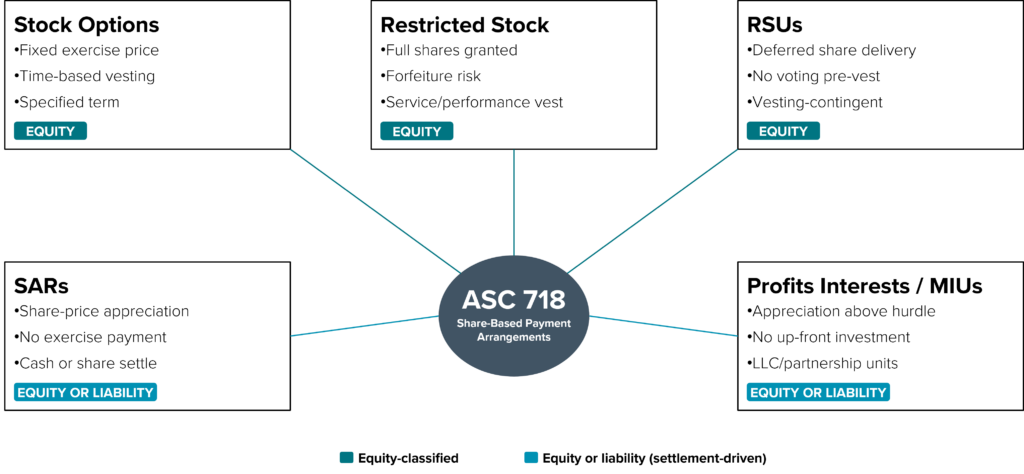
Figure 2: Common Transactions/Awards Under ASC 718
As Figure 2 illustrates, stock-based compensation can take many forms. The next question is how those awards should be classified, since that determination can affect how they are measured and reported over time.
Equity or Liability: A Classification That Matters
Classifying an award as equity or a liability can have important accounting consequences. For equity-classified awards, companies typically measure fair value at the grant date and recognize it over the requisite service period. The value is generally not remeasured every reporting period. However, liability-classified awards are typically remeasured at each reporting date until settlement. Changes in the company’s value from updated forecasts and shifts in market conditions can affect compensation cost over time.
Those ongoing remeasurement requirements can create challenges if a company does not correctly identify an award’s classification from the outset. This is a common year-end issue. A company may think it only needs a valuation at the grant date, only to have an auditor conclude the award is liability-classified and needs remeasurement at every reporting date instead.
Choosing the Right Valuation Model
Once a company knows what type of award it is dealing with, the next question is how to assign a value to it. For a straightforward stock option with a fixed exercise price and service-based vesting, Black-Scholes or a similar option-pricing model may be appropriate. It relies on a handful of inputs, including the exercise price, the expected term and expected stock volatility. The model is widely understood and relatively efficient to apply. Awards with more complicated features call for something more robust. A Monte Carlo simulation models a range of possible paths a company’s value could take over time, which can matter for awards tied to return targets, EBITDA requirements, or other path-dependent conditions. Two companies could ultimately sell for the same enterprise value but produce different payouts if one steadily meets its targets while the other misses early targets and recovers later. That is the idea behind path dependency and why some awards require simulation rather than a simpler option-pricing model.
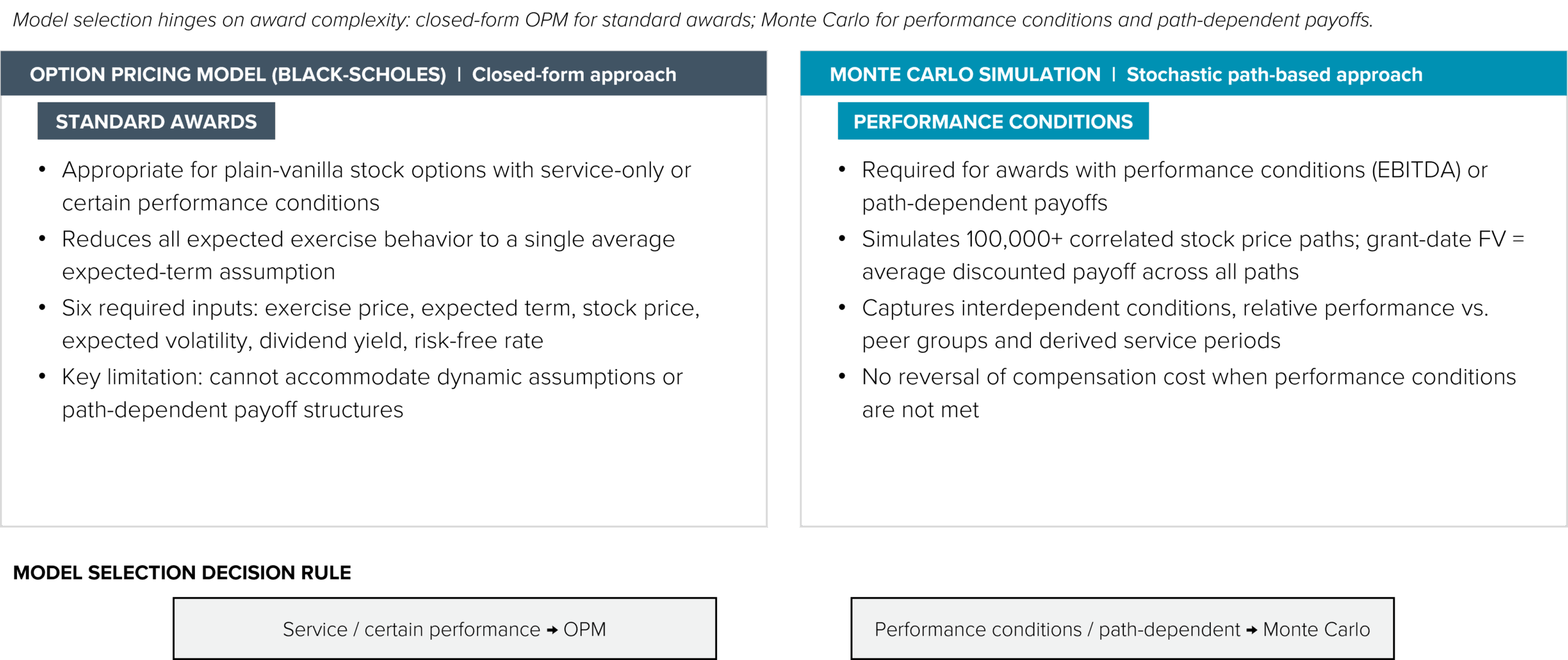
Figure 3: ASC 718 Valuation Methodologies: OPM & Monte Carlo
One point worth remembering is that while an award may be out of the money today, meaning the current value is below the threshold needed for the holder to receive a payout, that is not the same thing as being worth nothing. If a company is expected to grow, an option or incentive unit can carry real value even if it would not produce a payout based on the company’s value today. A useful assessment is to ask whether the holder would agree to sell the award for nothing right at the present moment. If the answer is no, the award likely has measurable value.
The Bottom Line
ASC 718 asks a fairly commonsense question dressed up in technical language. If a company pays someone in equity, what did that equity actually cost? Getting to that answer requires attention to timing, careful thinking about how an award should be classified and the right valuation tool for the complexity involved. None of that has to be intimidating once the pieces are laid out clearly. Asking early whether a valuation is needed and preserving the facts and circumstances that existed at the grant date can help companies prepare for the questions that may arise during the audit.
Rebecca McElwain is a Director at Prairie Capital Advisors, Inc. She can be contacted at 614.768.7302 or by email, rmcelwain@prairiecap.com.
Download the full article above.


