
Overall M&A Market Commentary
The M&A deal flow in the first half of 2025 has fallen sharply from the already low levels seen in 2024. Overall, the number of M&A deals and the recorded dollar volume in the first half of 2025 is less than half of the deals closed in the first half of 2024.
After nine months under the new presidential administration, the rapid pace of change continues. Various modifications have been made to government operations, regulations, immigration policies, and tariffs, all creating uncertainty in the economy. Additionally, the government is now in a shutdown, which introduces a host of other issues to an already long list. Considering these uncertainties, the National Federation of Independent Businesses (“NFIB”) Small Business Optimism Index still indicates some business optimism, with the current level above the 51-year average. However, the index declined in September after a series of monthly gains. Bill Dunkelberg, the chief NFIB economist, stated in the September 2025 Small Business Economic Trends Report, “While most owners evaluate their own business as currently healthy, they are having to manage rising inflationary pressures, slower sales expectations, and ongoing labor market challenges. Although uncertainty is high, small business owners remain resilient as they seek to better understand how policy changes will impact their operations.” However, the same NFIB report also shows that the current uncertainty index is the fourth-highest level in the last 51 years. Uncertainty hampers the ability to commit to and close deals. It seems that reducing the level of uncertainty in the economy could prepare the M&A market for growth.
Trump’s main tariff provisions are set to be debated before the Supreme Court in November 2025. This case will likely influence the future of Trump’s tariff policy. By the end of September 2025, the U.S. has collected $195 billion in tariff revenue and is on track for an annual rate of $350 billion. Since tariffs were first introduced on April 2, “Liberation Day,” when a broad set of import duties was announced, many experts predicted a rise in inflation and a recession. However, after six months, inflation remains below 3.0%, and U.S. GDP growth as of the second quarter of 2025 was at 3.8%. Even with a more moderate forecast for third-quarter GDP growth, the likelihood of a recession remains low. Most experts are relying on the previous “transitory argument” and believe the inflationary effects of tariffs will likely appear later. Only time will tell.
The new administration has achieved notable successes in foreign policy, including recently securing a ceasefire and the release of hostages in Gaza. While caution is advised in this situation, it could lead to a more stable Middle East and economic growth in the region. The war in Ukraine, however, still presents a significant challenge, but new peace agreements might encourage other peace deals to follow. The U.S. has signaled it will send more weapons to Ukraine, as President Trump has become more impatient with Russia, and he is likely to refocus efforts on that conflict. Although none of these foreign policy actions directly affected the M&A market, they may have shifted the administration’s attention away from ongoing issues like the government shutdown, tariffs, and immigration.
The U.S. economy remains unexpectedly resilient, with GDP growth consistently positive and showing no signs of a recession. Consumers continue to spend, and corporate investment in capital equipment, along with the need for companies to increase earnings, keeps rising. Additionally, banks and other lenders have abundant available credit. Private Equity (“PE”) funds and family offices have undeployed capital, and strategic buyers hold cash and unused debt capacity. All the key ingredients for a strong M&A market are in place, except for the deals.
Because private company M&A market data are collected over an extended period, our information experiences a one-quarter delay. As a result, the market commentary below generally covers data up to 2Q25. Any 3Q25 data used to extend trend lines in this edition remains preliminary and will be thoroughly reviewed in the next quarterly newsletter.
Buyers of all types are interested in making acquisitions. PE firms have abundant, time-limited investment capital to deploy. Strategic buyers are well-capitalized and still seek growth opportunities. Since there are fewer sellers than buyers, demand for deals exceeds the supply of quality companies. As a result, well-prepared sellers with strong company fundamentals can attract widespread interest from buyers and achieve premium results.
M&A Market Activity
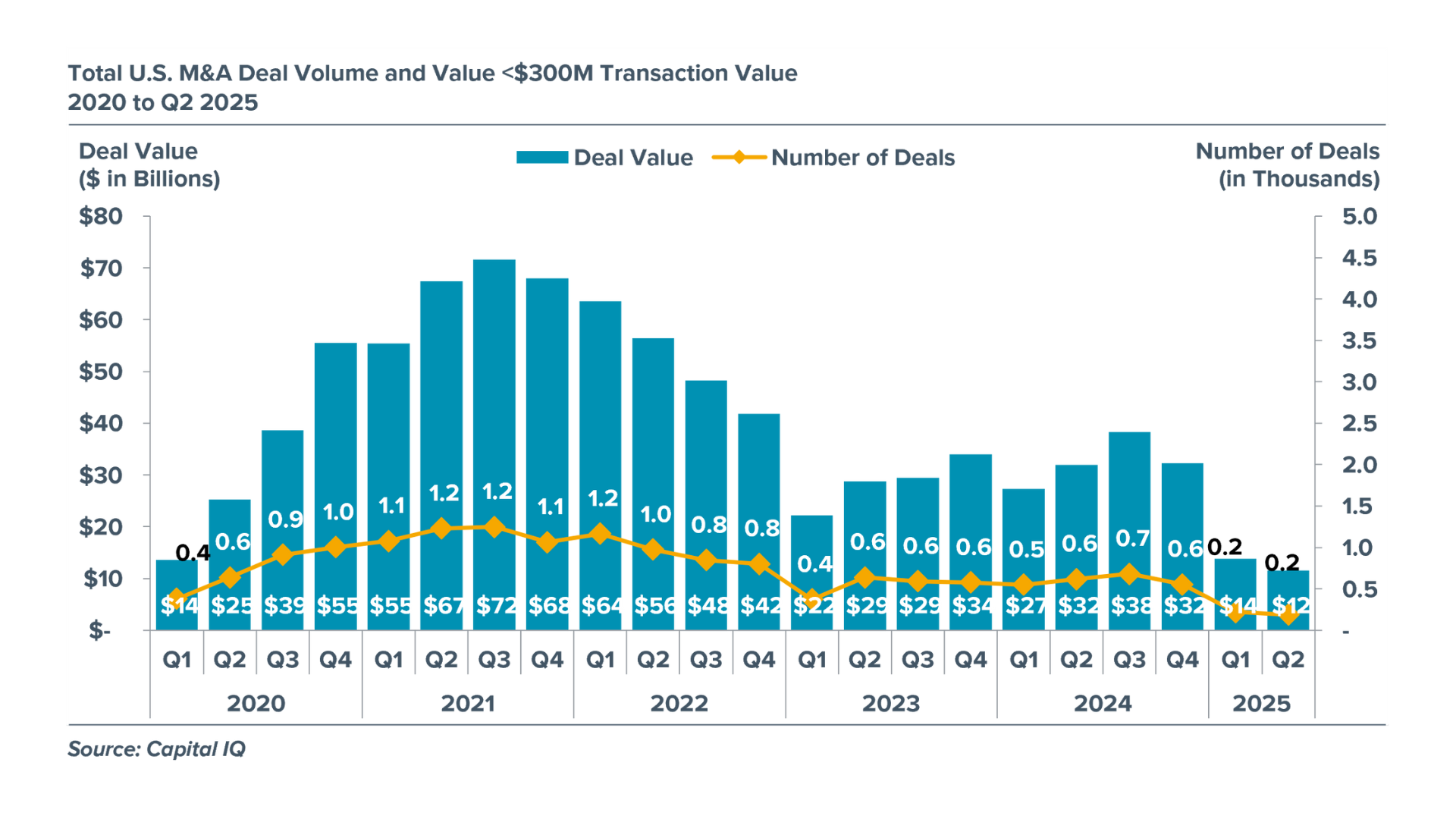
The M&A market has not rebounded since reaching its peak in 2021 after the pandemic. Deal volumes, measured by both the number of deals and total dollar value, increased again in late 2023 and late 2024, only to fall back to market lows at the start of the following year. Despite strong market optimism after the November 2024 election, sellers and buyers paused deal activity, waiting for more clarity on the potential effects of policy changes, including tariffs expected from the new presidential administration. Market activity in the first half of 2025 has remained subdued.
There is abundant capital and a strong interest in making M&A deals across the market. Business optimism for the future remains high, but short-term uncertainty continues. The new administration’s aggressive push for policy and tariff changes, including shifting economic priorities, is happening amid the ongoing government shutdown. Political compromise between the two parties remains difficult, leading to increased U.S. political unrest. The M&A market reacts negatively to uncertainty, resulting in lower M&A activity, as shown by our deal market data.
The interest of PE funds and strategic buyers in engaging in M&A activity remains strong. These buyers have ample resources and capital to support M&A deals. These groups need to increase their deal-making efforts and enter the M&A market to utilize their resources and generate a return. The main issue is that the supply of available acquisitions is still limited.
There is reason for optimism. The number of business owners nearing retirement continues to grow, and these owners will need to seek liquidity by selling their businesses. Additionally, PE funds have a large number of older portfolio companies that will require exits. Both of these groups will boost deal supply in the M&A market and drive activity. With high deal demand and an anticipated increase in salable companies, indicators suggest the M&A market could pick up in late 2025 or early 2026.
In 2Q25, $12.0 billion in middle-market deals were recorded, down about $2 billion from the amount reported in 1Q25. On a quarter-over-quarter basis, the dollar value of deals in 2Q25 fell by 14.3% compared to 1Q25.
In contrast, on a quarter-over-quarter basis, the number of middle-market deals closed in 2Q25 stayed the same as in 1Q25. This indicates that the market experienced a decline of over 10% in deal size in 2Q25.
The average middle-market deal size of $60.0 million in 2Q25 was 14.3% lower than the $70.0 million average deal size closed in 1Q25. However, the year-to-date (“YTD”) 2025 average deal size of $65.0 million surpassed the $53.6 million recorded in YTD 2024. The trend of lower-middle-market M&A deals gradually shifting toward larger transactions continues, despite the slight reversal in 2Q25.
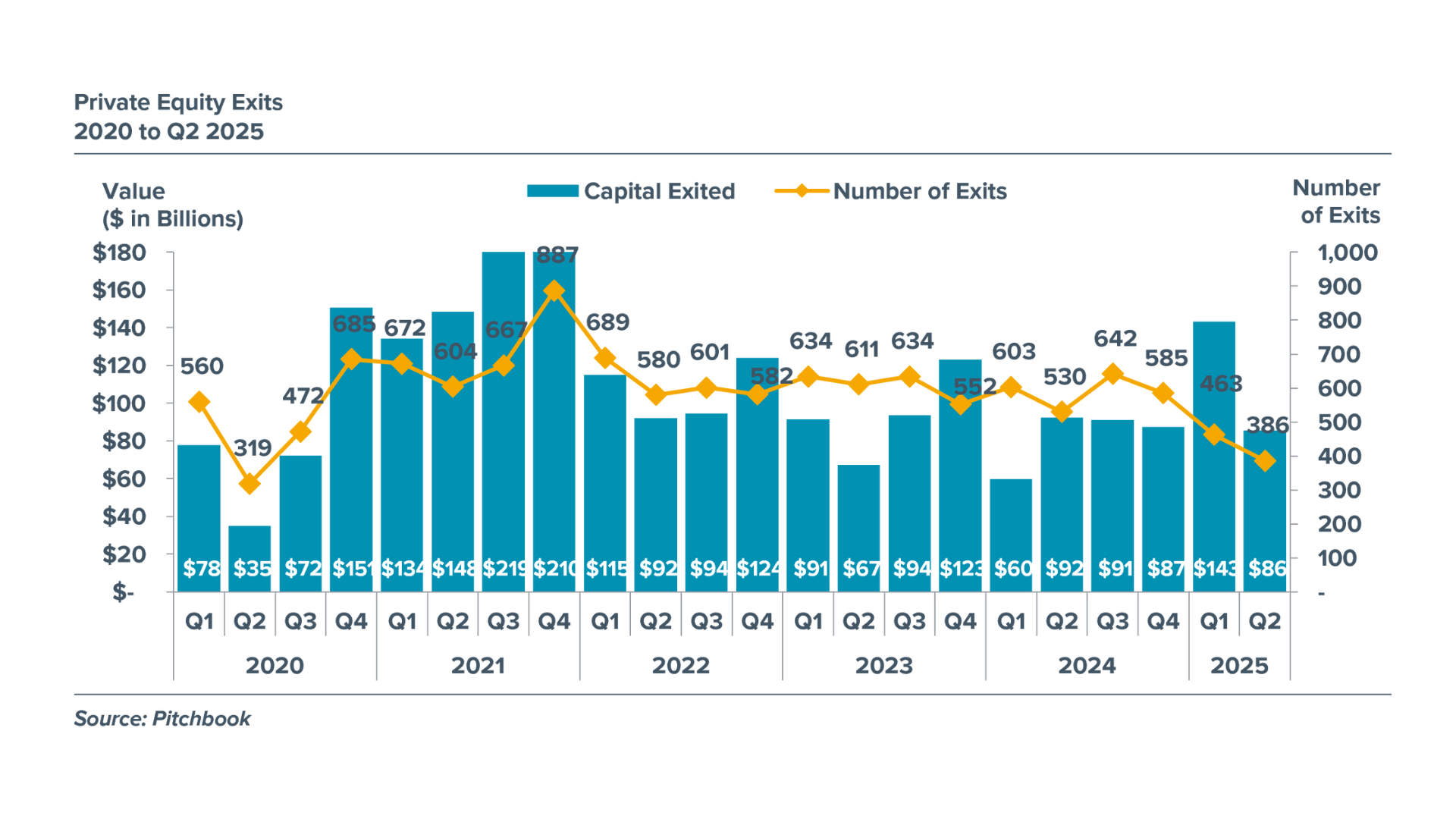
Generally, the 2025 PE exit activity follows overall M&A deal trends, but while the trends are similar, the decline in activity during 2Q25 was more severe than in the overall M&A market. In 2Q25, PE exits by dollar value dropped by 40.2% compared to 1Q25, while the number of PE exits decreased by 16.6% from the same period. This indicates that PEs are starting to sell smaller portfolio companies in 2Q25. The 2Q25 data clearly show a decline in PE deal activity through June. Our early 3Q25 data suggest a significant rise in PE portfolio company sales. PE funds are lagging in returning cash to their limited partners, which could explain the increased deal volume. Limited partners need their cash back, and the funds seem to be meeting that demand.
PE funds focus on repeatedly making deals and are therefore known as the “professional buyers and sellers” of businesses. Because they operate in deal-making, PE firms must participate in transactions across various markets, often positioning themselves as leaders in the M&A sector. PE funds strategically pursue both the acquisition and sale of portfolio companies, either at the asset level when the company is most sellable or at the fund management level when they aim to realize their investments and return capital to investors. Typically, PE funds have limited timeframes—usually 10 to 12 years—within which they must invest their committed capital and exit these investments to return cash to their limited partners. This creates a sense of urgency in PE fund management and a constant evaluation of exit options.
Over the past few years, the median holding period for a PE portfolio company has reached an all-time high as PE funds delayed selling assets until market uncertainty lessened. Pitchbook reports a backlog of over 12,500 unsold portfolio companies, including more than 4,000 that have been held for over five years. If market conditions improve as expected, these companies are likely to drive future deal activity.
Strategic and financial buyers keep seeking opportunities in the M&A market. Because of market uncertainty, buyers of all kinds are more cautious when evaluating potential acquisitions. Consequently, sellers with high-quality companies and solid financial results are drawing the most interest from buyers. Preparation is essential for business sellers to secure fair enterprise valuations, manage a competitive sales process, and navigate more detailed due diligence.
Middle Market Deal Valuations
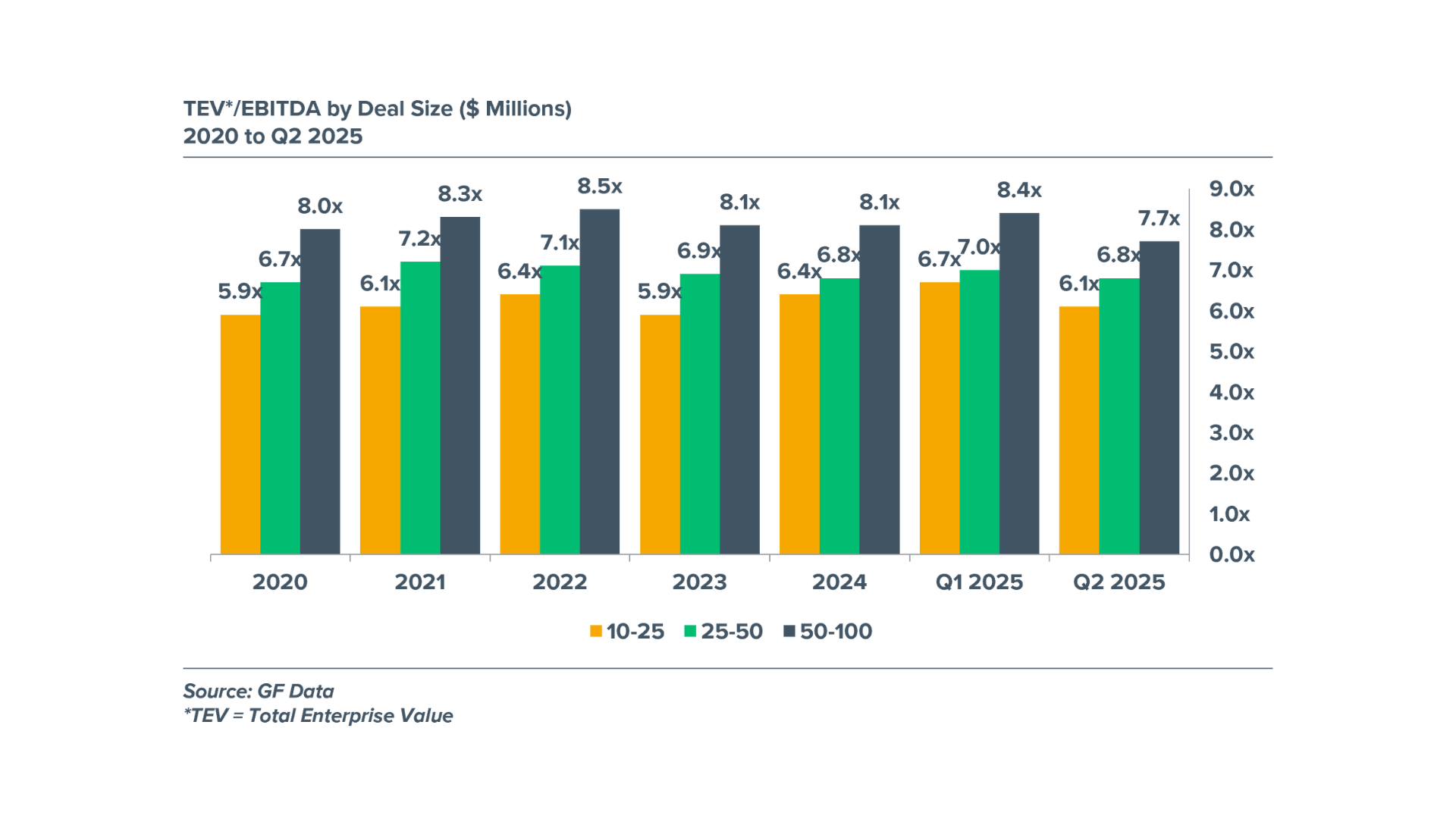
M&A deal valuations have remained stable over recent years, but these valuations, particularly on the larger side, have slightly softened in 2Q25. Despite the drop in valuations, the data might still be somewhat inflated because we believe the higher-quality deals, which command higher valuations, are closing in the current market.
Deal valuation multiples for the sub-$25.0 million category in 2Q25 were 6.1x, slightly below the long-term average of 6.2x for this size category.
Deal valuation multiples for the large middle-market category, above $50.0 million, registered at 7.7x in 2Q25, significantly below the long-term average of 8.2x for this sector.
Finally, the 2Q25 valuations in the $25.0 to $50.0 million middle segment were recorded at 6.8x, just slightly below the five-year average of 6.9x.
PE funds have ample undeployed capital, and strategic buyers continue to cautiously pursue growth through acquisitions. The recent decline in M&A activity has resulted in fewer new deal opportunities, but there remains consistent demand from buyers for high-quality acquisition targets and valuations. This supply-demand imbalance offers good-quality sellers a chance to maximize their valuations. Since acquirers are very cautious, thorough preparation for a detailed due diligence process is crucial. Only higher-quality companies can secure higher valuations, but they will achieve this through careful preparation and extended deal negotiations.
Private Equity versus Strategic Valuations
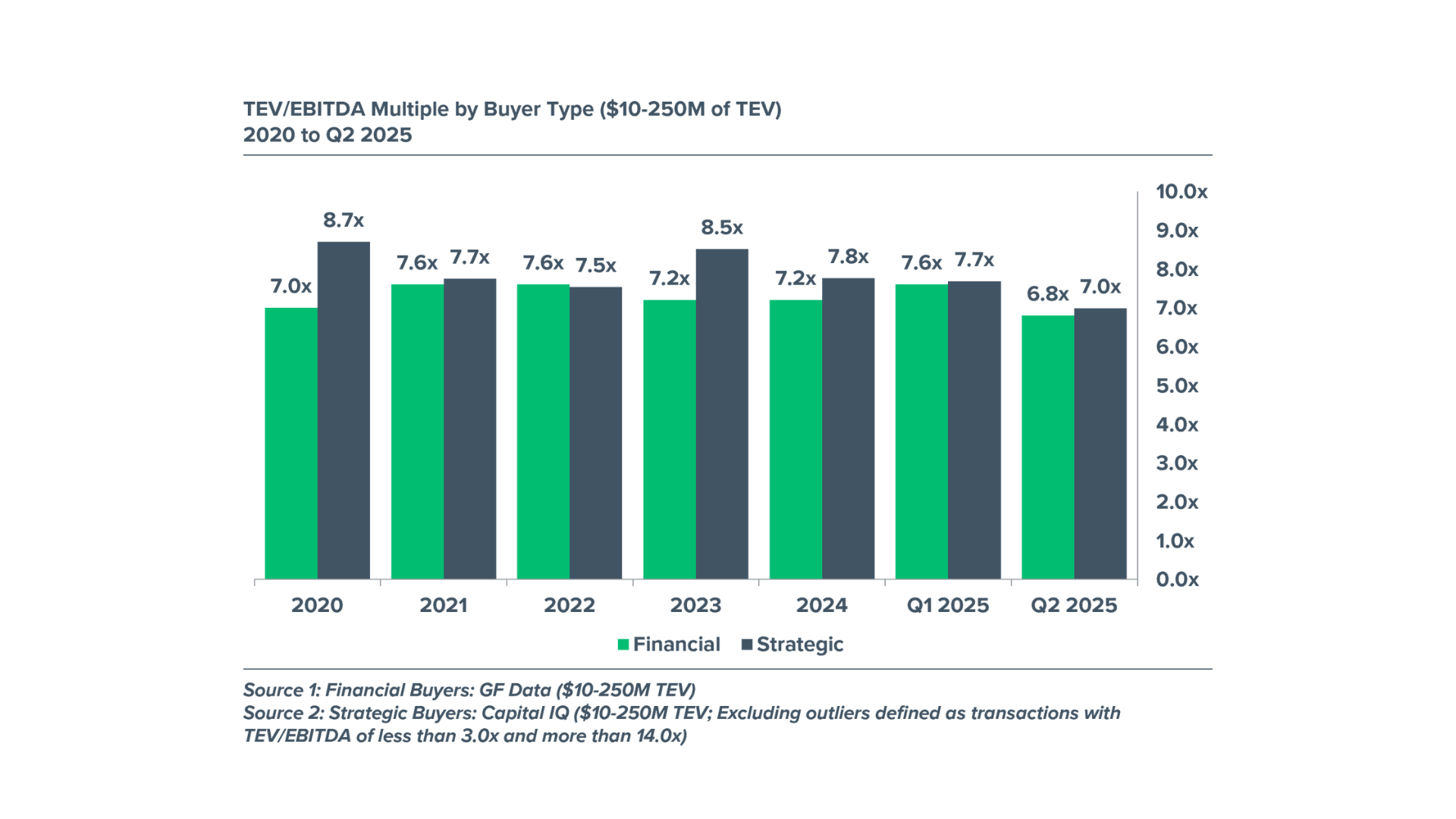
Strategic buyers play a vital role in the M&A market, making up nearly two-thirds of all transactions over the past decade. PE portfolio companies involved in add-on acquisitions are considered strategic because they share many traits with other strategic acquirers. Synergistic cost reductions, access to new customers, and other revenue-growth opportunities enable strategic buyers—but do not always require them—to pay more than typical financial buyers.
Since 2020, with the exception of a brief period in 2023, the strategic premium in the M&A market has almost vanished. After a short reversal in 2023, the downward trend of strategic premiums persisted into 2024 and 2025. Large decreases in transaction volume in recent years likely skewed the data and the observed decline in strategic premiums.
Over the past five years, EBITDA multiples paid by PE buyers have stayed around 7.3x, possibly indicating their need to attract outside debt financing and the valuation cross-check by lenders during the credit process, leading to a more disciplined approach to their acquisitions. Prices paid by strategic acquirers, on the other hand, have been more volatile than those paid by PEs, possibly reflecting shifts in the synergistic value of acquisitions over time and the strategic acquirer’s ability to pay what it takes to win the deal.
Prairie estimates that, for deals under $50.0 million, middle-market valuations are one to two multiples of EBITDA lower than the levels shown in the chart below.
Middle Market Leveraged Buy Out Capitalizations
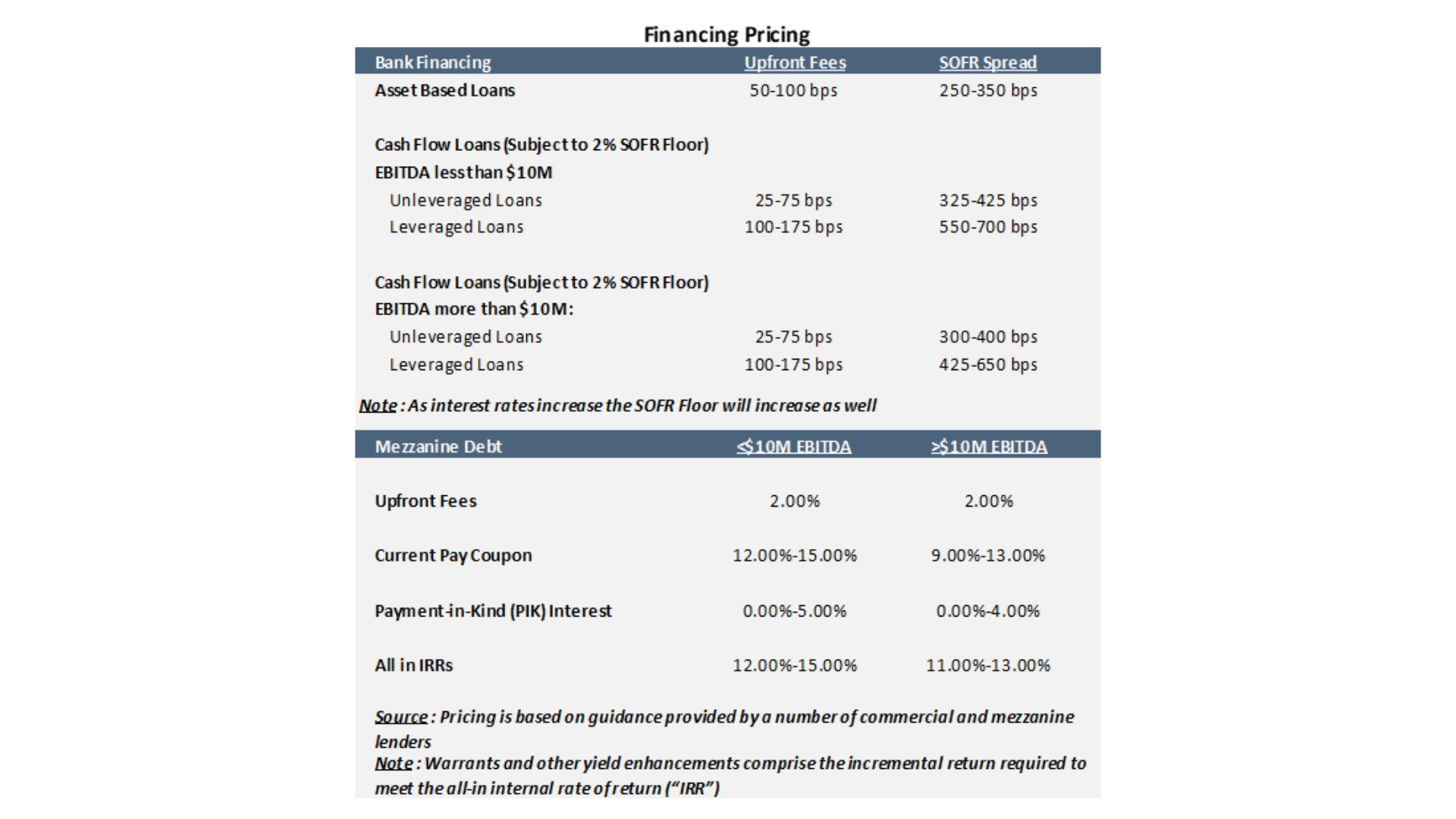
Commercial bank lenders are actively seeking new credit opportunities. Refinancing and expanding existing credit have led lending activity in 2025. The weak M&A market has caused lenders to face the same challenge as PE firms and other buyers—fewer deals to meet demand. Since the start of 2025, lending terms, including covenants, maturity structures, and pricing, have become more aggressive, favoring issuers to secure better terms from new borrowers.
The private credit markets, including business development corporations (“BDCs”), asset-based lenders, and other lending-focused private credit funds, are gaining more importance in the credit markets and are eager to originate new deals. These private credit lenders are adopting a more aggressive stance, offering slightly better lending terms to lower-quality issuers. Although private credit and asset-based lending (“ABLs”) are becoming more active, their loans tend to be more costly and have higher debt service expenses. Greater private credit involvement in the current lending environment enhances overall debt availability, leads to more aggressive lending conditions, and, in some cases, results in lower credit spreads across the market.
The maximum total debt for a deal increased slightly in 2Q25 to about 58.0% of a standard leveraged capital structure, which is returning to the leverage levels seen before the pandemic.
Mezzanine funds actively participate in leveraged transactions. While this type of financing offers advantages, it also involves high interest rates that can strain a company’s cash flow. Mezzanine financing is essential in middle-market buyout capital structures, especially when securing senior debt is more difficult. Although interest-only and payment-in-kind (“PIK”) structures still dominate the market, today’s environment sees equity co-investment structures helping to align mezzanine returns with the deal’s risk profile.
Overall Comment on the Financing Markets
The 2025 economy has demonstrated resilience and remains one of the most stable worldwide. In 2Q25, the economy grew at an annual rate of 3.8%, a significant rise from the 0.6% contraction in 1Q25. Consumer spending, which makes up a large part of the economy, drove the growth in 2Q25 GDP. Full-year 2025 GDP growth is projected to slow, with estimates between 1.7% and 1.9%. This expected slowdown is linked to potential effects of tariffs and other policy uncertainties. The escalating tariff conflict between the U.S. and China in October, along with the government shutdown, is likely to make the final quarter of 2025 quite eventful.
Although the initial Liberation Day tariff announcement caused a drop of more than 12.0% in the equity markets in April, the major equity indices recovered and, by the end of September, reached record levels. It is interesting to note that after six months of increased tariffs, inflation has not risen significantly, with many economists suggesting that inflation will occur later. This bears an eerie resemblance to earlier predictions that inflation would be transitory following the massive stimulus injected into the economy during the pandemic. Time will tell.
The credit markets started the year with a substantial rise in new business capacity. However, the absence of deals involving acquisitions, mergers, and corporate growth has left lenders’ demand for opportunities unmet. Because of the low deal volume, lenders have become more aggressive with credit prices and deal terms, creating a market that favors issuers. With extra capacity and fewer new deals, lenders are now more open to story credits and smaller deals, mainly because they have more available time.
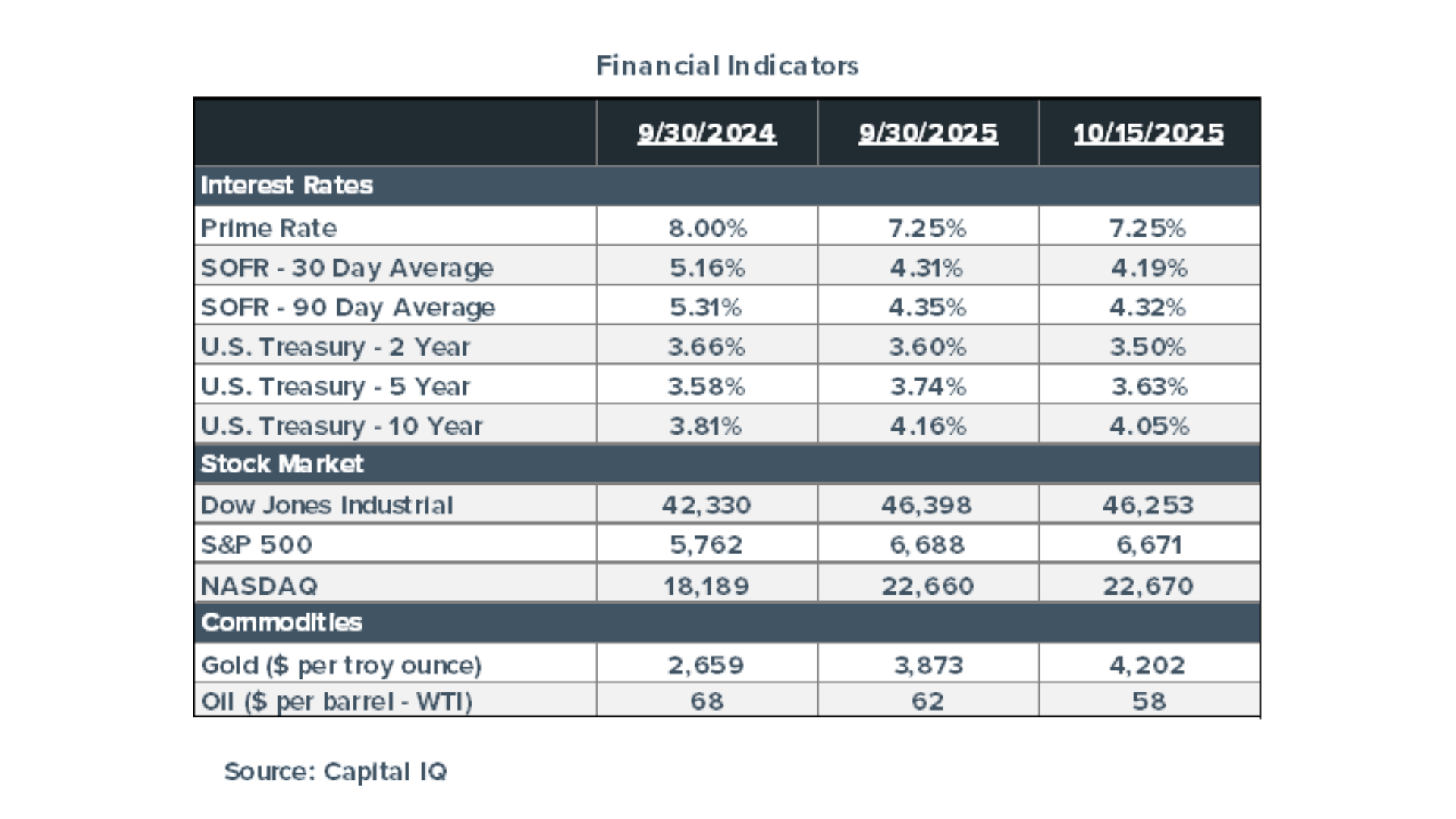
The Fed lowered interest rates by 100 basis points through three cuts in 2024. So far in 2025, the Fed reduced rates by 25 basis points in September and is likely to make one or two more cuts later in the year. These reductions have led to declines in the Prime Rate and the SOFR curve. These rates serve as the basis for adding a credit spread to determine the borrower’s interest rate. Lower rates will decrease financing costs and increase potential debt capacity for new deals. This could further boost higher M&A valuations and raise loan demand once tariff uncertainty diminishes.
Banks, non-bank lenders, insurance companies, SBA funds, BDCs, and the rapidly growing Private Credit funds all hold substantial capital and are eager to issue new loans. So far, their options have mainly included refinancing deals and a limited number of growth capital and capital expenditure loans. If the M&A market recovers as expected, it could energize a highly active capital market and result in even more loan growth later in 2025 and into 2026.
Preparation is essential in any market, but it becomes even more important in the current economic environment. All borrowers should create detailed business plans that show lenders how the Company will handle inflation, shrinking profit margins, revenue fluctuations, tariffs, and other business challenges, including interest rate changes. Since lenders expect repayment, borrowers must clearly communicate their plans to ensure this. With thorough preparation, creditworthy and qualified borrowers will be better positioned to attract funding. Borrowers should also be prepared for a potentially lengthy financing process and may face more cautious and more expensive capital options.
Total U.S. Middle Market Loan Issuance
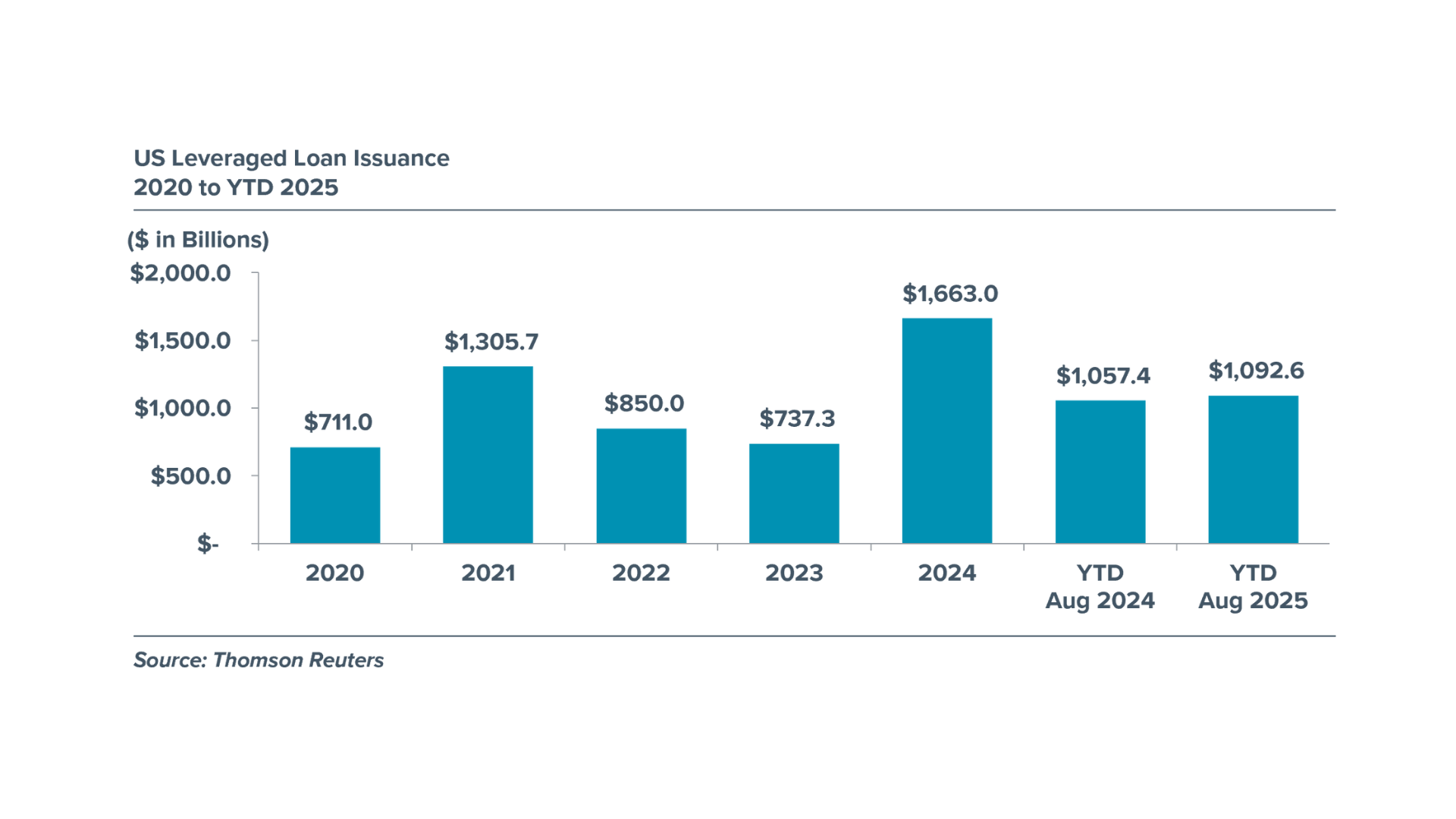
- Lower interest rates and reduced recession fears made borrowers more comfortable with the environment and increased their demand for new credit in 2024. This credit was used to refinance high-cost debt, fund growth, and support capital projects. As a result, U.S. leveraged loan issuance in 2024 rose sharply to $1663.0 billion, surpassing all totals from the post-COVID years and even the years just before COVID.
- Loan issuance through August 2025 matched the volume issued through August 2024, leading to expectations that the full-year 2025 loan volume will meet or exceed 2024 levels. This remains true despite decreased M&A activity and tariff uncertainties. Lenders are eager to pursue lending opportunities and are finding ways to manage the uncertainty.
- Bank lenders continue to focus on relationship banking, providing lines of credit for corporate borrowers, and prioritizing areas where they have a competitive advantage, such as operational needs like payroll and checking accounts. After nearly six months, the new tariffs have not significantly affected the economic environment. However, due to ongoing uncertainty, banks and other lenders remain cautious when issuing new loans and are selective with leveraged transactions. Private credit funds are also active and looking for new credit opportunities.
Interest Rate Environment
The Fed funds rate was reduced by a total of 100 basis points in 2024, ending the year at 4.25% to 4.50%. In 2025, the Fed funds rate decreased by 25 basis points.
So far, the tariffs imposed since April 2025 have had a limited impact on rising inflation, and the annualized GDP growth for 2Q25 was strong at 3.8% but slowed in 3Q25. With GDP growth decelerating and a cooling labor market, some economists have suggested one or possibly two more interest rate cuts this year. While the government remains shut, it will be more difficult for the Fed to analyze the economy; however, alternative data sources are available.
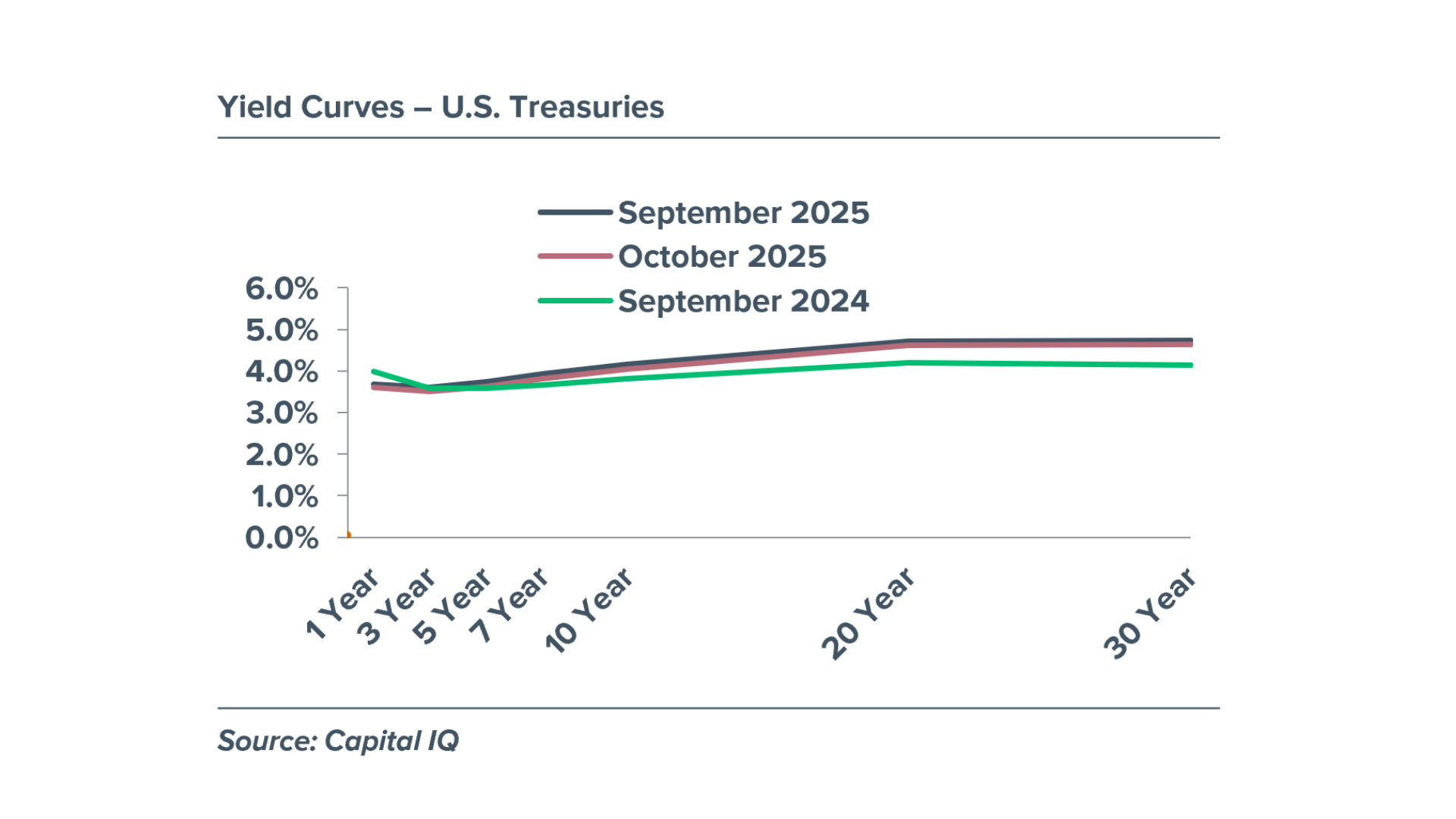
The interest rate environment returned to normal in late 2024, with an upward-sloping yield curve signaling more typical inflation expectations. By the end of 2024, the 2-year to 10-year spread was a positive 33 basis points, and it remained positive at 56 basis points as of September 30, 2025. The shift toward a more upward-sloping yield curve indicates a normal interest rate environment.
Middle Market Debt Multiples
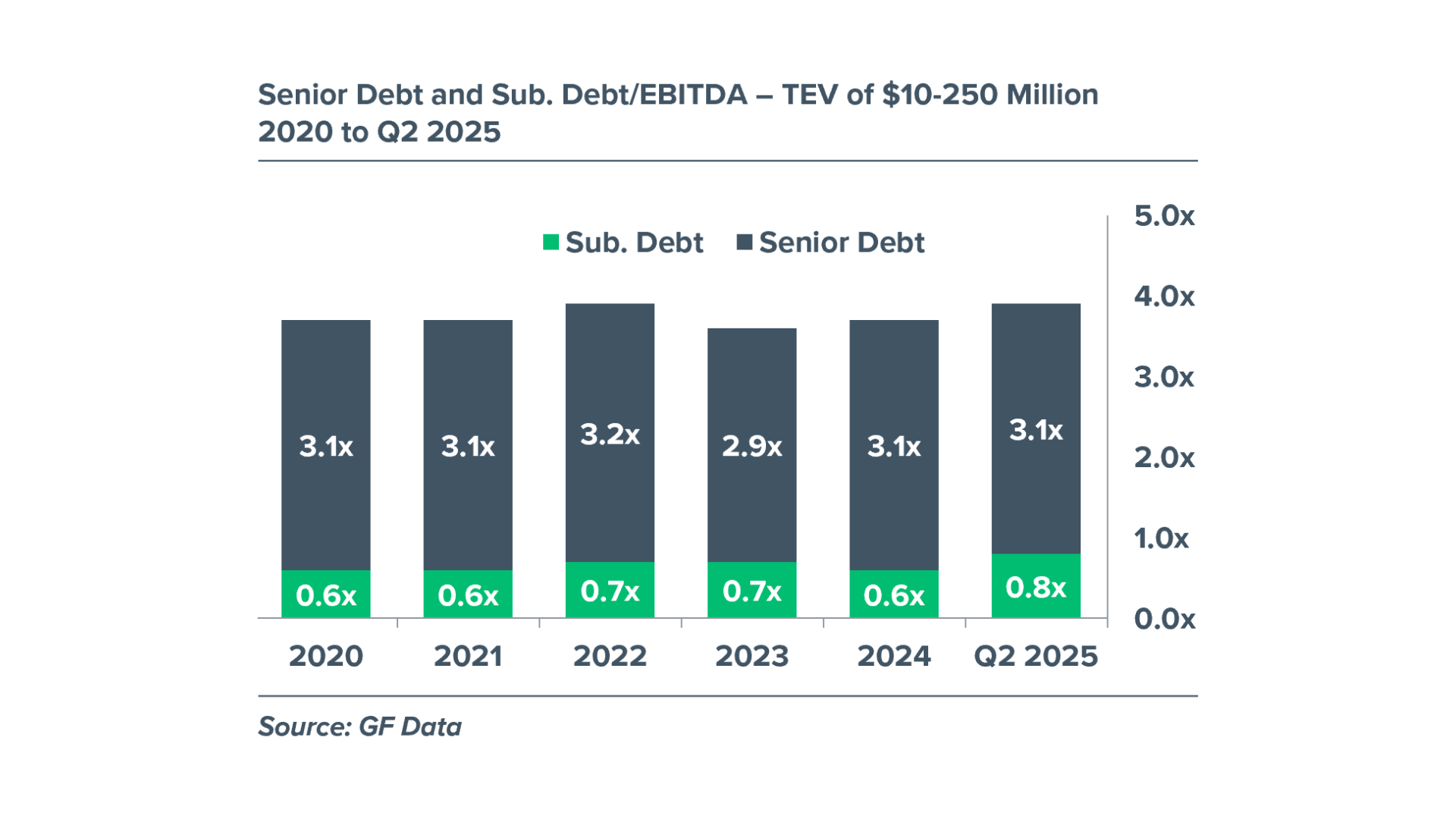
- The average total debt leverage in middle-market deals increased slightly in 2Q25, rising to 3.9x from 3.7x in 2024 and 3.6x in 2023.
- Mezzanine capital remains an essential part of leveraged capital structures. Although it is more expensive than senior debt, its return structure aligns with the risk profile of companies operating in uncertain economic conditions like those we face today.
- Over the past five years (2018-2023), mezzanine debt averaged 0.7x EBITDA in the standard capital structure. During 2Q25, mezzanine leverage rose slightly from 0.6x in 2024 to 0.8x EBITDA, marginally above the long-term average.
- The senior debt markets improved in 2024, but since our market data is a quarter behind, we are still evaluating the 2Q25 market. So far in 2025, the lending market has withstood tariffs and other uncertainties and continues to actively pursue new loan opportunities.
- Similar to the M&A market, we anticipate more tariff-driven shifts in the lending markets for the remainder of 2025.
Terry Bressler is a Managing Director and can be contacted at 312.348.1323 or by email, tbressler@prairiecap.com.
Download the PDF above.


