
Snapshot
- Lower middle-market activity remains measured versus pre-pandemic norms, though aggregate deal value has improved as larger transactions return.
- Quality assets continue to attract strong buyer attention and relatively resilient valuations.
- Financing remains available, with underwriting and structures reflecting a more disciplined market than in 2021.
- Policy and operating uncertainty are extending launches and closings, but demand for well-positioned businesses remains intact.
- Strong seller preparation remains one of the clearest drivers of process success.
“Selective capital. Real opportunity. Quality still commands attention.”
M&A Market Activity
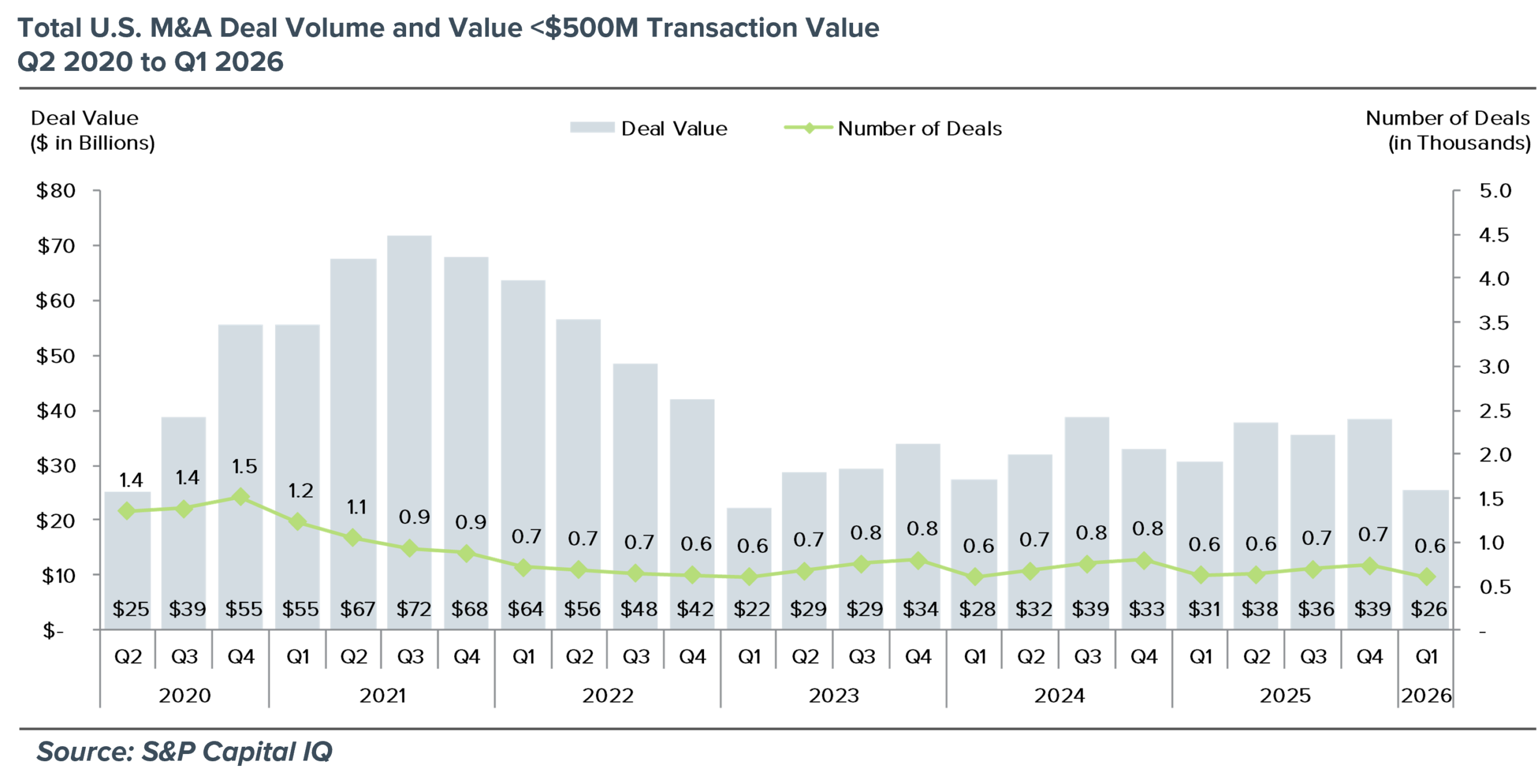
- Headline M&A Deal Value has been supported by larger transactions, while smaller middle-market activity continues to recover unevenly.
- The supply of well-prepared, high-quality companies remains limited relative to buyer demand, sustaining competition for attractive assets. This dynamic is reinforcing a bifurcated market, where scale, quality and preparedness are increasingly driving differentiated outcomes.
- Current market conditions are also shaping exit pathways and liquidity decisions, with sponsors and owners increasingly evaluating timing, structure and alternative liquidity options.
- For owners, the takeaway is clear: the market is open, but preparation and positioning matter more than broad market momentum.
Private Equity Exits & Liquidity Paths
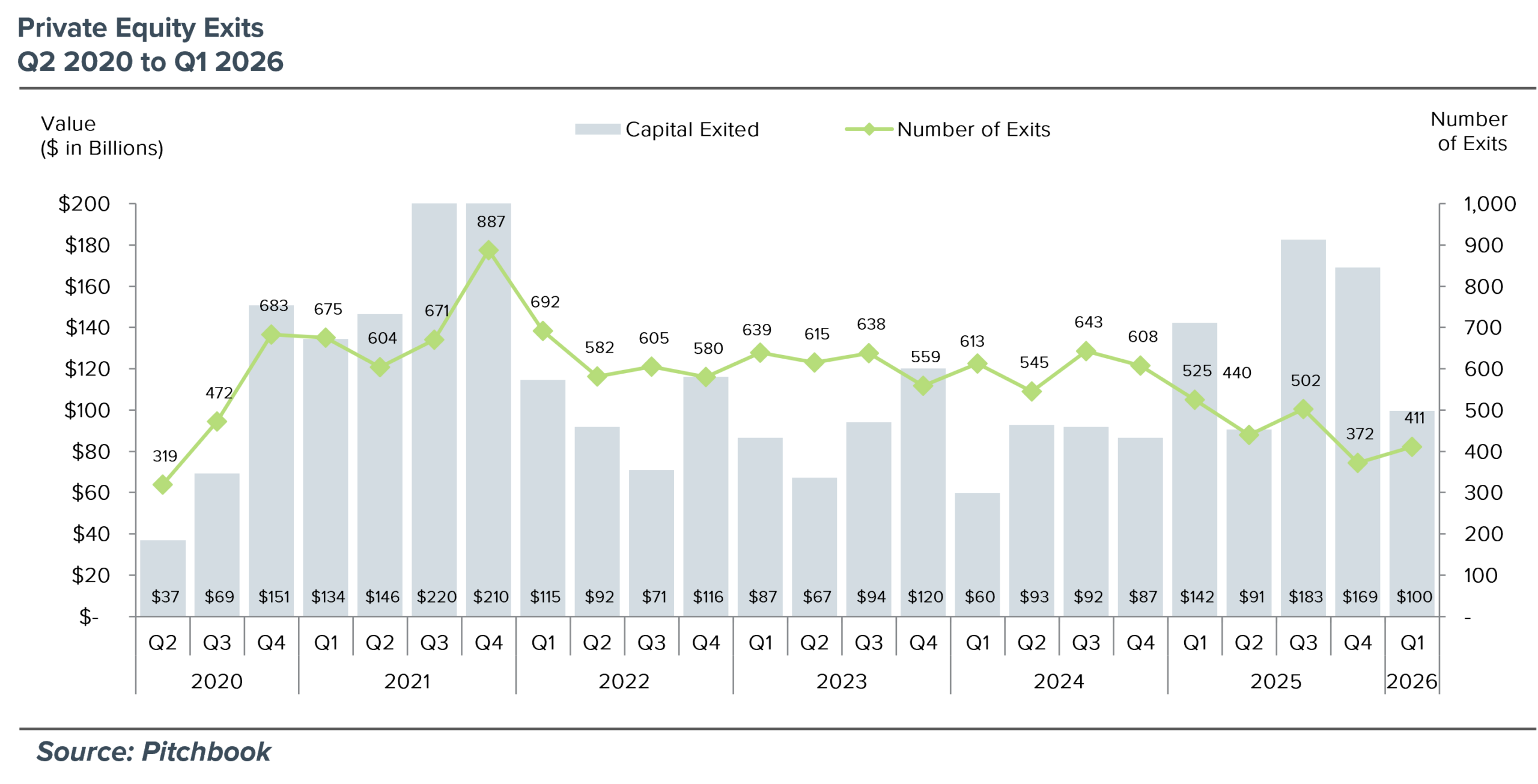
- Sponsors remain motivated to generate realizations and return capital to LPs, supporting continued focus on exit activity.
- Continuation vehicles have become a mainstream liquidity tool, particularly for stronger assets that sponsors believe merit additional hold time.
- Exit activity is improving, with the broadest set of options available to the best-performing and best-prepared businesses.
- The exit market is open, though outcomes increasingly depend on asset quality, preparation and positioning.
PE Dry Powder
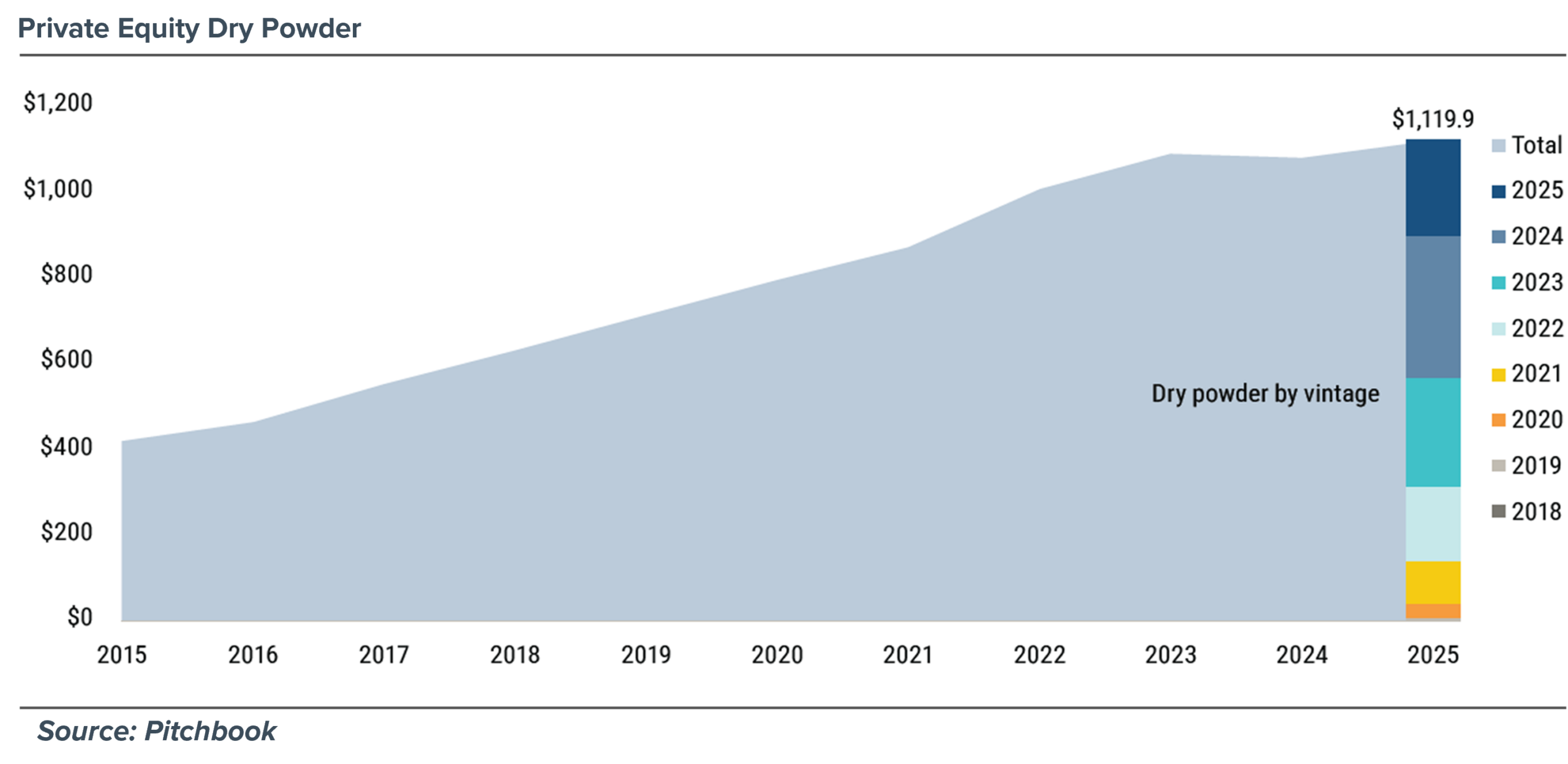
- Private equity (“PE”) firms continue to hold substantial undeployed capital, and a growing share of that capital is aging into deployment pressure.
- Record levels of dry powder is increasing competition for high-quality assets, a dynamic that is not fully reflected in broader M&A volume data.
- The market is not constrained by capital availability; activity is being shaped more by uncertainty, supply and execution complexity.
- This capital overhang helps explain why valuations for better businesses have remained resilient despite a slower overall market.
- For high-quality businesses, capital remains abundant and buyer interest remains robust, reinforcing that well-positioned companies can still command strong interest in a more selective market.
Valuation Environment
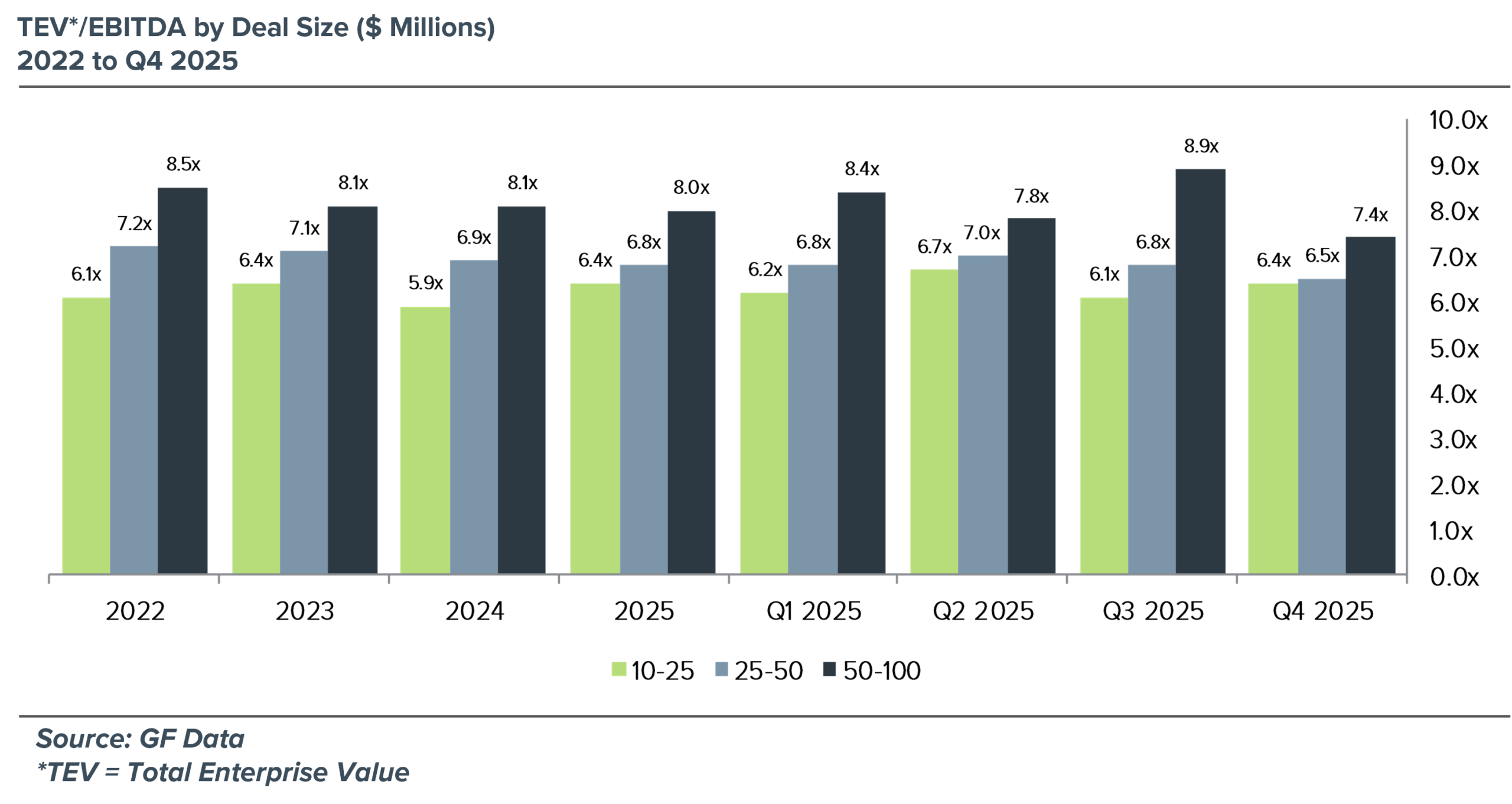
- Lower middle-market valuation multiples remained relatively steady through 2025 despite softer transaction volume.
- Multiples for smaller transactions maintained a floor above ~6.0x, while larger, higher-quality assets continued to command meaningfully higher valuations, supported by greater resilience and broader buyer pools.
- Valuations continue to reward durability, recurring revenue, scale and clearly actionable growth levers.
- The market continues to support premium valuations for select assets with visibility, resilience and clear growth characteristics.
Buyer & Sector Dispersion
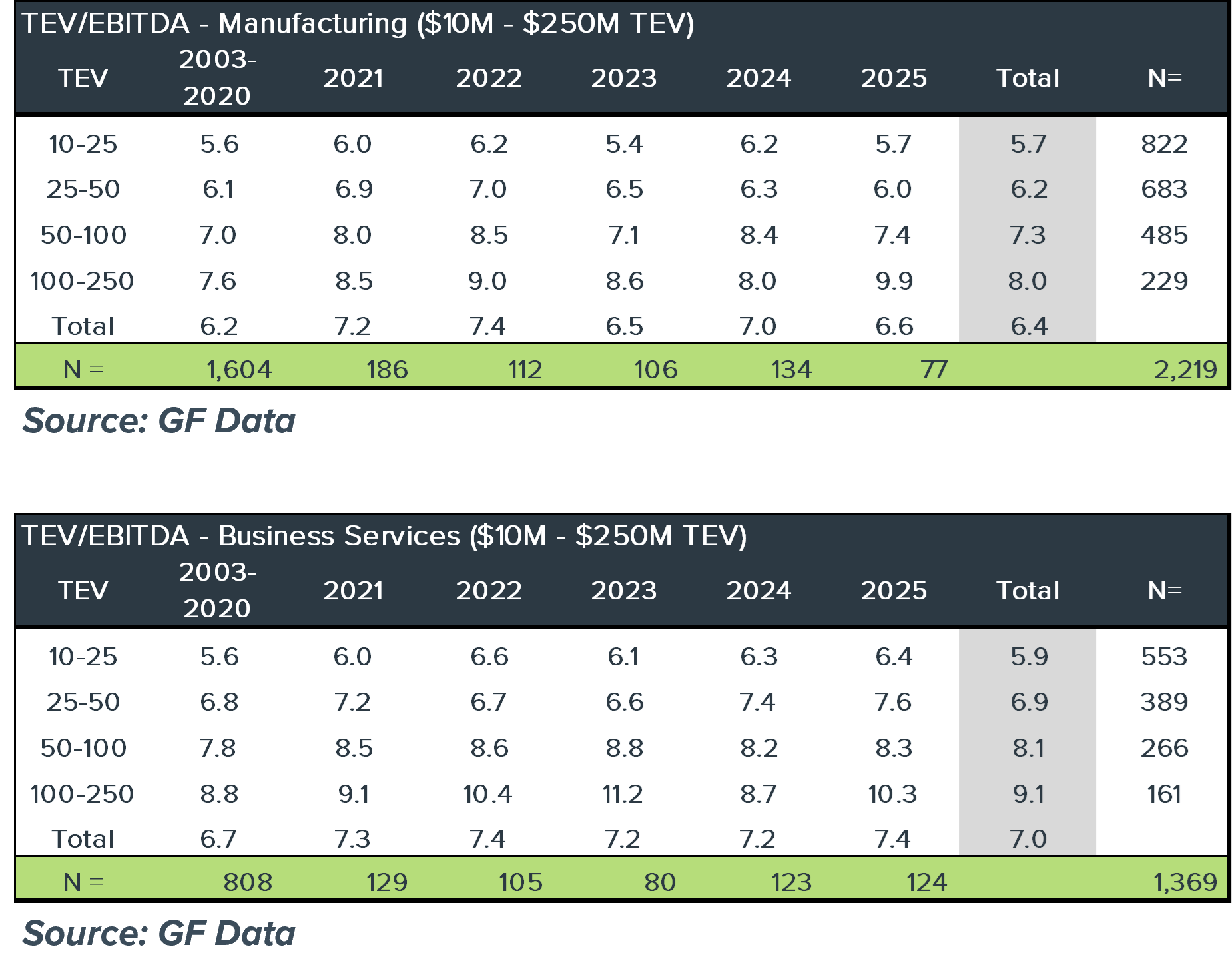
- Strategic buyers can still pay a premium where synergies are clear and conviction is high, though that premium is increasingly situation-specific.
- The data highlights meaningful sector dispersion, with business services showing stronger valuation support than manufacturing, which can be attributed to increased buyer competition for asset-light, domestically focused businesses less impacted by tariffs and supply chain challenges.
- 2025 data also shows larger companies continuing to command stronger valuations than smaller businesses, reinforcing the premium attached to scale and visibility.
- Manufacturing and other input-cost-sensitive businesses remain attractive and financeable, but buyers are applying greater scrutiny to margins, demand visibility and pricing power.
- In today’s market, buyer type, company scale and sector positioning matter more than broad market averages.
Leverage & Capital Structure
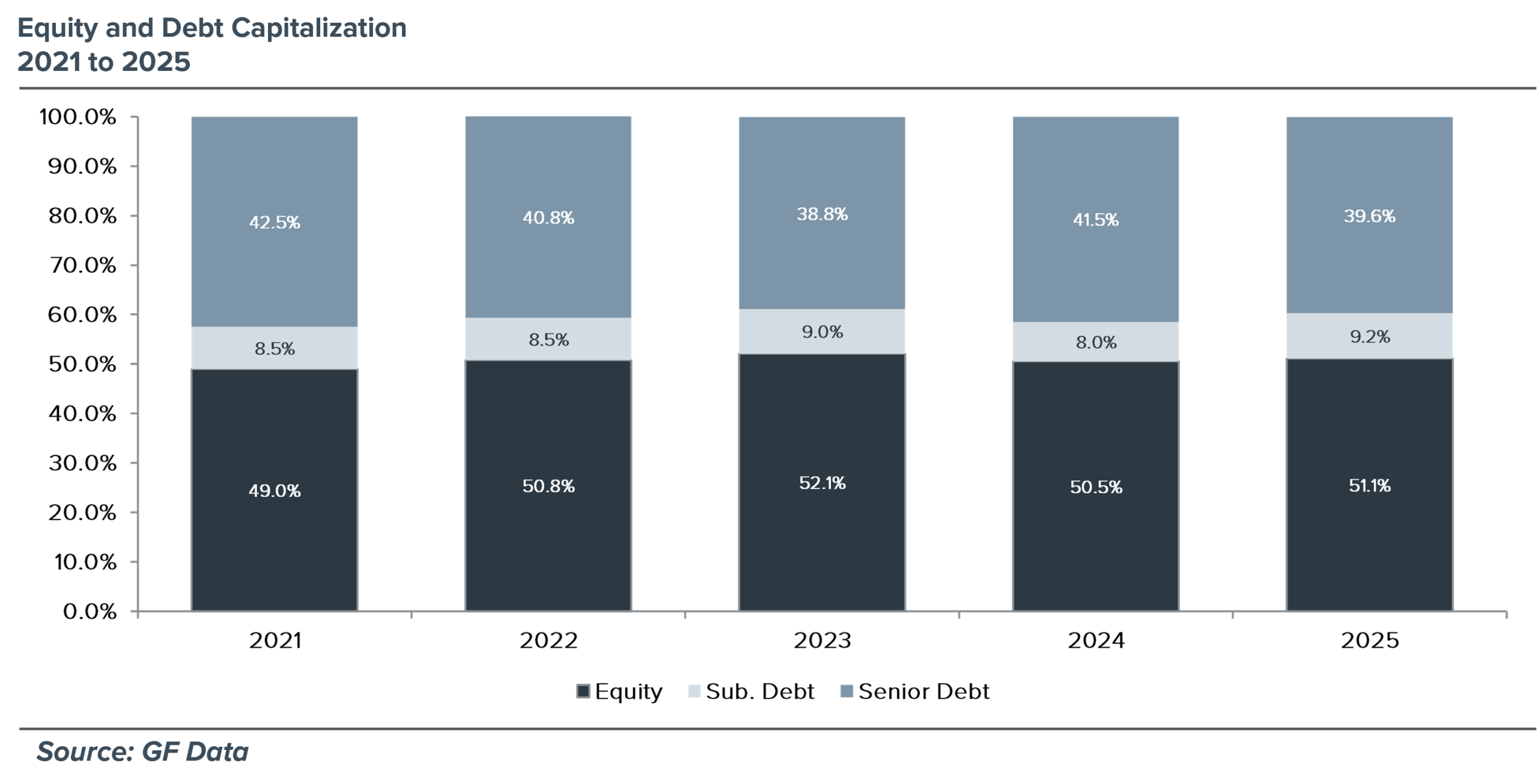
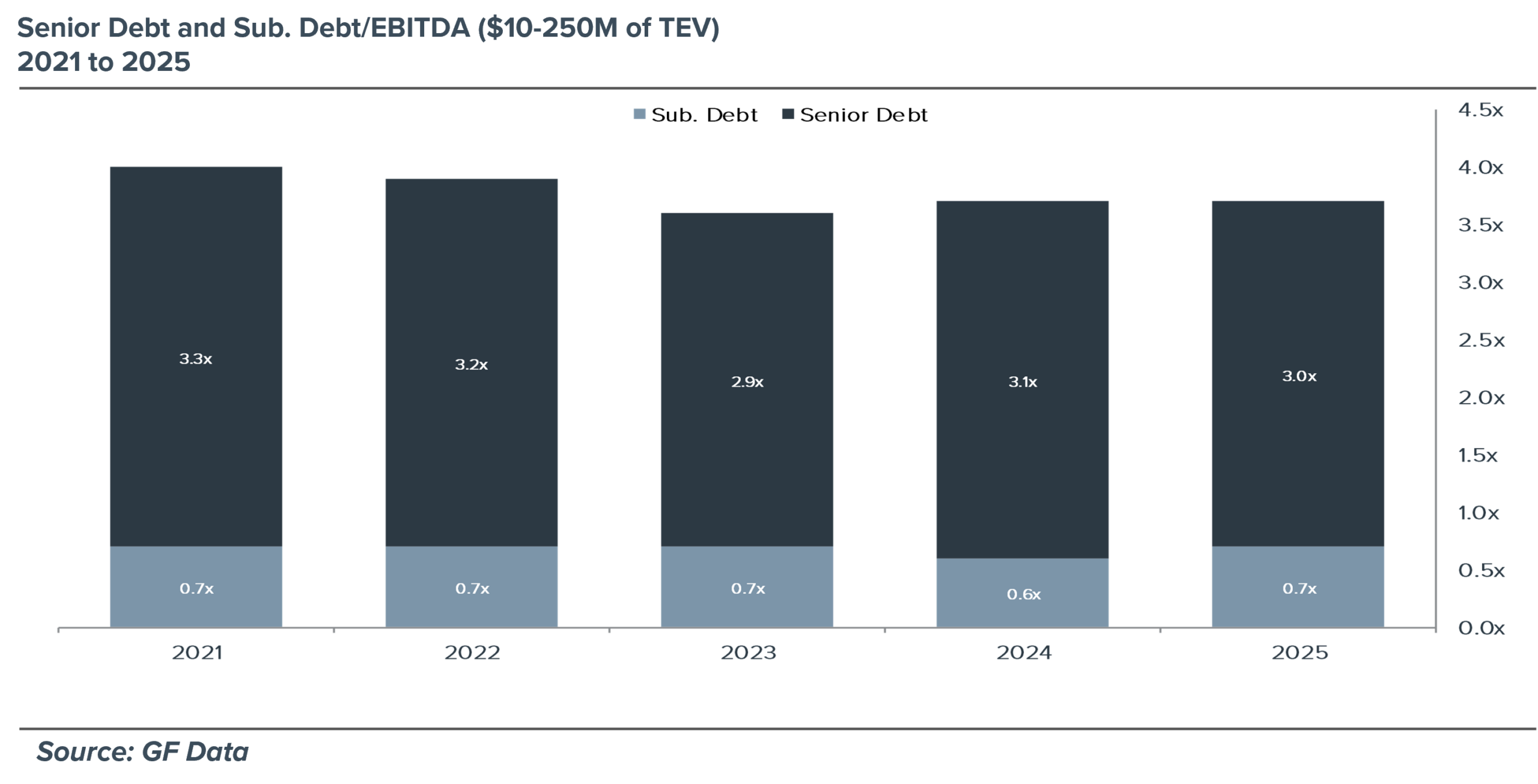
- Debt availability has normalized rather than disappeared; lenders remain active, though structures are more conservative than in the unusually borrower-friendly market of 2021.
- Leverage improved modestly late in 2025, though smaller platform deals still require more equity support and tighter underwriting.
- Scale, cash flow visibility and credit quality continue to drive better structures and more competitive lender behavior.
- High-quality businesses remain financeable, with capital structures built more deliberately than in prior peak years.
- A more stable rate environment should help support financing markets, but elevated all-in borrowing costs are still reinforcing tighter underwriting and more deliberate capital structures.
Private Credit & Leveraged Loan Environment
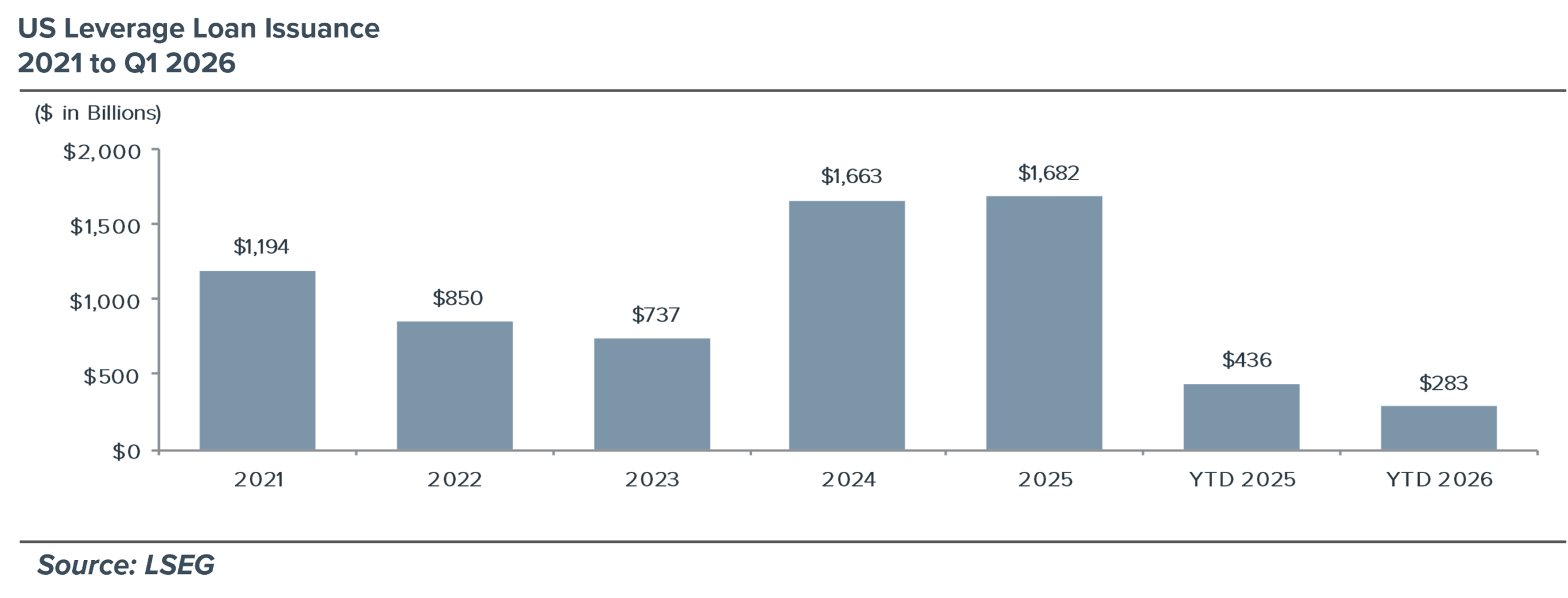
- Capital remains available across banks and private credit, with terms increasingly differentiated by borrower size, sector and leverage profile.
- Credit stress remains concentrated in select pockets, particularly among smaller, highly levered, floating-rate borrowers and certain software, healthcare-provider and consumer-exposed credits.
- Private credit remains a critical source of certainty and flexibility, though lender selectivity has increased and pricing remains responsive to shifts in risk sentiment.
- For most middle-market owners, the financing question is less about access to capital and more about terms, structure and lender confidence.
- With the Fed likely on hold and benchmark rates remaining relatively stable, financing markets are benefiting from better visibility, but lenders remain disciplined given still-elevated base rates and sector-specific risk.
Macro & Operating Backdrop
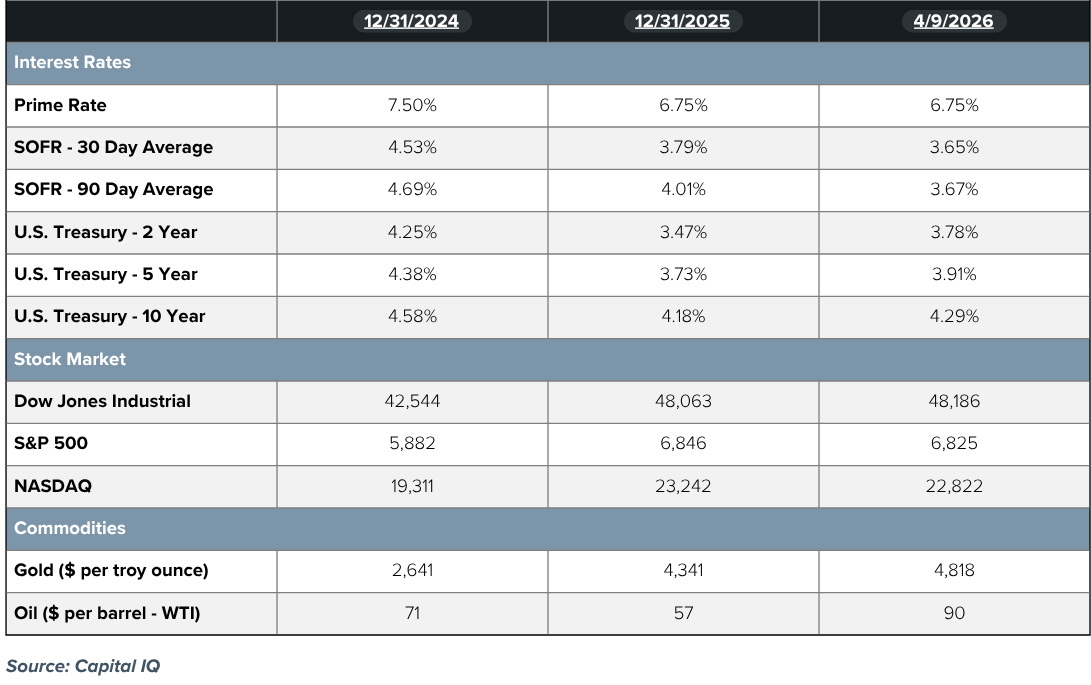
- The market backdrop remains constructive enough to support transactions, though uncertainty continues to restrain activity more than modest changes in base rates.
- The Fed held the target federal funds range at 3.50% to 3.75% at its March meeting, and futures-based market pricing currently points to a largely on-hold policy path for the balance of 2026, with any easing expected to be limited and back-end loaded rather than near term.
- That rate backdrop is helping reduce volatility in financing assumptions, even as Treasury yields remain elevated enough to keep lenders and buyers focused on coverage, structure and downside resilience.
- Tariff volatility, energy prices and mixed operating signals continue to influence confidence, diligence scope and lender underwriting.
- Small business optimism remains positive by long-term standards, though not yet at a level that suggests broad-based urgency to sell or invest.
- The macro environment remains supportive enough for transactions to move forward, but timing and confidence remain highly company-specific.
Diligence & Seller Readiness
- Buyers are underwriting downside protection and resilience more explicitly than upside alone.
- Quality of earnings, tariff exposure, legal readiness, management depth and reporting quality remain central diligence themes.
- Timelines are more likely to extend where a business has margin sensitivity, customer concentration or limited reporting depth.
- Prepared sellers running well-organized, highly competitive transaction processes are best positioned to achieve successful outcomes, particularly given the strong competition for high-quality assets.
- In this environment, owners and advisors who prepare thoughtfully and approach the market strategically are best positioned to maximize outcomes.
The market remains selective, but capital, demand and viable exit pathways persist for strong businesses. For owners considering a transaction, thoughtful preparation and strategic positioning are critical to achieving optimal outcomes.
Tim Witt is a Managing Director and can be contacted at 630.413.5593 or by email, tim.witt@prairiecap.com; Anthony Dolan is a Managing Director and can be contacted at 630.413.5593 or by email, adolan@prairiecap.com.
Download the PDF above.
We would also like to recognize our recently retired colleague, Terry Bressler, whose vision and leadership launched Prairie Middle Market Perspective in 2013. We will greatly miss his thoughtful insights, deep knowledge of middle-market M&A, and genuine enthusiasm for the business.


