
For many years, employee stock ownership plan (“ESOP”) companies were often viewed as ownership structures rather than active participants in the mergers and acquisitions (“M&A”) market. Today, that is changing. More employee-owned companies are thinking of M&A as a strategic tool and asking a practical question: how does a transaction work when employee ownership is part of the equation?
A More Active ESOP M&A Landscape
M&A is becoming a more common topic inside ESOP boardrooms. Whether driven by growth opportunities, succession planning, repurchase obligation considerations or broader strategic objectives, employee-owned companies are increasingly evaluating transactions that once would have seemed outside the norm.
This shift reflects a growing change in perspective. Rather than viewing employee ownership and corporate strategy as separate conversations, many ESOP companies are considering how acquisitions, mergers and sales can support the long-term health and growth of the business.
Why ESOP Companies Pursue M&A
Not every transaction begins with the same objective.
For some companies, the appeal is growth. An acquisition may provide access to capabilities, customers or markets that would take years to develop internally. In our experience, acquisitions can also help diversify a business by adding new sources of revenue and reducing dependence on existing operations. For companies looking to expand their reach or strengthen their competitive position, acquiring an established business can often be faster than building those capabilities from scratch.
Other transactions are driven by long-term planning. As ESOP companies mature, leadership teams and Boards inevitably begin looking beyond the immediate future. In some situations, combining with another employee-owned company can provide a path forward that preserves the ownership culture while creating a stronger organization. These transactions are often attractive when both organizations share a similar employee ownership philosophy and culture. Although most ESOP companies do not begin with the intention of selling, circumstances can change. Market conditions evolve, ownership objectives shift and financial pressures may arise. In some cases, a sale may be driven by strategic opportunities, industry consolidation or the need to manage future repurchase obligations.
Employee ownership can also provide ESOP companies with a differentiated value proposition when pursuing privately held businesses. In certain transactions, selling shareholders may be eligible to make a Section 1042 election, which can enhance after-tax proceeds. Combined with the ability to preserve a company’s culture, legacy and commitment to employees, an ESOP buyer may present a highly competitive overall proposal even when it does not offer the highest headline purchase price.
Key Considerations Before Pursuing a Transaction
Before moving forward with an acquisition, management and the Board must answer a fundamental question: will the transaction actually create value? The ESOP Trustee may also have an important, but distinct, fiduciary role depending on the transaction structure.
That may sound straightforward, but the answer requires careful consideration. The discussion extends well beyond purchase price. Companies must evaluate whether they have the resources to execute the transaction successfully and whether leadership has the capacity to manage the disruption that often follows. Customers, suppliers, culture and capital structure can all be affected after the deal closes.
In our experience, integration can be a point where successful transactions separate themselves from unsuccessful ones. We have seen acquisitions that delivered the anticipated strategic benefits while creating operational challenges that persisted years after closing. Sometimes, the challenge is not the transaction itself, but the complexity of combining people, systems and processes. Companies that dedicate resources to integration early and assign clear ownership of key responsibilities are often better positioned to capture the value they expect from the transaction.
For ESOP companies, capital allocation adds another layer of complexity. As ESOPs mature, Boards must consider how available capital is allocated among organic growth initiatives, acquisitions, debt repayment and future repurchase obligations. An acquisition that makes strategic sense must also fit within the company’s broader long-term capital needs.
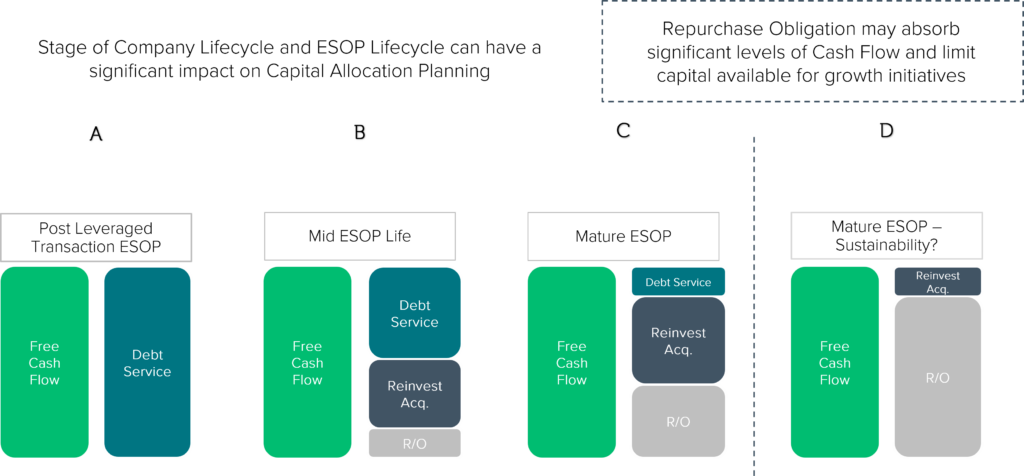
Figure 1: Cash Flow Demands of an ESOP Over Time
This reality has led many ESOP companies to devote greater attention to long-term sustainability planning. In our experience, understanding how an acquisition, additional debt or changes in employee demographics may affect future capital needs can be just as important as evaluating the economics of the transaction itself.
ESOP-to-ESOP Mergers & Transaction Structures
Among the various transaction types available to ESOP companies, mergers between employee-owned businesses present a unique set of opportunities and challenges.
The basic structure is relatively straightforward. A transaction may begin with a letter of intent between an acquiring company and a target company or shareholder. The target ESOP ultimately exchanges its shares for shares of the acquiring company, after which the ESOPs are combined.
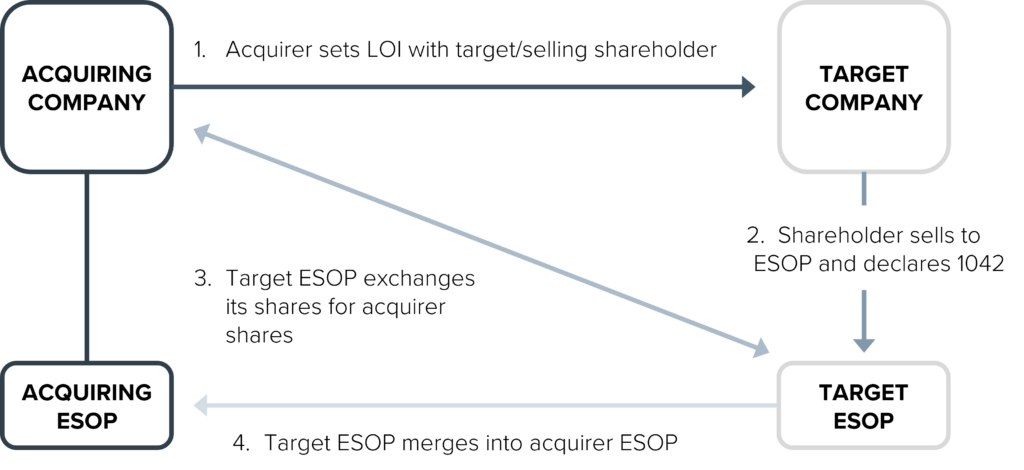
Figure 2: ESOP-to-ESOP Merger – Basic Structure
The exchange ratio is often at the heart of an ESOP-to-ESOP merger because it determines the relative ownership of the combined company. Establishing that ratio generally requires transaction-specific valuation analyses of both the Target and Acquiror. While the companies’ most recent annual ESOP valuations may provide useful reference points, they may not reflect current forecasts, market conditions, capital structures or other facts and circumstances existing at the transaction date.
Leadership and governance can be just as challenging. Over the years, we have seen otherwise attractive merger opportunities stall because the parties could not agree on leadership succession or the governance structure of the combined organization. In many cases, questions around leadership succession, Board composition and governance of the combined entity can prove every bit as important as the financial terms of the transaction.
These examples illustrate that ESOP-to-ESOP mergers involve considerations that extend beyond strategic fit alone. They also require agreement on valuation, governance, leadership and the long-term vision for the combined organization.
Maintaining the ESOP Vision During M&A
A successful transaction requires more than financial analysis.
Employees want to understand what a transaction means for them and how it may affect the company they helped build. Clear communication plays an important role in building trust during periods of uncertainty. That communication becomes even more important when a transaction introduces operational changes, new priorities or additional financial obligations.
Successful transactions tend to balance growth ambitions with the ongoing responsibilities that come with employee ownership. While a transaction may create new opportunities, it can also place additional demands on cash flow and organizational resources. Maintaining focus on long-term sustainability helps ensure that short-term strategic decisions support the broader goals of the ESOP.
When Selling an ESOP Company Makes Sense
Most ESOP companies are not built with the expectation that they will eventually be sold. Even so, there are certain situations where a sale can become the most reasonable path forward.
A sale is rarely driven by a single factor. More often, it reflects a combination of circumstances that have changed over time. In some cases, an attractive offer creates an opportunity that is difficult to ignore. In others, succession challenges, ownership considerations or growing repurchase obligation pressures may lead a company to reevaluate its options. Market conditions can play a role as well, particularly in industries experiencing significant consolidation.

Figure 3: Pros & Cons of Selling an ESOP Company
Selling an ESOP company involves trade-offs. A transaction can provide liquidity, reduce concentration risk and create opportunities through strategic partnerships. At the same time, it may bring changes to governance, culture and future ownership opportunities. Determining whether those trade-offs are worthwhile ultimately depends on the circumstances facing the company and its employee-owners.
Key Takeaways
In our experience, the most effective transactions begin with a clear understanding of why the deal is being pursued in the first place. Companies that approach acquisitions, mergers and sales with a disciplined process and a well-defined strategy are often better positioned to evaluate opportunities as they arise. M&A is a tool, not a strategy by itself. Used thoughtfully, it can help support growth, address succession challenges or strengthen long-term sustainability. Used without a clear purpose, it can become a distraction from the goals it was intended to achieve.
For ESOP companies in particular, the challenge is balancing those opportunities with the responsibilities that come with employee ownership. The transactions that tend to work best are those that align with the company’s long-term objectives while preserving a sustainable ownership structure for future employee-owners.
Will Hobby is a Vice President at Prairie Capital Advisors, Inc. He can be reached at 312.878.7308 or whobby@prairiecap.com. Darrell Smith is a Vice President at Prairie Capital Advisors, Inc. He can be reached at 810.399.6766 or dsmith@prairiecap.com.
Download the full article above.


