
This page was updated in August 2024 to enhance readability and accessibility. All content from the newsletter is now fully integrated into this page, allowing readers to access the information directly here.
Overall M&A Market Commentary
The middle-market M&A activity levels reached a low point in 1Q23. Since that time, the M&A volume for the last three quarters of 2023 moved slightly higher but not much above the lowest activity levels observed in 2023. The data for 1Q24 shows that both the dollar value and the number of middle-market M&A deals have continued to move sideways. There has not been much improvement from the activity for the last three quarters of 2023. There is no clear indication that activity will pick up in the near future. This lack of growth in deal flow is surprising since the economy is preforming reasonably well. The private equity (“PE”) funds and strategic buyers have ample resources and a desire to make acquisitions, and the business owner population is starting to “age out.” All these factors seem to suggest there should be more robust 2024 M&A deal activity, but it has yet to appear. One of the deal market bright spots is in corporate restructurings. Currently, business simplification has a new focus in corporate boardrooms which is leading to more corporate divestitures. Many companies are addressing their current business portfolio and taking the opportunity to prune and refocus their overall businesses. While the number of these deals are increasing, it is not leading to an increase in overall M&A volume. The Fed’s past inflation fighting interest rate increases, which ended about a year ago, are starting to gain traction to slow the economy. GDP growth was 2.5% for 2023, up from 1.9% GDP growth recorded in 2022. GDP growth has started to decline in 2024, moving in 1Q24 to 1.3% signaling that perhaps the economy has started to slow. Since June 2023, there have been seven Fed Open Market Committee meetings where the Fed neither raised or lowered rates. Clearly continuing higher interest rates for longer is disappointing, but the current interest rate environment is not out of line with historical interest rates.
Furthermore, businesses are beginning to adjust to the higher interest rate environment. Chairman Powell has noted that they are carefully considering rate cuts on a “meeting by meeting” basis with “data leading the way.” and will make cuts when they are comfortable that inflation is on a trajectory to hit 2.0%. The June inflation report may be the data the Fed needed. For the first time since May 2020, the monthly inflation rate dipped into negative territory in June. This means that the overall price measure actually declined in June, rather than just having the rate of growth decrease from the previous month, a very important distinction. The June 2024 consumer price index (“CPI”) declined 0.1% from May, producing an annual CPI rate of 3.0%, two long years after peaking at 9.0% in June 2022. While there is progress in the broad CPI measure of inflation in the economy the individual components of the CPI, like food and shelter costs, are still stubbornly high and these components tend to impact the lower end consumers more than other CPI elements. However, the Fed’s preferred inflation measure is the Personal Consumption Expenditures (“PCE”), which will not be released until later in July. The Fed was looking for reasons to start reducing interest rates and this positive development on CPI, if supported by a similar movement in the PCE later in July, may help further convince the group of Fed Governors to move on interest rates.
Under the “dual mandate,” the Fed is “to promote maximum employment and stable prices.”
In addition to inflation, the Fed also concerns itself with employment. The June jobs report showed a steady labor market with a slowing pace of new job creation. The employment gains through in 2Q24 were the slowest pace since the end of 2020, further reflecting that the Fed policy is slowing the pace of jobs growth and the overall economy.
According to The June Challenger Report, June’s job cut total marks the third time this year that job cut announcements are higher than the corresponding month one year prior. The unemployment rate moved up to 4.1%, the highest rate since 2020 and marking the third increase in the last three months. These soft labor market results are welcome indications that the Fed’s inflation fight has been effective and could lead to lower interest rates sooner rather than later. The moderately slowing economy is having an impact on the middle-market business physique. The National Federation of Independent Business (“NFIB”) Small Business Optimism Index released in June 2024 moved higher but marks the 30th consecutive month of being below the 50-year average. “Main Street remains pessimistic about the economy for the balance of the year. Increasing compensation costs has led to higher prices all around. Meanwhile, no relief from inflation is in sight for small business owners as they prepare for the uncertain months ahead,” said Bill Dunkelberg, NFIB Chief Economist. Business pessimism may be one of the reasons for a lack of volume in the M&A market.
While the Optimism Index is below the average, the measure is increasing month by month which is a positive sign. Consumer spending makes ups about 70.0% of the Gross Domestic Product and is therefore the driver of the U.S. Economy. The University of Michigan Surveys of Consumers in June 2024 held steady with the first three months of 2024. According to the report, “While consumers exhibited confidence that inflation will continue to moderate, many expressed concerns about the effect of high prices and weakening incomes on their personal finances.” The consumer continues to drive the economy, but higher prices and the maintenance of their income continues to be their primary concern.
Even with a slowing economic environment, declining but still persistent inflation and now, an uncertain political environment, the current market presents owners with a significant opportunity to consider selling their businesses. Private equity (“PE”) firms have abundant, time limited investment capital to put to work. Strategic buyers are well capitalized and still looking for growth opportunities. The demand for deals outstrips the number of willing sellers with good quality companies. This is a “flight to quality market” where buyers have a keen interest in high-quality acquisition opportunities. In this environment well-prepared companies with sound business fundamentals will command broad buyer interest. Due to the extended period over which private company M&A market data is collected, there is a one-quarter lag in our information. As a result, the market commentary reflected below is generally limited to the data through 1Q24. Any 2Q24 data included in this edition to expand trend lines is still preliminary and will be reviewed in detail in the next quarterly newsletter.
M&A Market Activity
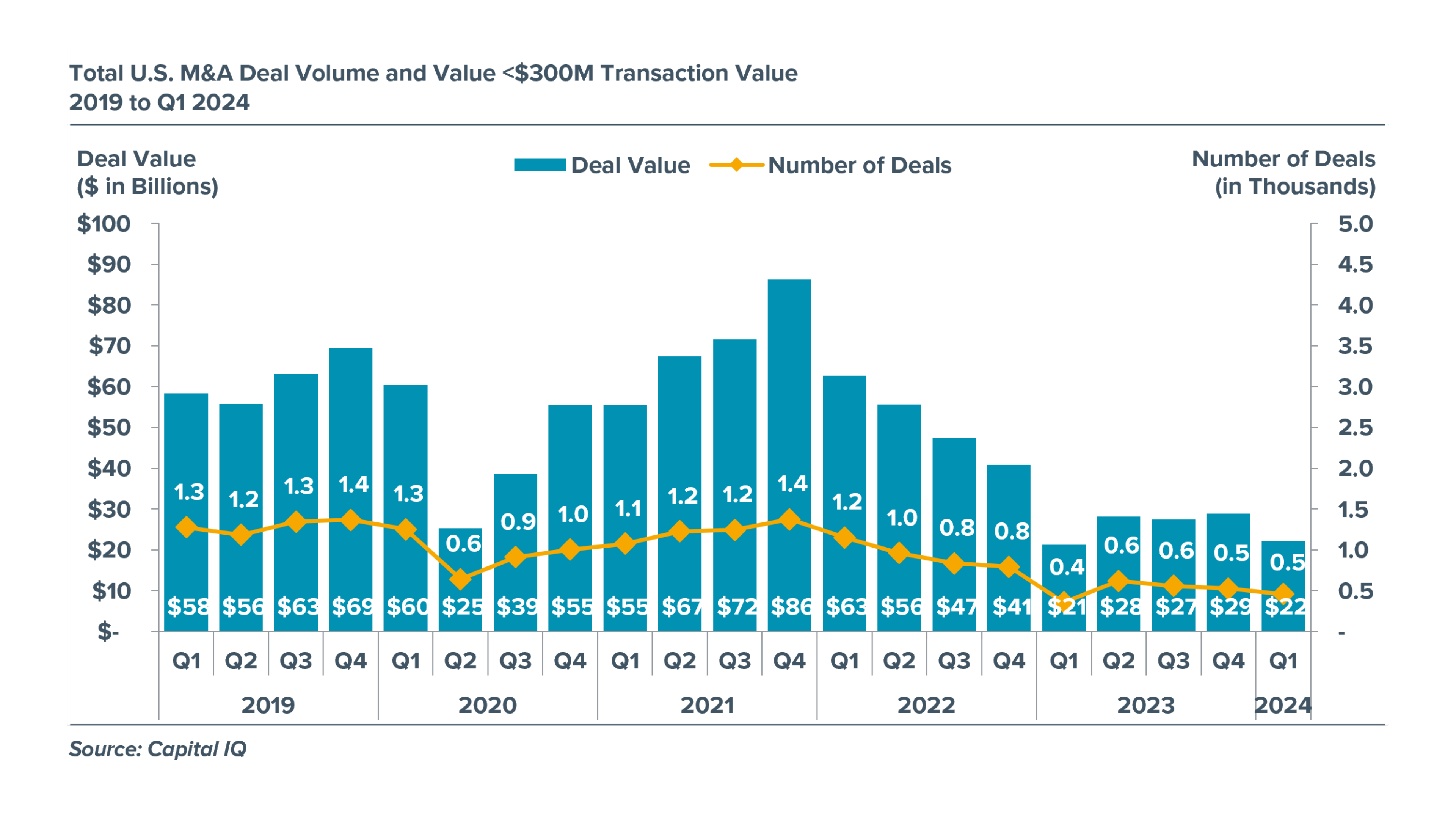
According to our market data, since the COVID-19 pandemic, middle-market M&A deal activity reached its lowest point in 1Q23. While the deal volume for middle-market sized companies has rebounded slightly from that low point, the deal activity has remained near the low levels experienced at the absolute bottom of M&A market during the 2020 pandemic. So far in 2024, deal activity continues to be anemic and appears to have moved slightly lower in 1Q24.
Further, our preliminary 2Q24 data shows a continuing deterioration and even lower levels of 2024 activity. Stubborn inflation, elevated interest rates, increased regulatory scrutiny and other factors have taken a toll on middle-market business optimism, which is a problem. The Fed’s efforts to reduce inflation by slowing business activity are working but these efforts have also affected the M&A market. Executive optimism is an important ingredient to have when considering taking on the risks associated with an acquisition. Until business optimism improves, the M&A market is likely to move sideways. There is a potentially significant factor that may serve to offset the current lack of business optimism. According to the U.S. Small Business Administration there are 33.3 million small businesses in the country making up 99.9% of all U.S. businesses. A January 2024 Forbes report suggested that about 40.0% of these businesses are owned by baby boomers. Getting older and “aging out” is a situation that all these boomer businesses will face in the next few years. The aging private business owner population has produced a wave of shareholder transition transactions that must occur whether deal market conditions improve or deteriorate.
We believe this emerging wave has led to a compression of valuation “bid-ask spread” between what buyers will pay and what sellers will accept in 2024. This increases the probability that deals can be consummated and lead to an increased volume of transactions in the future. In 1Q24, $22.0 billion of middle-market deals were recorded, down 24.1% from the value in 4Q23 and in quarter-over-quarter comparisons, 1Q24 deal value was up 4.8% compared to 1Q23. The number of middle-market deals closed in 1Q24 was approximately the same as the number of deals closed in 4Q23. In 1Q24, deal volume rose 25.0% compared to 1Q23. The average middle-market deal size of $44.0 million in 1Q24 was much smaller than the average $52.5 million deal size closed in 1Q23 and lower than the average deal size of $58.0 million recorded in 4Q23. The trend in the current M&A market continues to be toward smaller deals and add-ons to existing companies because of the lower business risk profile of add-ons and the easier path to attract financing for smaller deals.
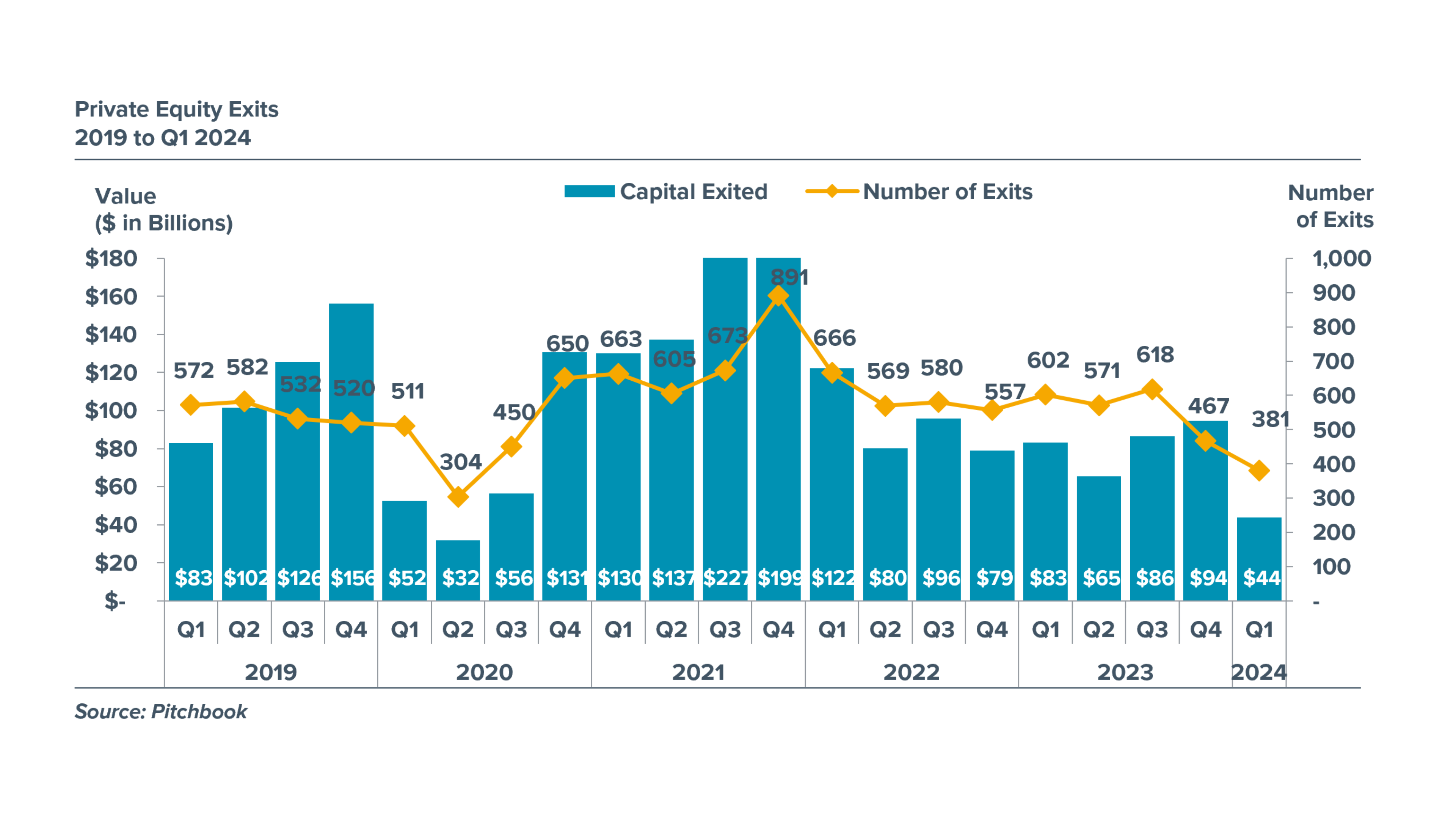
The PE exit data shows a slightly different trend in deal activity when compared to the overall M&A market. PE funds must deliver tangible results to their limited investors in the form of cash. As a result, they are motivated to sell portfolio companies even when market conditions are suboptimal. Deal volume in 2023 escalated quarter by quarter as funds sold portfolio companies toward the end of the year to realize some of their portfolio gains. While 2023 market conditions were not ideal, the dearth of M&A deal activity and the lack of deal supply provided PE sellers some negotiating leverage on valuations and deal terms. This surge of 4Q23 PE sales, pulled many deals forward and led to a significant drop in 1Q24 exit activity. PE exit activity in 1Q24 measured by the number of deals was down 18.4% from 4Q23, while the dollar value of PE exits was down 53.5% for the same period. The ramp in deal activity during 2023 shows that PE sellers took advantage of the scarcity of deals and sold the more marketable assets to realize gains in their portfolios in 2023. However, that late 2023 surge may have exhausted the supply of readily salable PE companies in 2024. Even with lower M&A market activity and more cautious buyers, both strategic and financial buyers continue to look for deals in the M&A market. Elevated borrowing costs and perceived business uncertainty are causing buyers across the spectrum to be more decerning in making acquisitions. Sellers with quality companies and good financial performance are still receiving strong buyer attention. These companies can still receive reasonable enterprise valuations if they are prepared to manage a competitive sales process and can withstand a more rigorous due diligence scrutiny.
Middle Market Deal Valuations
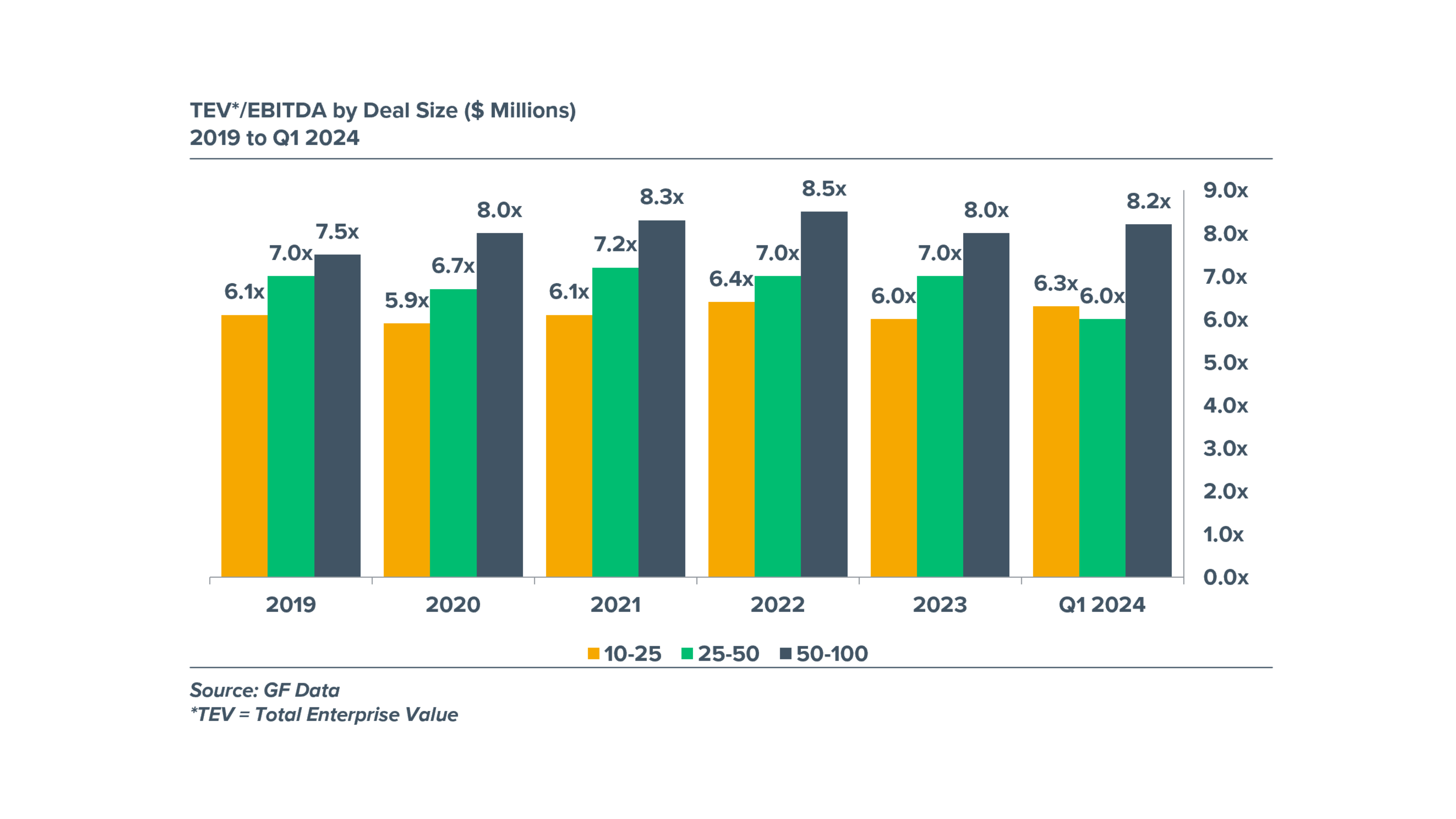
PE funds have abundant committed capital and strategic buyers continue to cautiously seek growth through acquisitions. The reduced volume of M&A activity has produced a smaller pool of new deals, leaving the demand for quality acquisitions unsatisfied. This supply-demand imbalance provides sellers with an opportunity to maximize their valuations. However, in this cautious market, only higher quality companies can establish some semblance of control over their valuations. Market uncertainty and conservative financing markets have forced buyers to be more measured in making offers for all but the best acquisition opportunities. Sellers have started to recognize the change in market dynamic and have lowered their valuation expectations and are starting to enter the market. As stated in previous editions of the Prairie Middle Market Perspectives (“PMMPs”), it appears that only the good quality, clean deals make it to closing in the current market. As a result, we believe the valuation statistics may be skewed higher because they represent mostly the best deals making it to a closing. The annual valuation data shows a decline in valuations during 2023 on both the low and high end of the middle-market deal spectrum, following the 2022 valuation market peaks in these size categories. The 1Q24 valuation information shows a slight valuation recovery in these size categories. Deal valuation multiples for the sub-$25.0 million category in 1Q24 came in at 6.3x, slightly above the long run average for this size category and but below the 2022 level, which was the market peak for this size category in the last five years. Deal valuation multiples for the large middle-market, the above $50.0 million category, came in at 8.2x in 1Q24, slightly above the long-run average for this size category and below 2022’s market peak. Finally, the 1Q24 valuations in the $25.0 to $50.0 million, middle segment were recorded at 6.0x, well below the five-year average of 7.0x.
Private Equity versus Strategic Valuations
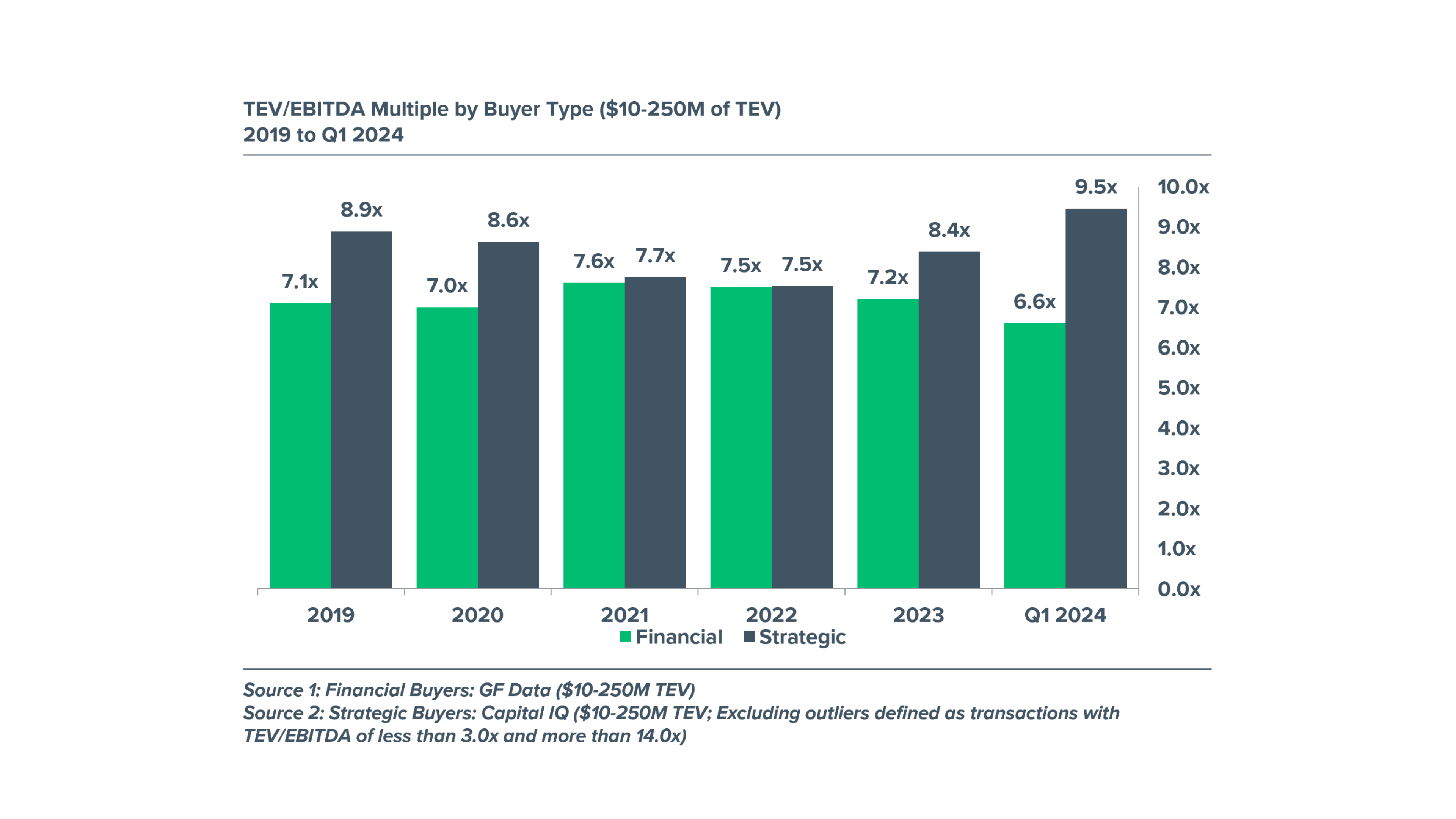
PE owned strategics and other strategic acquirors are major factors in the M&A market, comprising two thirds of all deals closed during the last decade. Synergistic cost savings, access to new customers and other revenue enhancement opportunities provide strategic buyers with the ability, but not the need, to pay more than the typical financial buyer. Since 2020, the size of the strategic premium has declined to almost zero and that continued in 2023. In addition, consistent with our size-related valuation data, the 2023 PE versus strategic acquiror data shows that valuations paid by both financial and strategic buyers are trending lower.
- As noted in previous PMMPs, strategic buyers are very active in middle-market M&A. In the post pandemic years of 2021 and 2022, strategic buyers, on average, paid little strategic premium over the PEs for their acquisitions. Our 2023 data shows a continuation of that trend. In 2023, strategic buyer valuations of 7.5x were well below the 5-year trend level of 8.3x.
- Over the last five years, EBITDA multiples paid by PE buyers have remained in a range centered around 7.3x. The full year 2023 valuation data indicates that PEs are currently paying on the long run trend level for new deals.
- Our historical M&A valuation data shows strategic buyers tend to pay a premium compared to PE firms’ valuations. The 4Q23 data, consistent with recent trends noted earlier, shows that the current strategic premium is very low, well below the average premium levels of 1.5x of the pre-pandemic years.
- Prairie estimates that, for deals below $50.0 million, middle-market valuations are between one and two multiples of EBITDA lower than the levels reflected in the chart below.
Middle Market Leveraged Buy Out Capitalizations
The low confidence in long run economic conditions during 2023 and the anticipated recession which never arrived, produced a more conservative lending environment last year. Recession fears have subsided during the first six months of 2024 with reasonable GDP growth and generally strong public equity markets. The bank lending markets remain skittish with smaller regional banks avoiding leveraged cash flow lending deals. Fortunately, the private credit markets (Business development corporations and other lending-oriented funds) are picking up the slack. These private credit lenders are moving to a more “risk on” lending profile and providing slightly more aggressive lending terms for high quality issuers. Even though lending terms are improving, the amount of equity required in a leveraged capital structure remains near 50.0%, representing a relatively conservative capital structure.
Private credit, asset-based lenders (“ABLs”) and mezzanine lenders continue to be active participants in more aggressive deal situations. In addition, competition for deals is forcing the private credit funds to reach outside of the PE deal sponsor community and lend into non-PE deals as well.
The growing private credit participation in the current lending market is leading to improved debt availability, more aggressive lending terms and in some cases lower credit spreads. Even with better terms the maximum debt component of a deal is around 50.0% of a typical leveraged capital structure.
Commercial bank lenders are aggressively pursuing more credit worthy borrowers and forcing the lesser quality lending opportunities to the more expensive private credit and ABL providers. While private credit and ABLs are becoming more active in the market, their loans are more expensive and have a greater debt service cost, thus further reducing the amount of debt that can be used in a capital structure.
Mezzanine funds are active in leveraged transactions. This capital has a high interest rate that can stress a company’s cash flow. Mezzanine is increasingly a critical component of a middle-market buyout capital structure when senior debt capital is harder to find. Interest-only and payment-in-kind (“PIK”) structures still dominate the markets, but in the current environment, the use of equity co-investment structures help match mezzanine returns with deal risk profile structures help match mezzanine returns with deal risk profile.
Overall Comment on the Financing Markets
The Fed’s inflation fighting activities moved from rate increases to “observation” in late 2023 and early 2024 as the Fed evaluated the inflation reports and chose not to change interest rates for almost a year. There have been seven opportunities to move rates lower and seven Open Market Committee meetings where policy makers chose to hold interest rates steady. As of early July 2024, it has been 12 months since the Fed last raised the benchmark interest rates. While it is widely believed that the U.S. economy is stable and not likely to tip into recession, economic activity was deemed too strong to warrant cutting interest rates from the current levels. However, within the last two months, inflation and jobs reports seem to show a slowing economy that might lead to one or two rate cuts later this year.
As we noted in previous PMMPs, the Fed has made significant progress in decreasing inflation from a high of 9.1% in June 2022 to 3.0% reported in June 2024. That first portion of inflation reduction was the easy part. The last part, moving from 3.0% to 2.0%, is taking much longer to accomplish. In the past, the Fed has cautioned the market will keep interest rates at the current levels until they are sure that inflation is in an acceptable zone.
However, in prepared remarks before his appearance on Capital Hill on July 10th, Chairman Powell stated, “At the same time, in light of the progress made both in lowering inflation and in cooling the labor market over the past two years, elevated inflation is not the only risk we face. Reducing policy restraint too late or too little could unduly weaken economic activity and employment.” It would appear as though the Fed is signaling some sort or rate reduction later this year.
Even with interest rates at the current levels, M&A buyers know their financing costs and are better prepared to understand their risk-return factors in making acquisitions. The deal market hates uncertainty. Knowing that interest rates will be at this level or potentially lower reduces uncertainty and makes it more likely that buyers will pursue new M&A deals.
The commercial bank lenders are still pursuing higher quality lending situations and more relationship-oriented deals. The private credit market is rapidly growing and will continue to expand and change the lending market over time. While segments of the lending markets have moved toward a more “risk-on” attitude, it is still a market where quality matters. More challenging deal situations and poorer quality borrowers will find little interest from lenders in this market. The private debt funds are stepping up to the more challenged borrowers, but the steep cost of capital demanded for these deals makes closing poorer quality deals difficult.
Preparation is key in this market. All borrowers should have documented business plans that show lenders how the company will react to higher interest rates, lower margins, changes to revenues and other business issues. Lenders want to be repaid, so borrowers must detail how they will make that happen. With proper preparation, good quality, credit-worthy issuers will be able to attract capital. Borrowers will have to be prepared for an extended financing process and potentially more conservative and expensive capital structures.
Total U.S. Middle Market Loan Issuance
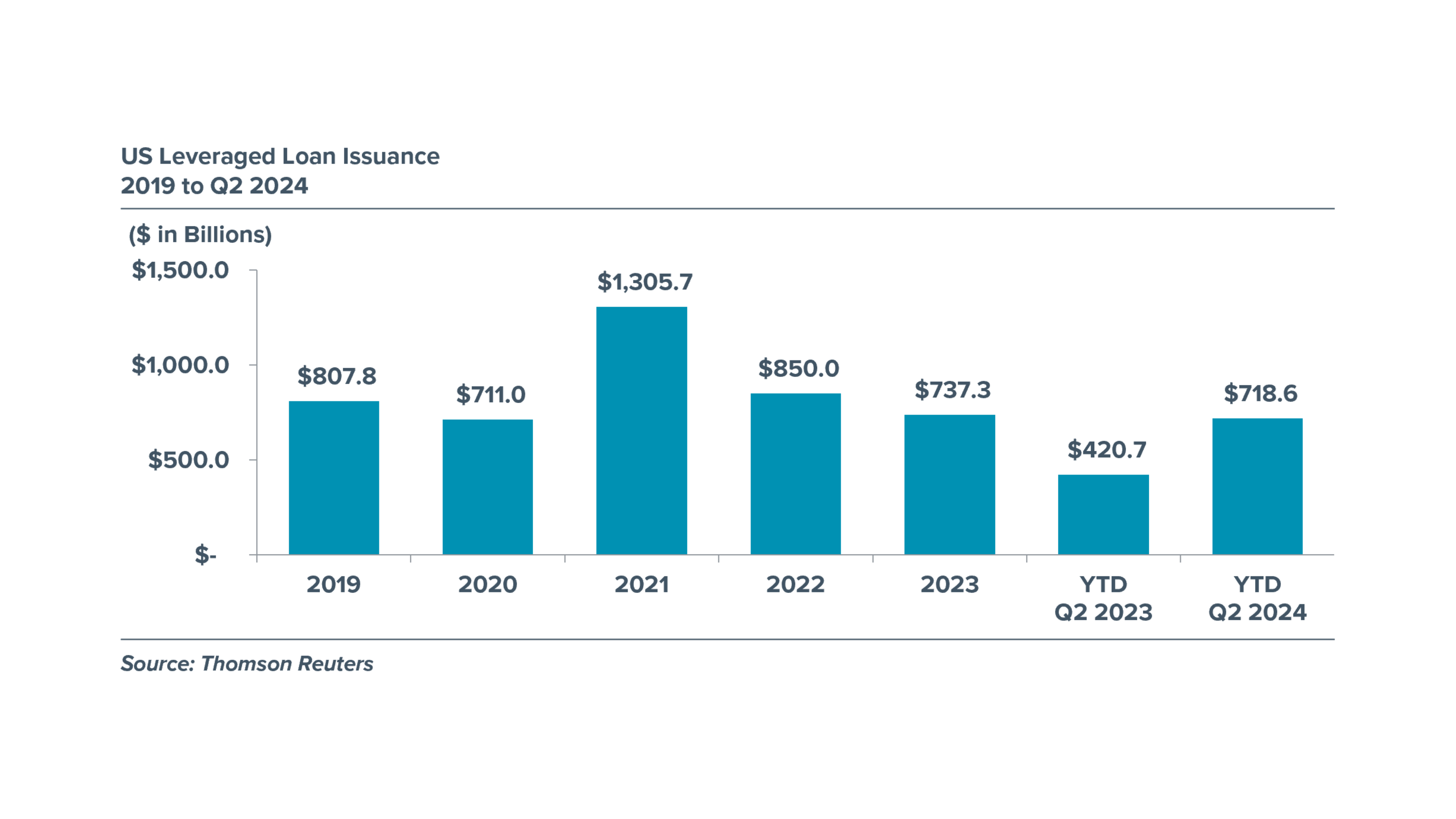
- U.S. Leveraged Loan issuance in 2023 dropped to $737.3 billion just barely exceeding the trough in volume of loans recorded in the pandemic year of 2020. The decline in leveraged loan issuance reversed dramatically in 2Q24, increasing to $718.6 billion just slightly below the total of leveraged loans in all of 2023.
- In 2Q24, recessionary fears have declined, and the interest rate environment has stabilized leading to more aggressive behavior by lenders on borrowing terms and credit spreads. Borrowers also become more comfortable with the current interest rate levels have increased their demand for new credit to fund growth, capital expenditure and M&A activity. As a result, deal flow in the credit markets has started to return to more normal levels as commercial banks and private credit lenders being more comfortable with the stabilizing interest rate environment and the economy, have been more aggressive in making new loans.
- Bank lenders continued to focus on relationship banking, corporate borrowers’ lines of credit and areas where they have a competitive advantage, such as operating business needs (including payroll and checking accounts). Due to the current economic environment, banks are cautious in making new loans and are very selective in new leveraged transactions. Private credit funds have taken up the slack but even this sector is focused on better quality loan situations.
Interest Rate Environment
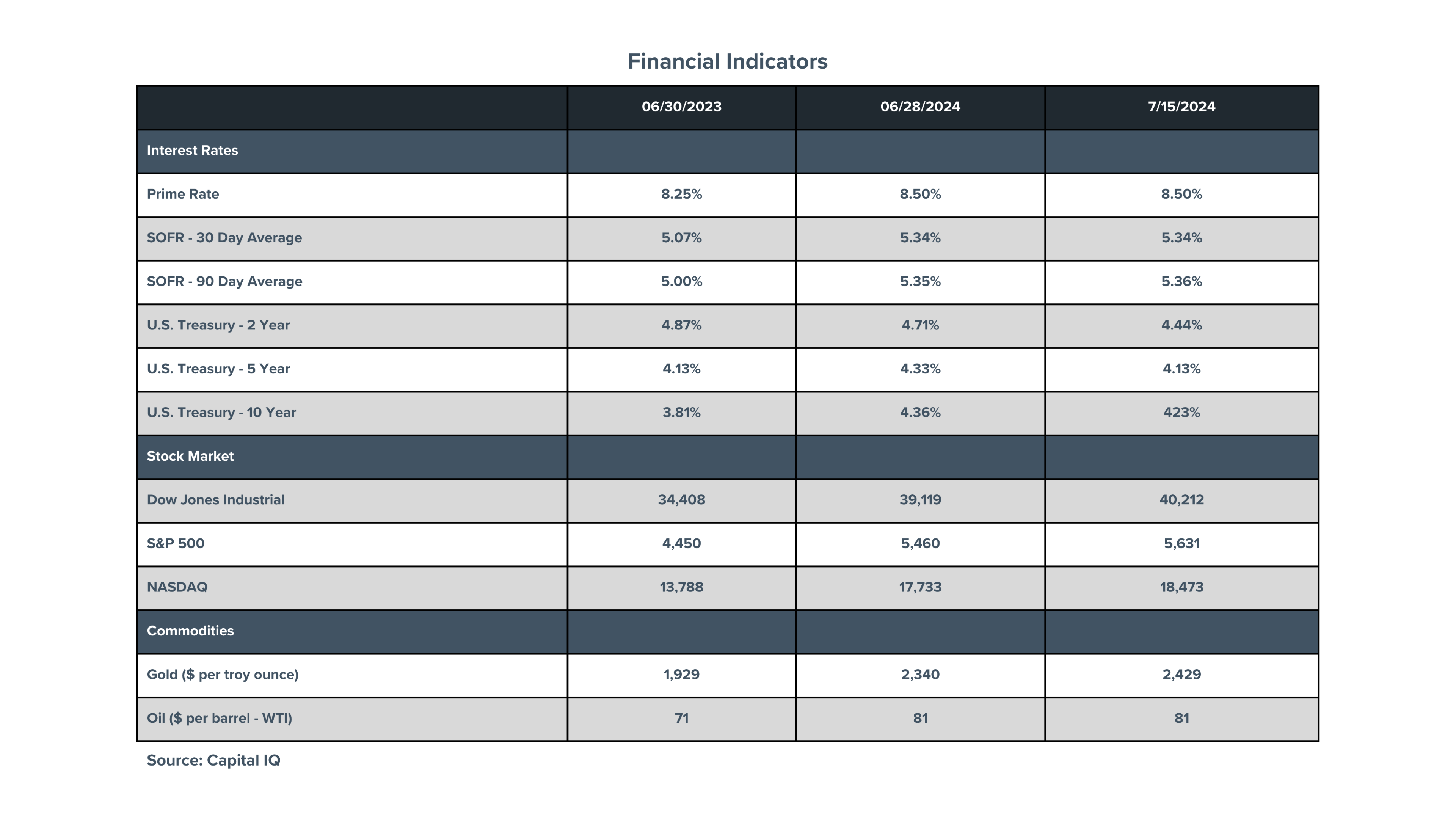
In the June 2024 Fed Open Market Committee meeting, the Fed held its benchmark rate at 5.25-5.50%. This was the seventh consecutive meeting where the Fed decided to leave rates unchanged and did not commence a benchmark rate reduction program.
The June CPI report showed an actual decline in prices of 0.1% rather than just a reduction in the growth rate of inflation. While the current CPI is 3.0%, it is still above the desired 2.0% level, but there is growing pressure on the Fed to reduce interest rates in 2024. The Fed’s preferred measure of inflation, Core PCE, is due in late July and if that measure improves as well, the Fed will have to move on interest rates. Progress on the inflation fight is being made, but the Fed wants more evidence that inflation has been tamed. Fed Chairman Powell stated, “It’s a consequential decision for the economy. And you know we want to get it right.”
Earlier in 2024, it was believed that the Fed would cut interest rates as many as six times this year. Now, it seems that the Fed could cut rates once or maybe two times potentially in September.
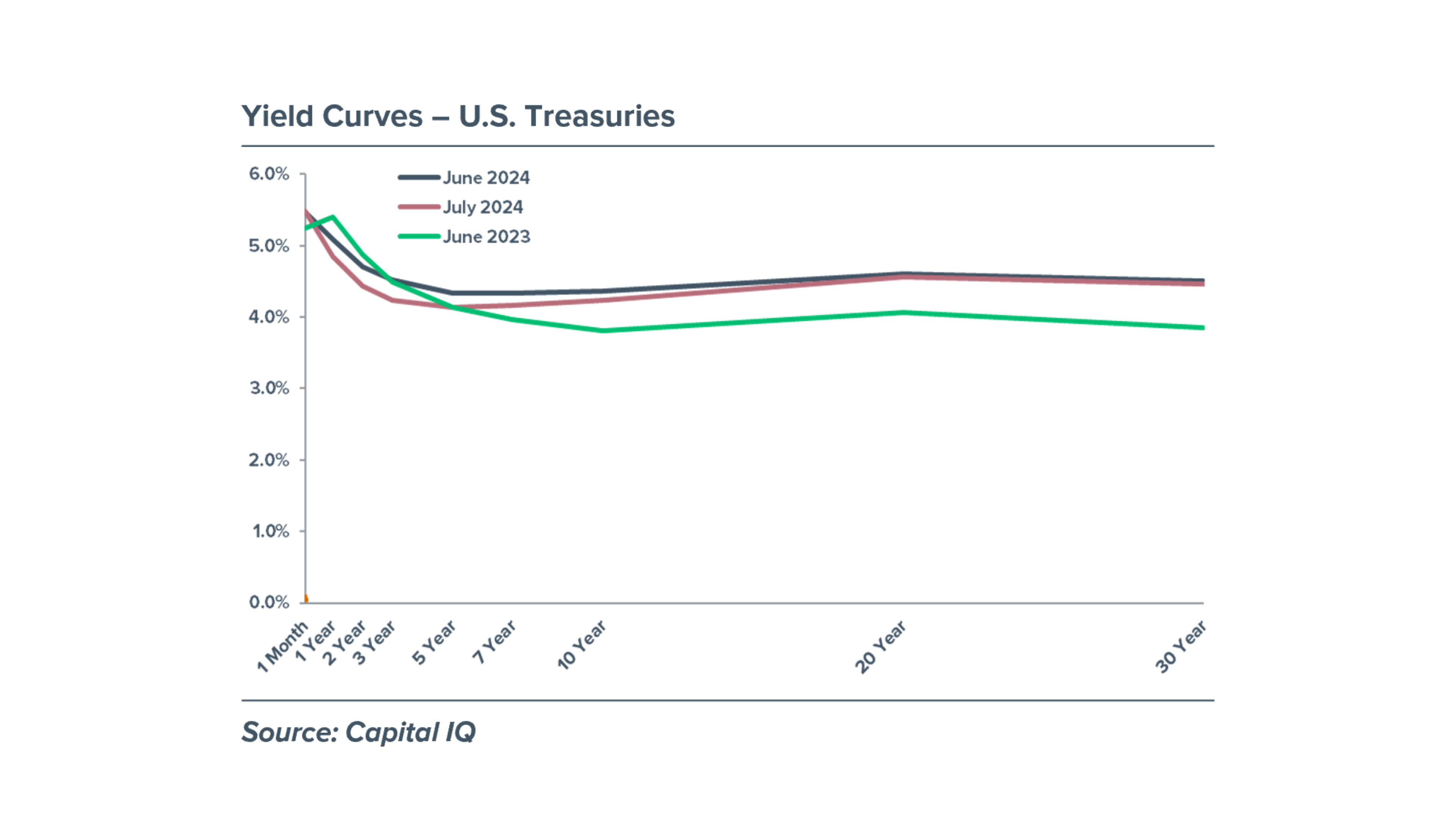
The slope of the yield curve at the end of 2021 was upward sloping, reflecting increasing but, at that time, normal inflation expectations. The 2-year to 10-year Treasury differential was a positive 79 basis points at the end of 2021. At the end of 2023, because of the Fed’s manipulations of the short-term Fed Funds Rate, that differential was shifted to a negative 35 basis points, resulting in an inverted yield curve. An inverted yield curve has historically been a harbinger of potential recessions. At the end of 2Q24, the 2-year to 10-year differential was still a negative 35 basis points, still inverted but closer to a more normal interest rate environment.
Middle Market Debt Multiples
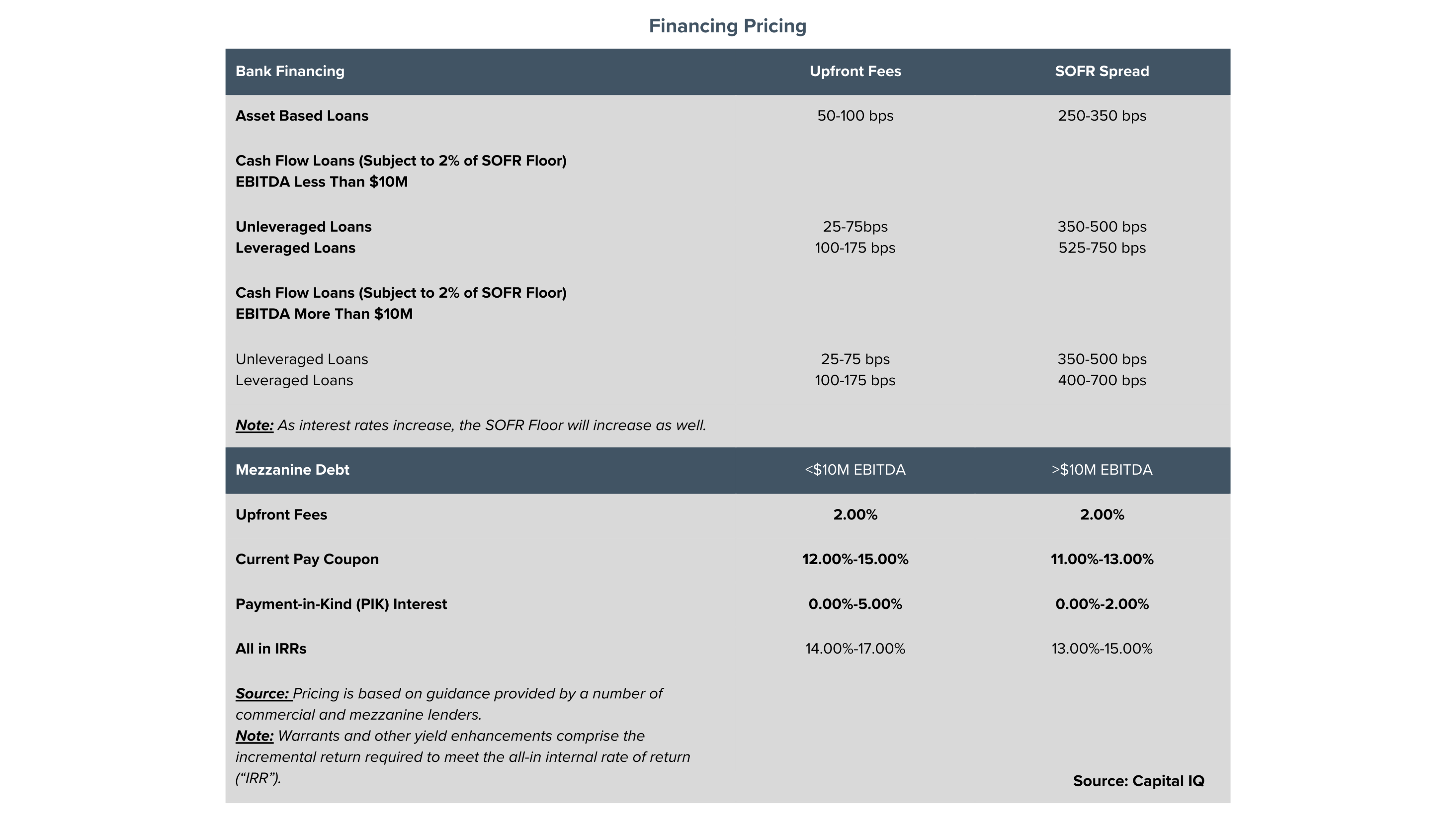
- Average total debt leverage in middle-market deals moved lower in 2023 to 3.6x, down from the 3.9x average in 2022. As noted earlier, the raising interest rates and business uncertainty lead to lower debt leverage multiples in 2023. Our 1Q24 data shows that leverage remains conservative scoring a 3.6x total multiple, the same as in 2023.
- Mezzanine capital continues to play a key role in leveraged capital structures. While mezzanine is more expensive capital than senior debt, its return structure matches the risk profile of companies operating in the current an uncertain economic environment.
- Over the past five years (2018-2023) and moving into 1Q24, mezzanine debt averaged about 0.7x EBITDA in the typical capital structure. In the post pandemic period, with the more conservative bank lending environment, mezzanine capital became a more significant, important component of the typical capital structure.
- More conservative senior debt lending markets and higher interest rate rates through 1Q24 have negatively impacted the amount of senior debt in the typical capital structure. Bank lending remains conservative, but private credit funds are filling the needs of less creditworthy borrowers, but at a price.

Terry Bressler is a Managing Director and can be contacted at 312.348.1323 or by email, tbressler@prairiecap.com.
Download the PDF above.
Let's Talk
Contact our Construction Industry Experts


