
Overall M&A Market Commentary
The M&A deal flow in the first half of 2025 has continued to decline from the already low levels seen in 2024. While the U.S. economy remains resilient and consumers keep spending at a high rate, the uncertainty caused by the new administration’s quick implementation of policy changes, along with ongoing tariff negotiations, has stalled the deal market. Uncertainty makes it difficult, if not impossible, to commit to and close deals.
The energetic efforts of the new Trump Administration continued into the second quarter of 2025. By the third week of July, it will have been six months since the administration took office, and it remains focused on fulfilling its economic campaign promises. For example, the Department of Government Efficiency (“DOGE”) continues to work toward reducing wasteful spending, even though Elon Musk is no longer leading it. The President and his team have made progress in tariff negotiations, forming several agreements and collecting nearly $100 billion in tariff revenues during the first half of 2025. Additionally, on July 4, after passing through Congress, the President signed the “One Big Beautiful Bill,” which extends the 2017 tax cuts and introduces additional measures believed to boost the economy. The President is clearly keeping his campaign promises, and now it remains to be seen what results these policies will produce. Although uncertainty often hampers M&A activity, there is now a clearer understanding of the administration’s objectives, which may lead to an acceleration of M&A activity later in 2025.
Aside from its economic activities, the new administration has also scored notable wins in foreign policy. Previously, NATO countries agreed (even though few of these nations have historically done so) to allocate 2.0% of their individual GDP to NATO defense. After pressure from the U.S. at the 2025 NATO Summit, the countries committed to increasing their defense contributions to 5.0% of their GDP by 2035. Additionally, in June, the U.S. significantly damaged Iran’s nuclear program with “Operation Midnight Hammer.” While none of these foreign policy efforts directly affected the M&A market, they shifted attention away from ongoing issues with DOGE, tariffs, and immigration.
The tariffs have challenged many experts’ predictions. On April 2, known as “Liberation Day,” a comprehensive import duty package was announced. These tariffs initially brought uncertainty and were expected to raise inflation, hurt the labor markets, and cause a U.S. recession. However, so far, inflation has stayed below 3.0%, wage growth remains strong, employment is increasing, and the chances of a recession have lessened. The year is only halfway through, so much can still change; nonetheless, the impact of the tariffs on the economy may have been exaggerated.
Private equity (“PE”) firms have abundant, limited-time investment capital to deploy. Additionally, strategic buyers are well-funded and actively pursue growth opportunities. The overall demand for deals exceeds the number of willing sellers with quality companies. Due to market uncertainty, this is a “flight to quality” environment where buyers are especially interested in high-quality acquisition opportunities. In this environment, companies that are well-prepared and have strong business fundamentals will attract widespread interest from buyers.
Because private company M&A market data are collected over an extended period, our information experiences a one-quarter delay. Consequently, the market commentary below generally covers data up to 1Q25. Any 2Q25 data used to extend trend lines in this edition remains preliminary and will be thoroughly reviewed in the next quarterly newsletter.
M&A Market Activity
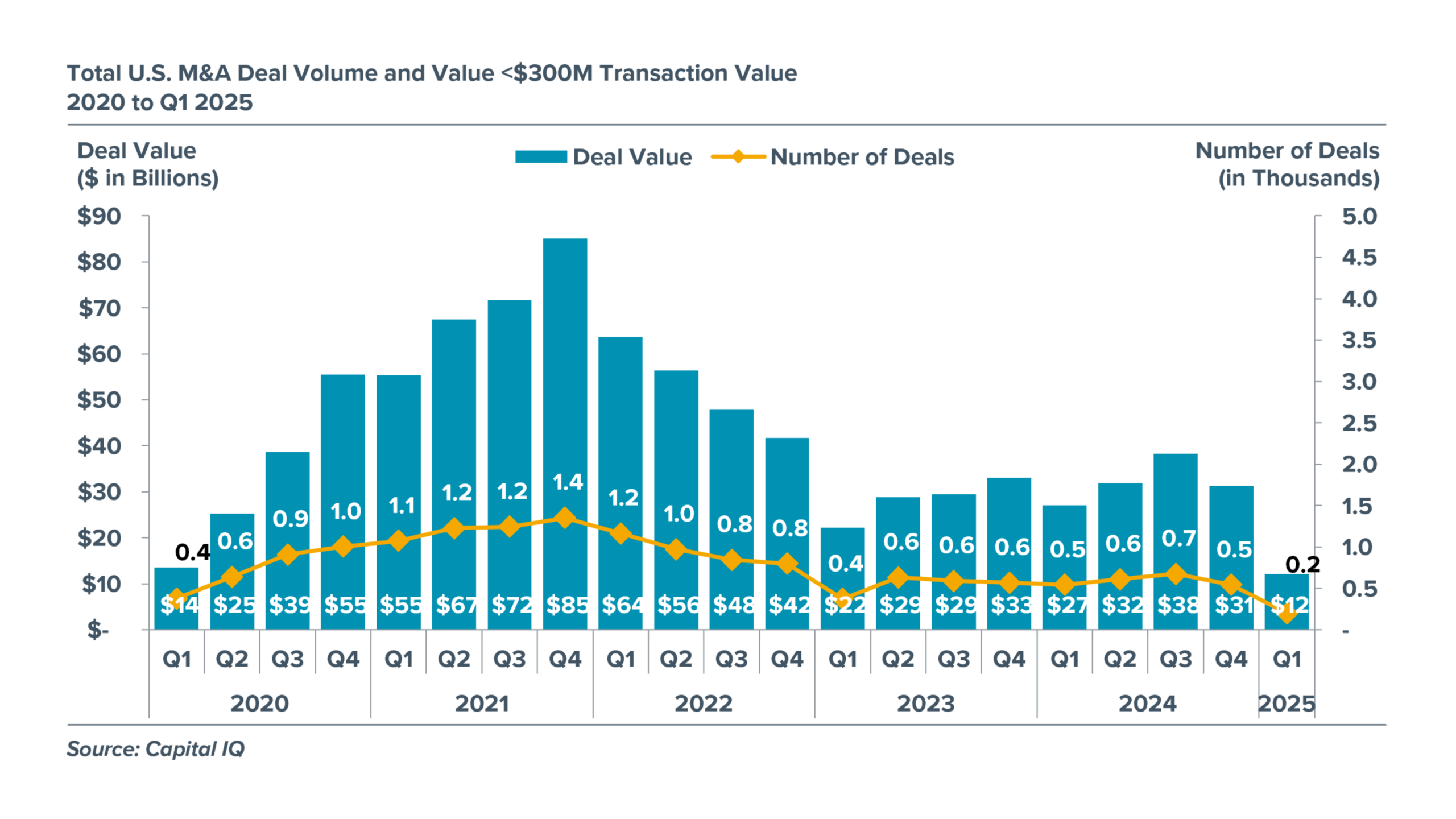
The M&A market peaked in 2021, rebounding from the slowdown caused by the pandemic. It then gradually declined from that peak in 2022, remaining at low levels of activity, as measured by deal counts and dollar volume, in 2023 and 2024. The market continued to weaken in early 2025 as sellers and buyers delayed deal activity to observe the impact of policy changes implemented by the new presidential administration.
The National Federation of Independent Business (“NFIB”) Small Business Optimism Index increased by three points in May to 98.8, exceeding the 50-year average of 98.0. Meanwhile, the NFIB Uncertainty Index grew to 94 from 92, staying above the historical average of 68. Business optimism remains strong, likely due to the new administration; however, business uncertainty also persists, probably because of the administration’s tariff and policy changes. Uncertainty hampers the M&A market, as reflected in our deal market data. The quick pace and volume of policy shifts, along with tariff negotiations, cause significant uncertainty in the M&A market. Until there is more clarity on the outcomes of these changes, the M&A market is likely to stay stagnant.
Despite these challenges, M&A activity remains fairly active. PE funds and strategic buyers have plenty of resources to support deals. These groups need to ramp up their deal-making efforts and enter the M&A market to utilize their resources and achieve returns. Moreover, the population of business owners continues to “age out” and will need to seek liquidity by selling their businesses. Additionally, the need for PE funds to exit their older portfolio companies will increase the deal supply in the M&A market. With strong deal demand and expected growth in the number of salable companies, signs indicate the M&A market may pick up in late 2025 once uncertainty is resolved.
In 1Q25, $12.0 billion in middle-market deals were recorded, a notable decline from the value reported in 4Q24. On a quarter-over-quarter basis, the dollar value of deals in 1Q25 decreased by 61.3% compared to 4Q24.
Similarly, on a quarter-over-quarter basis, the number of middle-market deals closed in 1Q25 dropped significantly from those closed in 4Q24. The number of deals closed in 1Q25 decreased by 60.0% compared to the total number of deals closed in 4Q24.
The average middle-market deal size of $60.0 million in 1Q25 was 3.2% smaller than the average $62.0 million deal size closed in 4Q24 and larger than the average $54.0 million recorded in 1Q24. Lower-middle-market M&A deals are gradually shifting toward larger transactions.
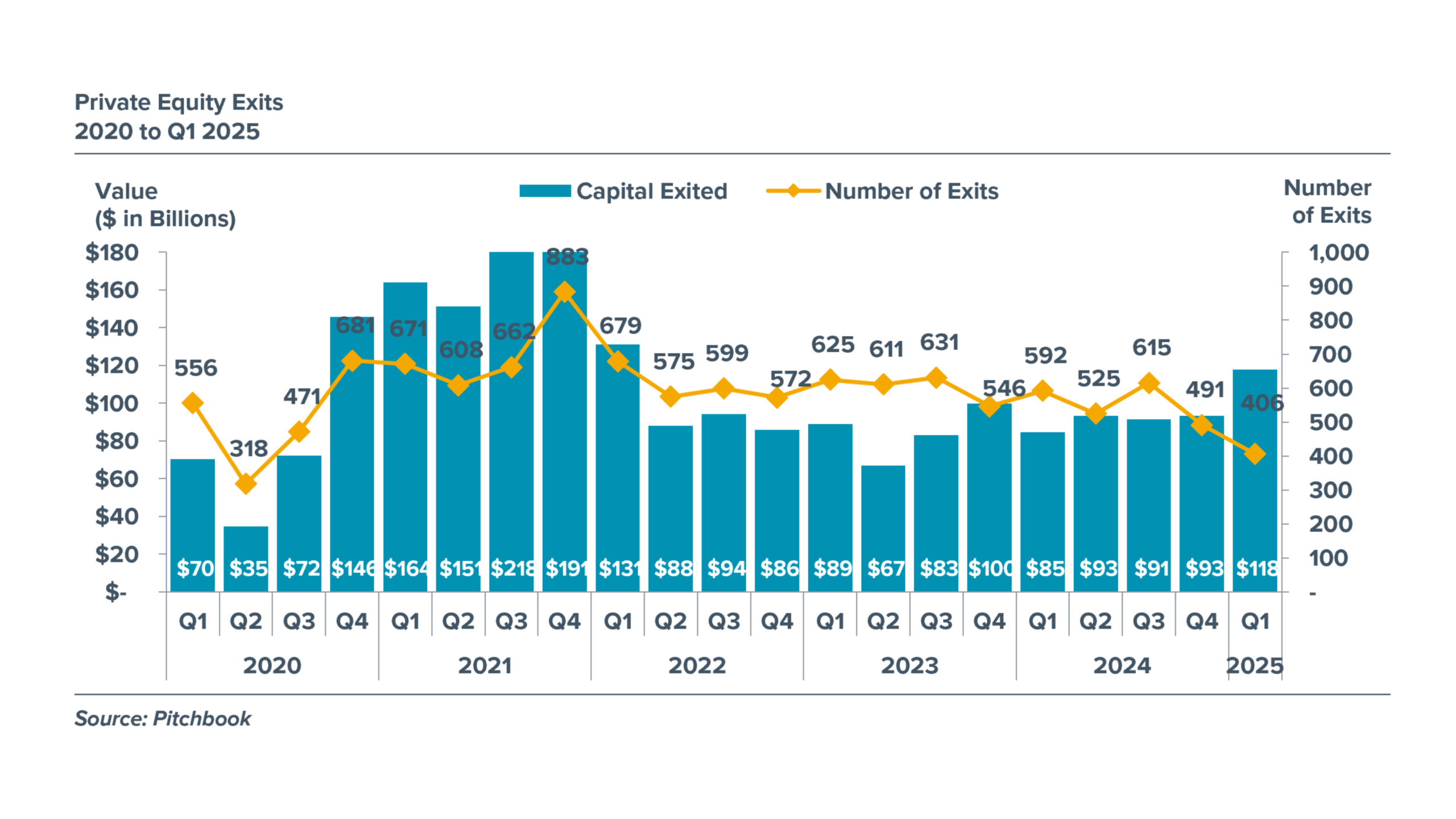
PE exit activity mirrors overall M&A deal trends but does not show a sharp drop in deal volume in 1Q25. In 1Q25, PE exits by dollar value increased by 26.2% compared to 4Q24, while the number of PE exits decreased by 17.3% from the same period. This suggests that PEs are selling larger, higher-value portfolio companies. Our initial 2Q25 data reveals a noticeable decline in PE deal activity through June. PE funds remain behind in returning cash to their limited partners, which could explain the higher deal volume. Limited partners need their cash back, and the funds appear to be meeting that demand.
PE funds serve as the “professional buyers and sellers” of businesses and must engage in deal activity across all types of markets. Consequently, they often take the lead in the M&A market. PE funds strategically pursue both the acquisition and sale of portfolio companies, either at the portfolio company level, when the asset is most sellable, or at the fund management level, when the fund seeks to realize its investments and return capital to its investors. Typically, PE funds have limited timeframes, usually 10 to 12 years, within which they must invest their committed capital and “harvest” these investments to return cash to their limited partners. This creates a sense of urgency in PE fund management.
According to Pitchbook data, the median holding period for a PE portfolio company reached an all-time high of 8.2 years in early 2025. Pitchbook also reports a backlog of over 12,500 unsold portfolio companies, including more than 4,000 that have been in the portfolio for over 5 years. These companies indicate future deal activity.
Even in this environment, strategic and financial buyers continue to seek opportunities in the M&A market. Buyers of all types are becoming more cautious and thorough in their acquisitions. Sellers with high-quality companies and strong financial results are attracting significant interest from buyers. Preparation is essential for business sellers to attain fair enterprise valuations, manage a competitive sales process, and navigate more rigorous due diligence.
Middle Market Deal Valuations
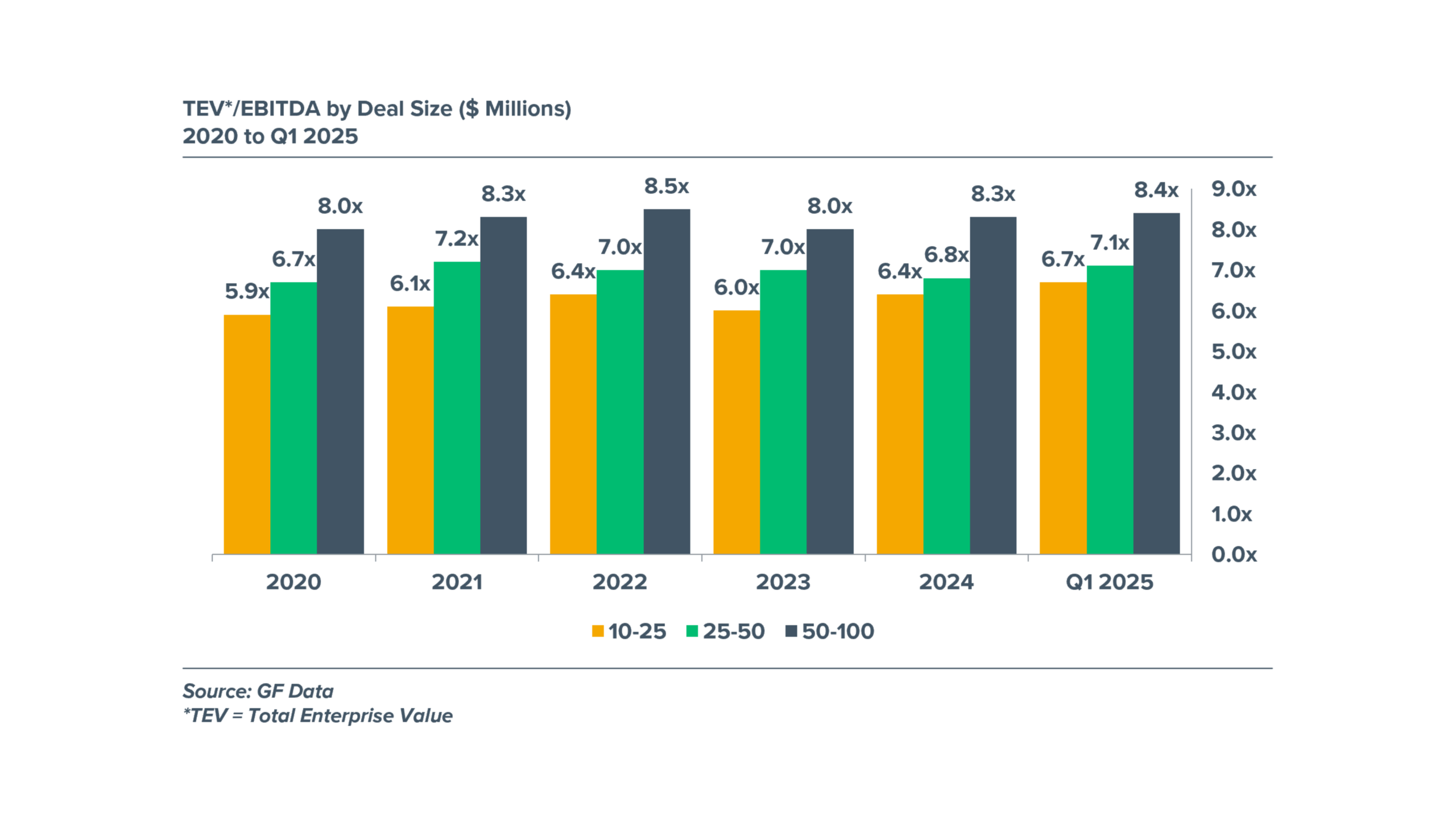
M&A deal valuations have stayed consistent over the past few years, with 1Q25 valuations remaining within that range. The data might be inflated because higher-quality, more straightforward deals with the highest valuations are closing in the current market.
Deal valuation multiples for the sub-$25.0 million category in 1Q25 were 6.7x, above the long-run average of 6.2x for this size category.
Deal valuation multiples for the large middle-market category, above $50.0 million, came in at 8.4x in 1Q25, slightly above the long-run average of 8.2x for this category.
Finally, the 2024 valuations in the $25.0 to $50.0 million middle segment were recorded at 7.1x, slightly above the five-year average of 6.9x.
PE funds have ample committed capital, and strategic buyers continue to cautiously pursue growth through acquisitions. The decline in M&A activity has led to a smaller pool of new deals, keeping high-quality acquisition opportunities in demand and valuations high. This supply-demand imbalance offers sellers a chance to maximize their valuations. Since acquirers are very cautious, thorough preparation for a detailed due diligence process is essential. Only the higher-quality companies can secure higher valuations, but they will achieve this through careful preparation and extended deal negotiations.
Private Equity versus Strategic Valuations
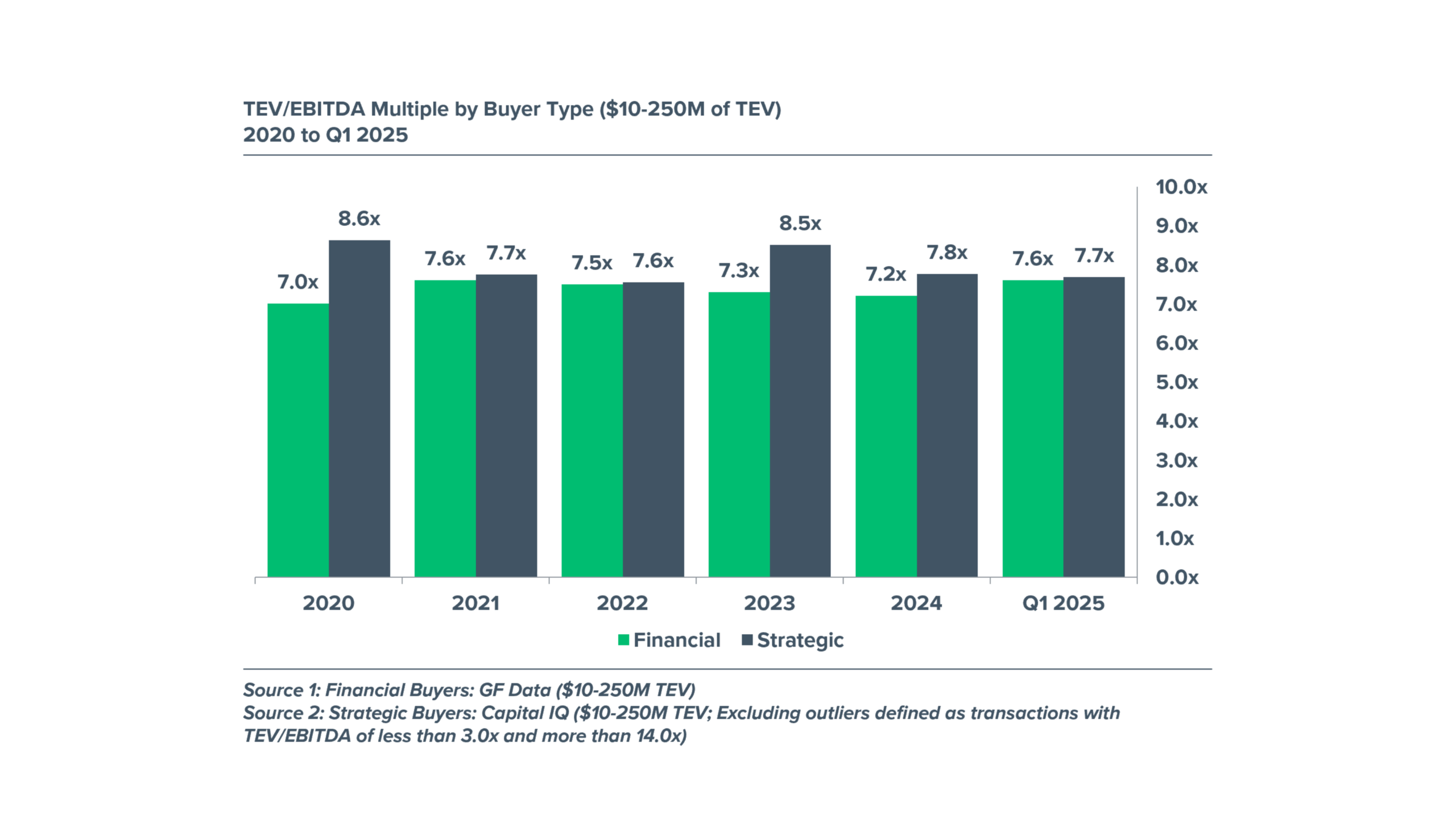
Strategic buyers play a vital role in the M&A market, making up nearly two-thirds of all transactions over the past decade. PE portfolio companies that pursue add-on acquisitions are considered strategic because they share many traits with other strategic acquirers. Synergistic cost savings, access to new customers, and other revenue-growth opportunities enable strategic buyers—but do not necessarily require them—to pay more than typical financial buyers. Since 2020, the strategic premium has almost vanished, but a significant premium suddenly reappeared in 2023. That trend reversed in 2024 and continued into 2025, with the strategic premium declining again.
In the post-pandemic years of 2021 and 2022, strategic buyers, on average, paid only a small premium over the PEs for their acquisitions. However, that trend reversed in 2023, when strategic valuations increased to 8.5x above the 5-year trend level of 8.0x. The trend shifted again in 2024 and into 2025, with the strategic premium decreasing once more. Sharp drops in transaction volume might distort the data and the observed trends.
Over the past five years, EBITDA multiples paid by PE buyers have remained around 7.3x, possibly indicating a more disciplined approach to their acquisitions.
Prices paid by strategic acquirers, on the other hand, have been more volatile than those paid by PEs, possibly reflecting changes in the synergistic value of acquisitions over time.
Prairie estimates that, for deals under $50.0 million, middle-market valuations are one to two multiples of EBITDA lower than the levels in the chart below.
Middle Market Leveraged Buy Out Capitalizations
Commercial bank lenders are cautious, but they have funds to lend and earnings goals to meet, so they are actively seeking new credit opportunities. Since the start of 2025, commercial lending terms, including covenants, maturity structures, and pricing, have favored the issuer. Additionally, the low volume of M&A deals has left lenders’ need for new deals mostly unfulfilled.
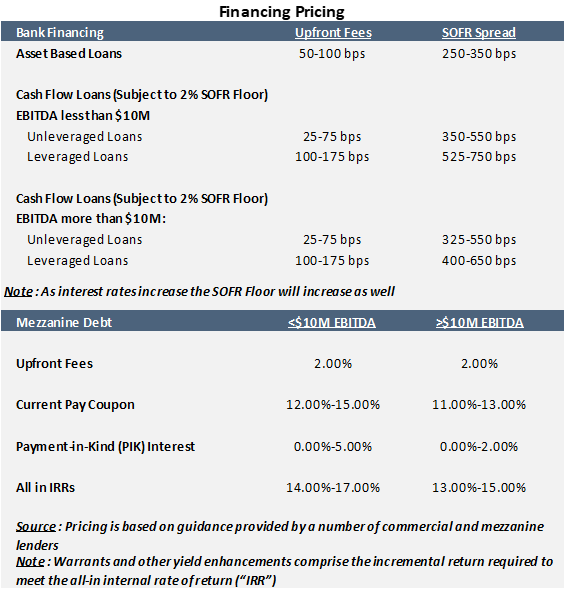
The private credit markets, including business development corporations, asset-based lenders, and other lending-focused private credit funds, are eager to originate new deals. These private credit lenders are adopting a more “risk-on” approach, offering slightly more aggressive lending terms to lower-quality issuers. Although private credit and asset-based lending (“ABLs”) are becoming more active, their loans tend to be more expensive and carry higher debt service costs. Increased private credit participation in the current lending environment improves overall debt availability, leads to more aggressive lending terms, and, in some cases, results in lower credit spreads across the market. The maximum total debt for a deal increased slightly in 1Q25 to above 50.0% of a standard leveraged capital structure, which remains conservative but is returning to pre-pandemic levels.
Mezzanine funds actively participate in leveraged transactions. Although this type of financing provides benefits, it also involves high interest rates that can pressure a company’s cash flow. Mezzanine financing is becoming more significant in middle-market buyout capital structures, especially when obtaining senior debt is more challenging. While interest-only and payment-in-kind (“PIK”) structures still predominate the markets, in today’s environment, equity co-investment structures help align mezzanine returns with the deal’s risk profile.
Overall Comment on the Financing Markets
Throughout 2024 and into the first half of 2025, the U.S. economy has shown ongoing resilience. Despite the Liberation Day tariff activities that started on April 2 and will continue into July and beyond, the equity and credit markets have adjusted to these changes and reached new heights. After just six months, the markets have grown accustomed to the new tariff procedures and have become somewhat desensitized to the initial statements from the President and his team, recognizing that there is a strong likelihood the final tariff agreement will be harmless to the economy.
Although the initial Liberation Day tariff announcement caused more than a 12.0% drop in the equity markets in April, by early July, the major equity indices had recovered to their pre-announcement levels. Ongoing tariff negotiations are likely to increase market volatility; however, the business-friendly, pro-growth features of the recently passed One Big Beautiful Bill are expected to lessen some of the future tariff-related risks.
The credit markets started the year with a large amount of new business capacity. However, the lack of deals involving acquisitions, mergers, and corporate growth has left lenders’ demand for opportunities unmet. Because of the low deal volume, lenders have maintained stable credit pricing and terms during the first half of the year, creating a market that favors issuers. With extra capacity and fewer new deals, lenders are now more willing to consider story credits and smaller deals, mainly because they have the time to do so.
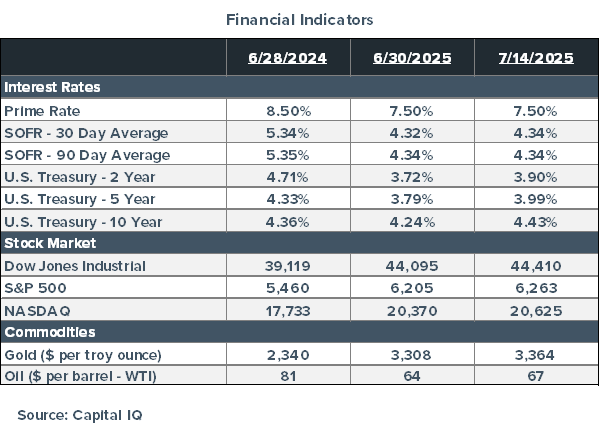
The Fed reduced interest rates by 100 basis points through three cuts in 2024. So far in 2025, the Fed has kept rates steady but is expected to make several cuts later in the year. The 2024 reductions led to a 100-basis-point decrease in the Prime Rate and a similar drop along the SOFR curve. These rates form the basis for adding a credit spread to determine the borrower’s interest rate. Lower rates will lower financing costs and increase potential debt capacity for new deals. This could support higher M&A valuations and boost loan demand once tariff uncertainty passes.
Banks, non-bank lenders, insurance companies, SBA funds, Business Development Companies (“BDCs”), and the quickly growing Private Credit Funds all have plenty of capital and are eager to issue new loans. So far, their options have mainly included refinancing deals and a small number of growth capital and capital expenditure loans. If the M&A market picks up as expected, this could spark a very active capital market and lead to even more loan growth later in 2025.
Preparation is crucial in any market, but it becomes even more important in the current economic environment. All borrowers should develop detailed business plans that demonstrate to lenders how the Company will manage inflation, reduced profit margins, revenue variability, tariffs, and other business challenges, including shifts in interest rates. Since lenders expect repayment, borrowers need to clearly outline their strategies to ensure this. With thorough preparation, creditworthy and well-qualified borrowers will be better equipped to attract capital. Borrowers should also be ready for a potentially lengthy financing process and may face more conservative and costly capital structures.
Total U.S. Middle Market Loan Issuance
- Recession fears diminished in 2024, and optimism grew that the new administration would be more business-friendly and focus on economic growth. Additionally, lower interest rates in 2024 made borrowers more comfortable with the interest rate environment and boosted their demand for new credit to refinance higher-cost debt, fund growth, and capital projects. As a result, U.S. leveraged loan issuance in 2024 increased significantly to $1663.0 billion, surpassing all the annual totals of the post-COVID years and even the years just before COVID.
- The tariff uncertainty discussed earlier has dampened demand for general credit in 2025 and decreased M&A activity and the associated demand for leverage loans. As a result, year-over-year lending activity has slightly slowed through May 2025.
- Bank lenders continue to prioritize relationship banking, lines of credit for corporate borrowers, and areas where they have a competitive advantage, such as operational business needs (including payroll and checking accounts). Due to the current tariff-driven economic environment, banks are cautious about issuing new loans and are very selective with new leveraged transactions. Private credit funds have stepped in to fill the gap, but this sector is focusing on higher-quality loan opportunities.

Interest Rate Environment
The Fed Funds rate was reduced by a total of 100 basis points in 2024, ending the year at 4.25% to 4.50%. In 2025, the Fed Funds rate remained unchanged through the first three Federal Reserve meetings, with the market expecting at least two 25-basis-point rate cuts later in the year.
Since recent tariffs have had a limited effect on inflation and the labor market remains weak, several economists at financial firms, including those at Goldman Sachs, Citigroup, and Wells Fargo, have increased their interest rate cut forecasts from two to three 25-basis-point reductions this year.
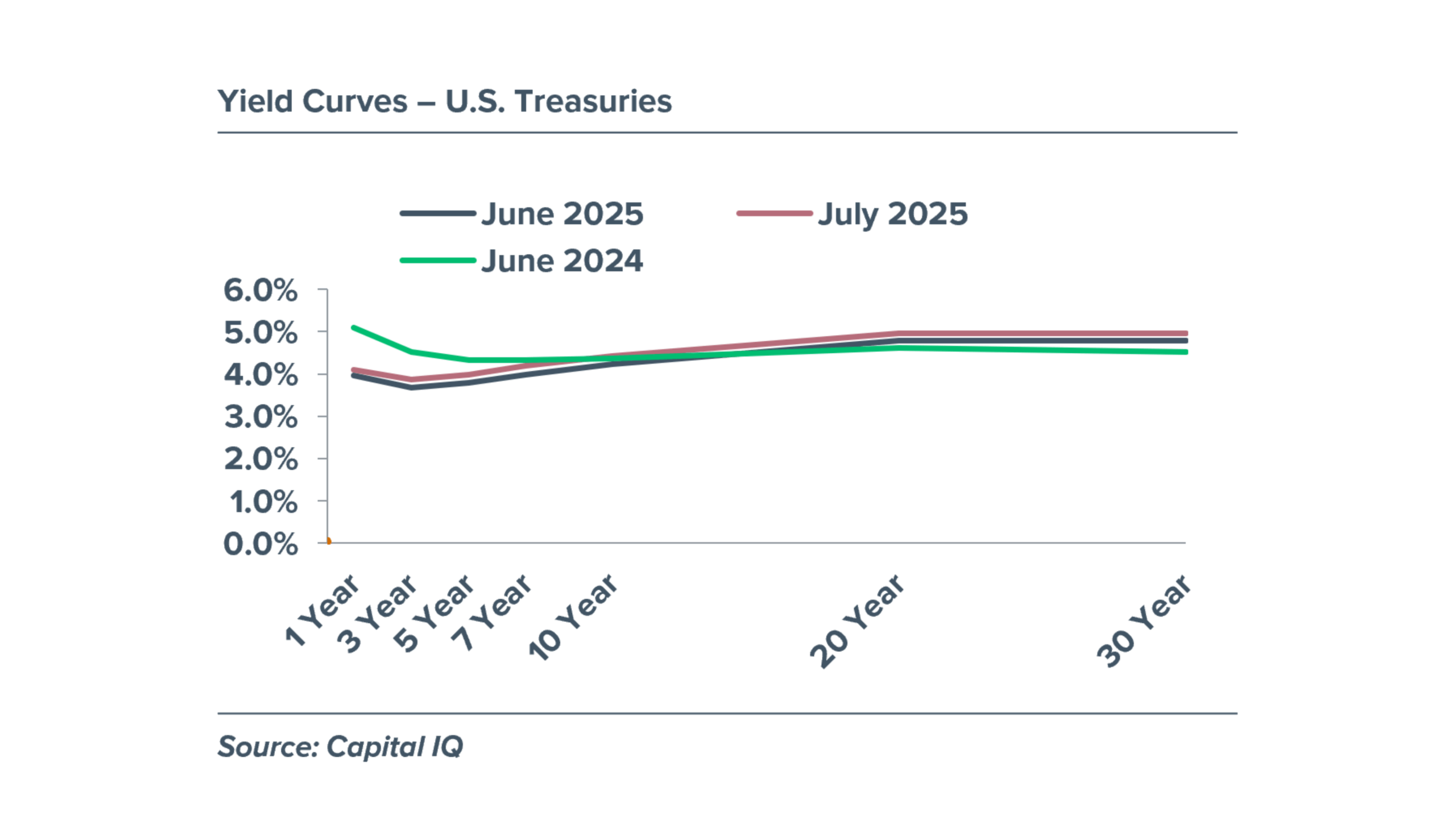
The interest rate environment returned to normal in late 2024, with an upward-sloping yield curve signaling more typical inflation expectations. By the end of 2024, the 2-year to 10-year spread was a positive 33 basis points, and it remained positive at 52 basis points as of June 30, 2025. The shift toward a more upward-sloping yield curve indicates a normal interest rate environment, despite the initial effects of tariffs on the economy.
Middle Market Debt Multiples
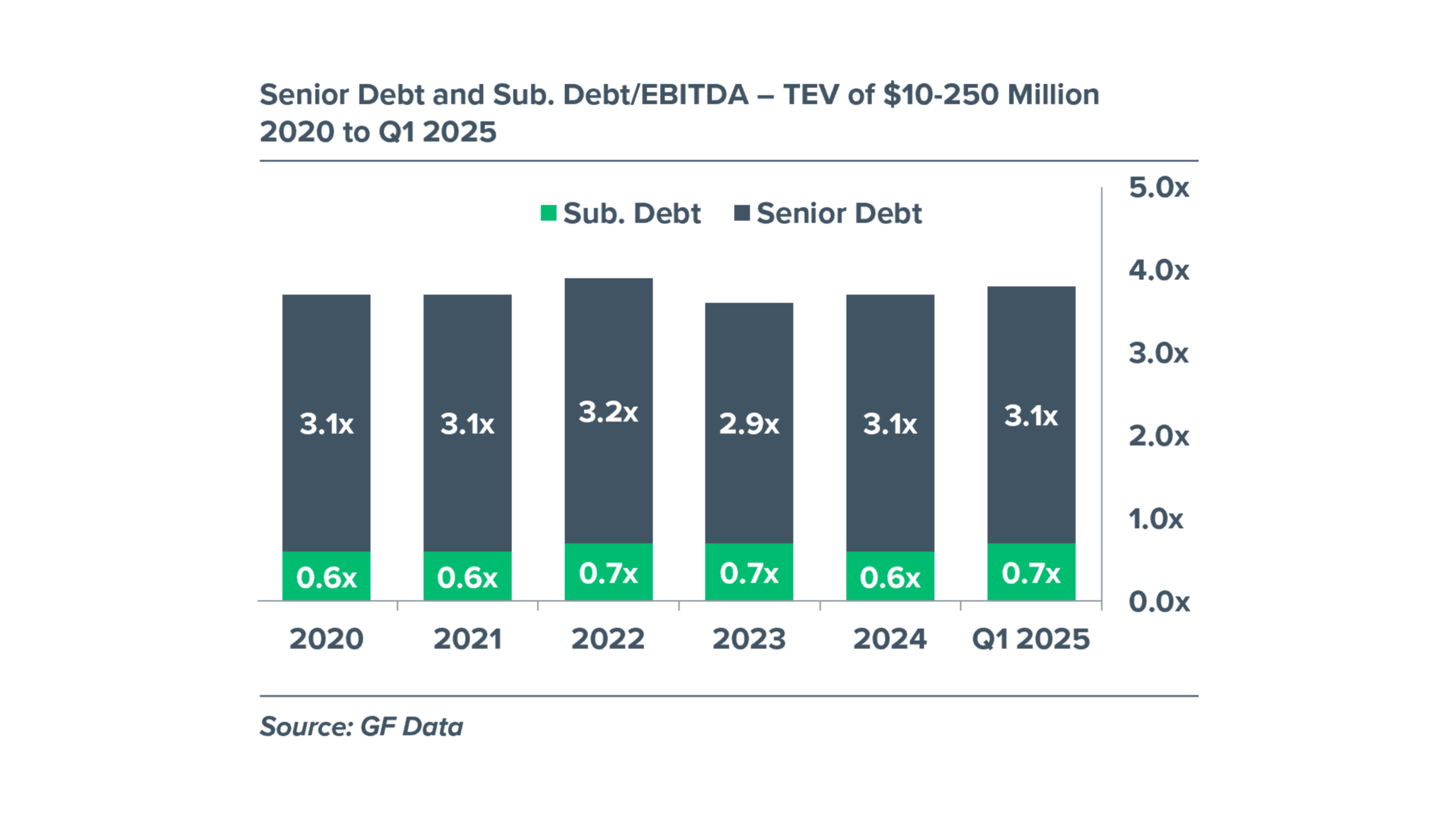
- The average total debt leverage in middle-market deals rose slightly in 1Q25, increasing to 3.8x from an average of 3.7x in 2024 and 3.6x in 2023.
- Mezzanine capital remains a crucial component of leveraged capital structures. Although it is more expensive than senior debt, its return structure aligns with the risk profile of companies operating in today’s uncertain economic environment.
- Over the past five years (2018-2023), mezzanine debt averaged 0.7x EBITDA in the typical capital structure. During 1Q25, mezzanine leverage increased slightly from 0.6x in 2024 to 0.7x EBITDA, aligning with the long-term average.
- The senior debt markets improved in 2024, but since our market data is a quarter behind, we are still evaluating the 2Q25 market. The lending market appears to have withstood tariff uncertainty and continues to seek new loan opportunities.
- Like the M&A market, we expect more tariff-driven changes in the lending markets throughout the rest of 2025.
Terry Bressler is a Managing Director and can be contacted at 312.348.1323 or by email, tbressler@prairiecap.com.
Download the PDF above.


