
Overall M&A Market Commentary
The economy has continued to show strength, with 3Q24 GDP growth reported at 3.1% following the 3.0% growth reported in 2Q24. While GDP is growing above trend, prior to mid-2024 business owners were still feeling uncertain as they delt with inflation-induced margin pressures, labor shortages, higher interest rates and a wide variety of regulatory hurdles. Finally, there was the emergence of what could be a dramatic change in the economy and the deal market during the fourth quarter of 2024.
Perhaps the biggest change in 4Q24 was the improvement in market psyche resulting from the re-election of Donald Trump as the 47th President of the United States. Following the election, the National Federation of Independent Business (“NFIB”) Small Business Optimism index rose eight points in November, reaching 101.7 after remaining below the 50-year average of 98 for the previous 34 months. “The election results signal a major shift in economic policy, leading to a surge in optimism among small business owners,” stated NFIB Economist Bill Dunkelberg. “Owners are particularly hopeful for tax and regulation policies that favor strong economic growth as well as relief from inflationary pressures. In addition, small business owners are eager to expand their operations.” While the inauguration will occur later in January on the 20th, it appears as though we are already experiencing the return of the Animal Spirits in the United States economy.
Inflation, while trending lower, remains higher than the Fed’s desired 2.0% target, and is still closely watched. Even though inflation is still an issue, the Fed chose to start reducing its benchmark overnight borrowing rate to avoid a recession. The Fed reduced interest rates by a total of 100 basis points in 2024, first by 50 basis points in September and then an additional 25 basis points in each of November and December. Fed Chairman Powell remarked, “We have lowered our policy rate a full percentage point from its peak, and our policy stance is now significantly less restrictive.” The Fed is running a fine line between reducing inflation and fostering economic growth. Lower interest rates and lower inflation are both essential to improve the economic sentiment of participants in both the business and consumer sectors.
The labor market showed strength in 4Q24. Cautious employers, remembering the labor shortages of the last few years, were redescent to firing employees and were very careful in adding people to their work forces. During 4Q24, additions to the workforce have consistently been above the market’s workforce growth expectations. For example, December job creation was about 100,000 employees above expectations of 156,000 employees, which moved the unemployment rate down slightly to 4.1% from 4.2% in November. The consistent above-expectation employment growth has shown a labor market with strength. The Fed pledges to continue to be data driven in its rate cut deliberations and signaled in December that due to the strength in the labor market, there will be fewer interest rate decreases in 2025.
The new Trump Administration is expected to be more business friendly but may also add other challenges to the economy. The new President is a negotiator and deal maker who is fond of trade tariffs. Depending on the level and application of these potentially new trade tariffs, there could be negative consequences on the U.S. supply chain through product shortages and increased inflation. There could also be positive changes. Furthermore, dramatic changes are likely in immigration and may have effects on the labor markets and the payroll costs to employers. It will take several months for the policies of the Trump administration to become known and their effects on the economy to be evaluated. Change is opportunity with risk. We will all see what opportunities are available to us in 2025.
Private equity (“PE”) firms have abundant, time limited investment capital to put to work. Strategic buyers are well capitalized and still looking for growth opportunities. The demand for deals outstrips the number of willing sellers with good quality companies. This is a “flight to quality” market where buyers have a keen interest in high-quality acquisition opportunities. In this environment, well-prepared companies with sound business fundamentals will command broad buyer interest.
Due to the extended period over which private company M&A market data is collected, there is a one-quarter lag in our information. As a result, the market commentary reflected below is generally limited to the data through 3Q24. Any 4Q24 data included in this edition to expand trend lines is still preliminary and will be reviewed in detail in the next quarterly newsletter.
M&A Market Activity
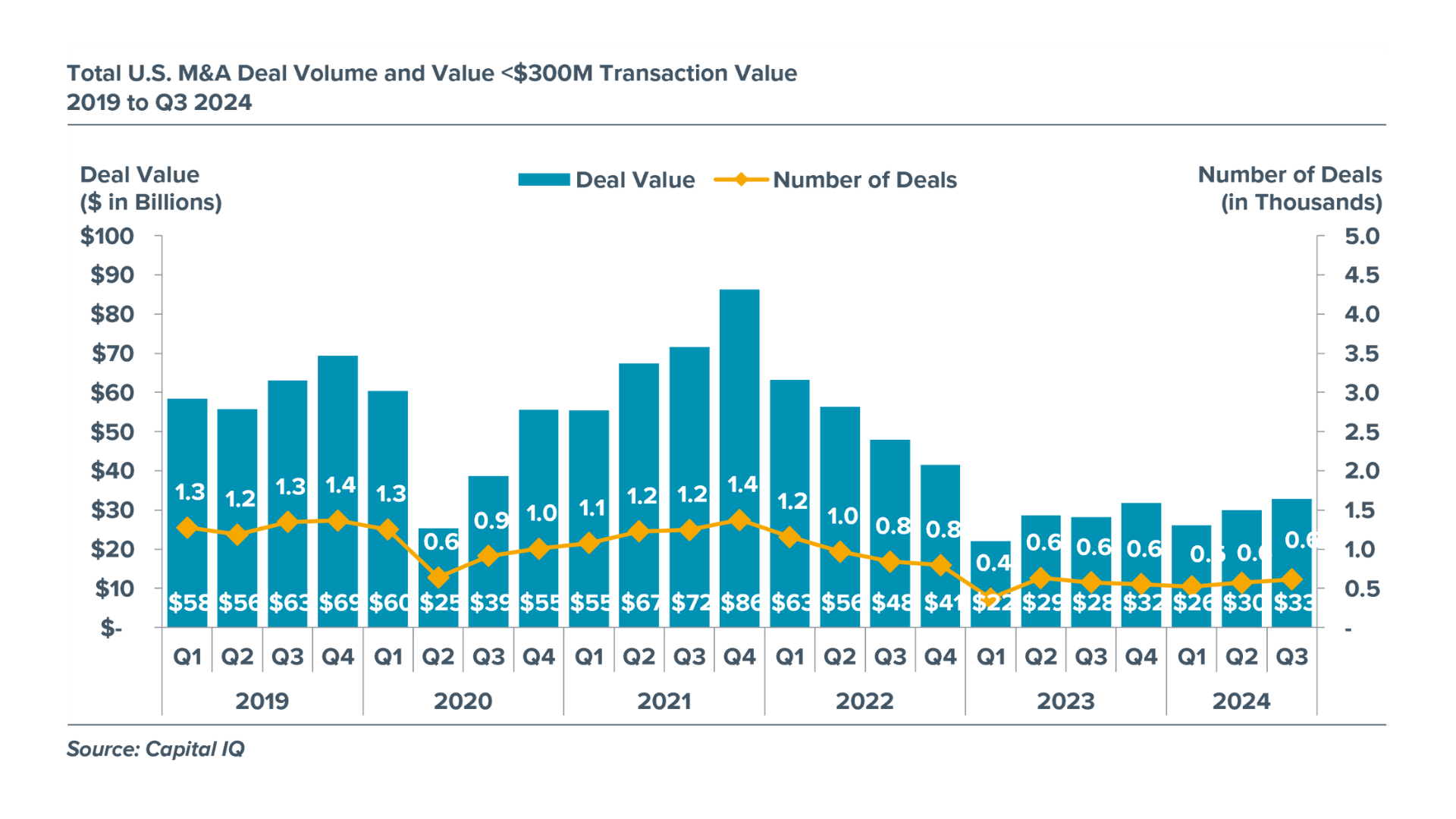
Since the COVID pandemic, the M&A market “bounce back” years of 2021 and 2022, middle-market M&A activity has stalled at low activity levels measured by both the number and annual dollar value of deals. Middle-market M&A activity reached a low point in 1Q23 and moved slightly higher throughout 2023. M&A market activity stepped back in 1Q24 but trended higher in each quarter through 3Q24. These improving trends are driven, first on the demand side by private equity (“PE”) funds and strategic buyers with ample resources to make deals. And second, on the supply side by the business owner population beginning to “age out” and seeking liquidity by selling their businesses coupled with the need for PE funds to exit their older portfolio companies. Because of the existing strong demand for deals and the anticipated growth in the supply of salable companies, there are signs the trend in M&A growth will continue to rise in 4Q24 and into 2025. All these factors seem to suggest there should be a more robust deal market in 2025.
Even with a relatively strong U.S. economy, business optimism has been tepid, induced in part by stubborn inflation, elevated interest rates, increased regulatory scrutiny and political uncertainty. These factors have led to increased business costs and a negative impact on margins, corporate earnings and the business owner psyche. Business owner optimism is important when considering the sale of a business or taking on the risks associated with making and acquisition. As described earlier by the NFIB Small Business Optimism Index, the change in Presidential Administration has already caused a significant improvement in business optimism. It is anticipated that there will be a significant increase in the number of business owners considering a liquidity event in 2025.
PE funds have an abundant supply of uncommitted capital to make acquisitions. This capital, coupled with the prospect of a lower interest rate environment, may lead to greater demand from the PE funds for new deal activity and an increase in M&A activity. The public equity markets are at elevated levels which gives strategic acquirors additional resources to use equity in making their acquisitions. The demand for new M&A deals continues to be strong.
With improved business optimism the number of business sellers is expected to increase to meet the ready demand for new deals.
- In 3Q24, $33.0 billion in middle-market deals were recorded, up slightly from the value recorded in 2Q24. In quarter-over-quarter comparisons, 3Q24, the deal value was up 10.0% compared to 2Q24.
- The number of middle-market deals closed in 3Q24 was approximately the same as the number of deals closed in 2Q24. On a year-to-date basis the number of deals in the first three quarters of 2024 was up 6.3% compared to the same period last year.
- The average middle-market deal size of $55.0 million in 3Q24 was 10% larger than the average $50.0 million deal size closed in 2Q24 and larger than the average deal size of $49.4 million recorded in the first three quarters of 2023. The trend in the 2024 M&A market is slowly growing in size. Even in the $50 million size these deals are still considered add-ons to existing companies with a lower business risk profile and an easier path to attract financing.
PE exit information reflects a slightly different pattern than the overall M&A market. PE exit activity in 3Q24 measured by the dollar value was down slightly, about 1.4%, from 2Q24, while the number of PE exits was about the same as 2Q24. The elevated dollar value PE deal activity during the last two quarters shows that PE sellers took advantage of the scarcity of deals and sold the more marketable businesses to realize gains and harvest cash in their portfolios. It should be noted that in 2024 significant numbers of PE funds are significantly behind returning cash to their limited investors.
In last quarter’s PMMP, we noted that PE funds are the “professional buyers and sellers” of businesses. PE funds strategically pursue both the buying and selling of portfolio companies both at the portfolio company level, when the asset is most saleable and at the fund management level when the fund needs a realization to return capital to their investors. PE funds generally have limited time frames over which they must invest their committed capital and “harvest” these investments to return cash to the funds’ limited partners. Typically, these timeframes are 10 to 12 years and create realization urgency in PE fund management.
According to Bain & Company, a global consulting firm, approximately half of the PE portfolio companies are at least four years old, which when you consider that the average holding period for a PE fund is six to seven years, is in PE terms is old. We are at the beginning of a large PE fund realization cycle where many funds will have to work down their portfolio company portfolios and return capital to their investors providing another boost to M&A volume.
Even with lower M&A market activity and more cautious buyers, both strategic and financial buyers continue to look for deals in the M&A market. Since the COVID recovery period, buyers across the spectrum are more decerning in making acquisitions. Sellers with quality companies and good financial performance are receiving strong buyer attention. Preparation is key for business sellers to be able to achieve appropriate enterprise valuations and manage a competitive sales process and can withstand more rigorous due diligence scrutiny.
Middle Market Deal Valuations
As stated in the Fall 2024 PMMP, 2023 was a post-COVID low water mark for M&A deal valuations with valuation levels starting to rise in early 2024. Valuation information in 3Q24 shows a continuation of the valuation recovery in 2024. It appears that higher quality, clean deals are closing in the current market. As a result, we believe the valuation statistics may be skewed higher because they represent the highest quality companies with the highest valuations.
- Deal valuation multiples for the sub-$25.0 million category in 3Q24 came in at 6.4x, above the long run average of 6.1x for this size category and just short of the 5-year market peak for this size category.
- Deal valuation multiples for the large middle-market, the above $50.0 million category, came in at 8.8x in 3Q24, well above the long-run average for this size category.
- Finally, the 3Q24 valuations in the $25.0 to $50.0 million, middle segment were recorded at 7.0x, equal to the five-year average of 7.0x.
PE funds have abundant committed capital and strategic buyers continue to cautiously seek growth through acquisitions. The reduced volume of M&A activity has produced a smaller pool of new deals, leaving the demand for quality acquisitions unsatisfied. This supply-demand imbalance provides sellers with an opportunity to maximize their valuations. However, in this cautious market, only the better-quality companies can push for higher valuations. Market uncertainty and conservative financing markets have forced buyers to be more measured in making offers for all but the best acquisition opportunities. Sellers have started to recognize the change in market dynamic and have lowered their valuation expectations and are starting to enter the market in greater numbers.

Private Equity versus Strategic Valuations
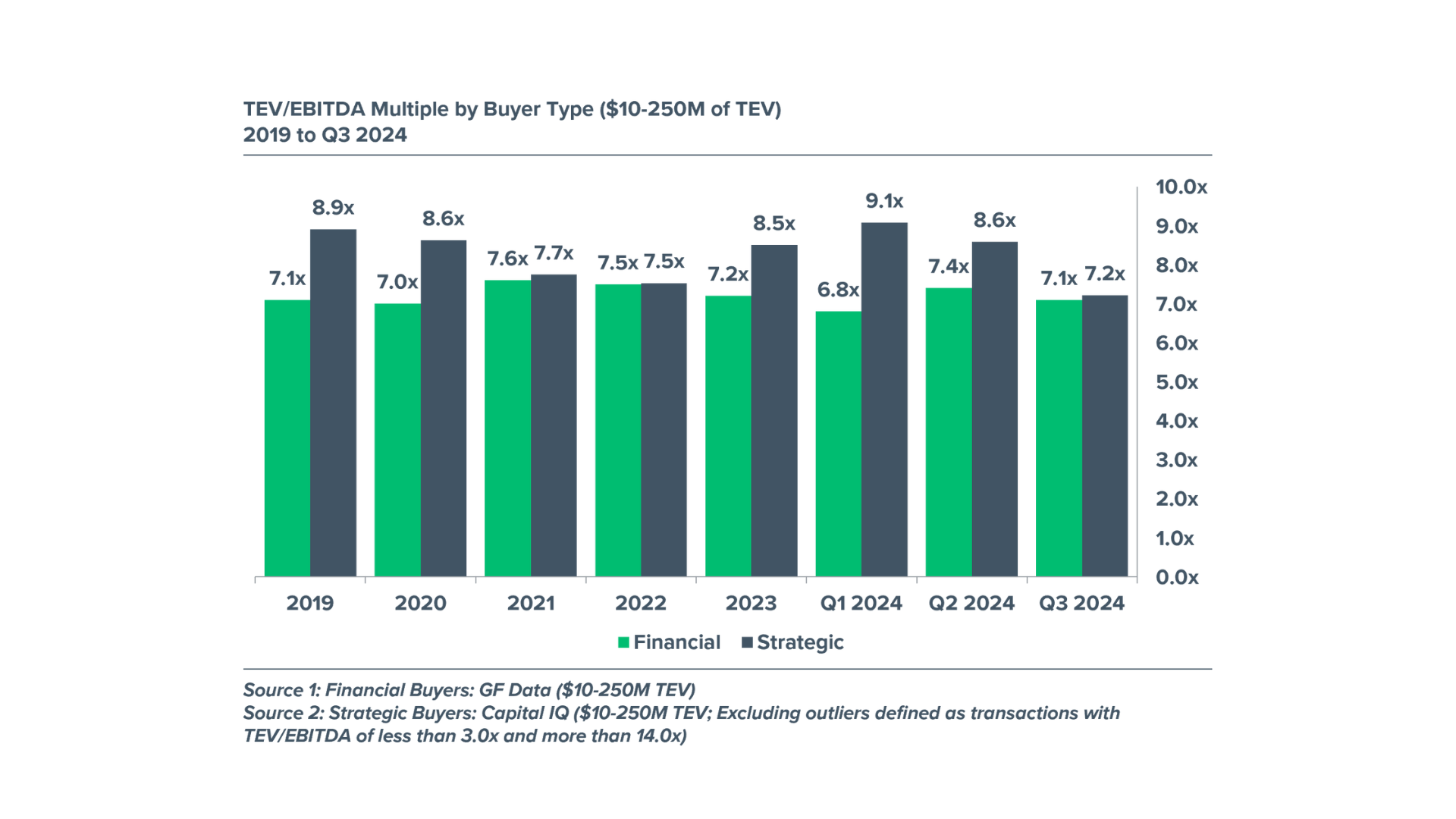
Strategic acquirors are major factors in the M&A market, comprising almost two thirds of all deals that have closed during the last decade. PE portfolio companies that make add-on acquisitions are grouped in the strategic category because these companies have many of the same characteristics as other strategic acquirors. Synergistic cost savings, access to new customers and other revenue enhancement opportunities provide strategic buyers with the ability, but not the need, to pay more than the typical financial buyer. Since 2020, the size of the strategic premium has declined almost to zero but that reversed in 2023 when strategic valuations began to climb while PE valuations were flat. This resulted in a return to the strategic premium we saw before the pandemic.
- In the post pandemic years of 2021 and 2022, strategic buyers, on average, paid little strategic premium over the PEs for their acquisitions. But that trend reversed in 2023, where strategic valuations jumped to 8.5x above the 5-year trend level of 8.3x.
- Over the last five years, EBITDA multiples paid by PE buyers have remained in a range centered around 7.3x. The full year 2023 valuation data indicates that PEs are currently paying slightly more than the long-term trend level for new deals.
- The quarterly information in 2024 has been somewhat volatile because of the low number of M&A deals. Our data shows that the strategic premium has moved around for each of the last three quarters and eliminated in 3Q24.
- Prairie estimates that, for deals below $50.0 million, middle-market valuations are between one and two multiples of EBITDA lower than the levels reflected in the chart below.

Middle Market Leveraged Buy Out Capitalizations
In 2023, the economy showed resilience but there was low confidence in long-term economic conditions coupled with troubles in the commercial bank sector and an anticipated recession which produced a tepid lending environment and more conservative capital structures. This started to change in 2024, as the U.S. economy continued to show resilience, the equity markets set new records and the Fed, believing inflation has been tamed, started to reduce interest rates causing recession fears to subside. However, even with these positive developments in the first half of 2024, the bank lending markets remained conservative.
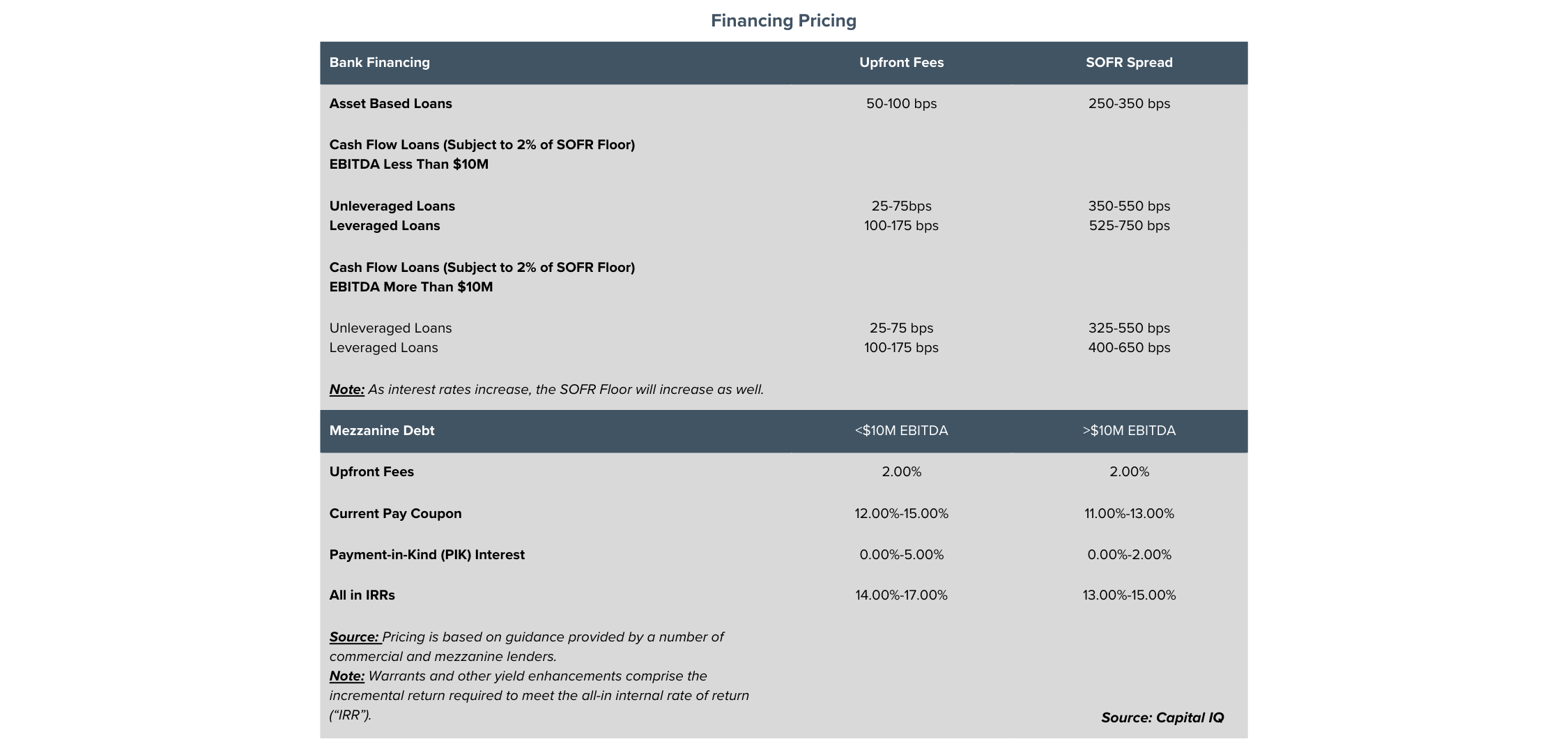
Commercial bank lenders are still cautious but are aggressively pursuing more credit worthy borrowers and forcing the lesser quality lending opportunities to other lenders. Fortunately, the private credit markets (including business development corporations, asset-based lenders and other lending-oriented private credit funds) are picking up the slack. These private credit lenders are moving to a more “risk- on” lending profile and providing slightly more aggressive lending terms for lesser quality issuers. While private credit and ABLs are becoming more active in the market, their loans are more expensive and have a greater debt service cost. The growing private credit participation in the current lending market is leading to improved overall debt availability and forcing more aggressive lending terms and, in some cases, lower credit spreads across the lending market. Even with better terms the maximum total debt component of a deal is around 50.0% of a typical leveraged capital structure which remains conservative.
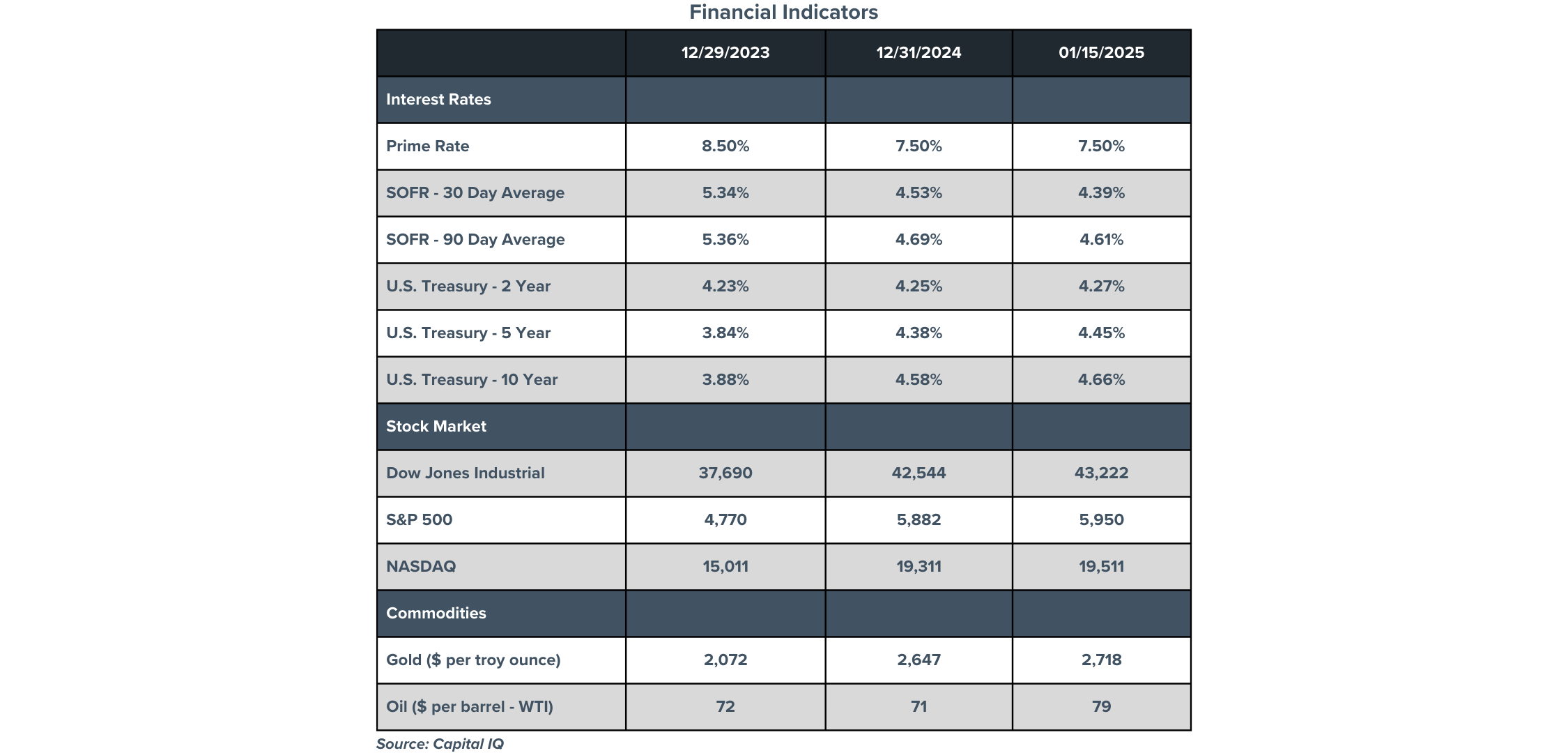
The Fed reduced interest rates by 100 basis points in 2024 which shifted the short term SOFR lower leading to lower borrowing costs. In addition, credit spreads have narrowed which will result in better issuer debt service coverage and could lead to more debt in a typical capital structure.
Mezzanine funds are active in leveraged transactions. This capital has a high interest rate that can stress a company’s cash flow. Mezzanine is increasingly a critical component of a middle-market buyout capital structure when senior debt capital is harder to find. Interest-only and payment-in-kind (“PIK”) structures still dominate the markets, but in the current environment, the use of equity co-investment structures help match mezzanine returns with deal risk profile structures.
Overall Comment on the Financing Markets
The aggregate demand for loans and financing has been muted for the last several years but started to recover in mid-2024. Much of the 2024 loan growth was attributed to refinancing of existing credit but a portion was for growth opportunities and equipment acquisitions. As noted earlier, the M&A market continued to be soft in early 2024 but has shown a modest escalation in volume since mid-year. There are signs of positive change in the 2025 M&A market and the same optimism is beginning to affect the financing markets for next year as well. Many business owners believe a new U.S. President will bring a more business friendly regulatory and tax environment which, when coupled with lower interest rates, will lead to further economic growth. The financing community expects that reduced interest rates combined with narrowing lending spreads and more business optimism will lead to further increases in financing volume during 2025.
The Fed reduced interest rates three times and a total of 100 basis points in the last four months of 2024. These reductions led to a reduction in the Prime Rate of 100 basis points and a shift lower in the SOFR curve of between 66 and 80 basis points. These interest rates are the base rates to which a credit spread is added to develop the borrower’s interest rate. In addition, according to SPP Capital Partners, the Market at A Glance newsletter states, “Credit spreads have compressed to their lowest levels in years…” SPP Capital Partners estimates that credit spreads have narrowed by 25 to 50 basis points across the credit spectrum. The combined effect is to reduce borrowing rates by around 100 basis points which could induce more borrowing for growth and capital expenditures. Additionally, lower interest rates will decrease financing costs and increase potential debt capacity in new deals, which could support higher M&A valuations and lead to more loan demand.
Banks and non-bank lenders, insurance companies, SBIC funds, Business Development Companies (“BDC”) and the rapidly emerging Private Credit Funds all have abundant capital and are anxious to make new loans. Refinancing transactions and a limited number of growth capital and capital expenditure loans have been all these groups have been able to pursue. If the M&A market ramps up as expected, this could lead to a very active capital market and even more loan growth in 2025.
Preparation is key in any market, but even more important in the current emerging economic environment. All borrowers should have thoughtful business plans that show lenders how the company will react to inflation, lower margins, changes to revenues and other business issues including changes in interest rates. Lenders want to be repaid, so borrowers must detail how they will make that happen. With proper preparation, good-quality, creditworthy issues will be able to attract capital. Borrowers will have to be prepared for an extended financing process and potentially more conservative and expensive capital structures.
Total U.S. Middle Market Loan Issuance
- U.S. Leveraged Loan issuance in 2024 increased significantly to $1663.0 billion exceeding all the annual volume tallies of the post-COVID years and even the last few years before COVID.
- Recessionary fears declined in 2024, and the interest rate environment has stabilized leading to more aggressive behavior by lenders on borrowing terms and credit spreads. The Fed’s interest rates reductions in September, November and December have made borrowers more comfortable with the current interest rate environment, which in turn has increased their demand for new credit to refinance higher cost debt, fund growth and capital expenditures. Although M&A activity financing is still muted, the deal flow in the credit markets has started to return to more normal year levels in the last half of 2024.
- Bank lenders continued to focus on relationship banking, corporate borrowers’ lines of credit and areas where they have a competitive advantage, such as operating business needs (including payroll and checking accounts). Due to the current economic environment, banks are cautious in making new loans and are very selective in new leveraged transactions. Private credit funds have taken up the slack but even this sector is focused on better quality loan situations.

Interest Rate Environment
The Fed began its interest rate cuts with a robust 50 basis point reduction in September 2024 and followed up with two additional 25 basis point reductions in November and December, in total a 100-basis point reduction in the Fed Funds rate for 2024. In the Fed’s post meeting statement, it was suggested that there would be a slower pace of reductions in 2025.
The December Consumer Price Inflation (CPI) report was hotter than expected and showed an increase in monthly prices of 0.4% and an annual inflation rate of 2.9%. Other measures of inflation, including the Fed’s preferred measure, Core PCE, showed a 3.2% annualized increase, down slightly from 3.3% in November. While inflation is somewhat tamed, it is still above the Fed goal of 2.0% and will limit future rate decreases.
The labor market has produced better than predicted job growth, but a slight increase in the unemployment rate to 4.2% in November from 4.1% in October has somewhat dampened the excitement. The Fed is walking a fine line. Keeping interest rates just high enough to dampen economic growth and reduce inflation but not too high to send the economy into recession. Jobs growth shows strength, which implies economic growth, but is it too much growth? At this point, the Fed will continue to be data-driven and manage interest rates very carefully.
The interest rate environment has finally normalized in 3Q24. The slope of the yield curve in normal times is usually upward sloping, reflecting normal inflation expectations. The 2-year to 10-year Treasury differential was a positive 79 basis points at the end of 2021. However, due to the Fed’s inflation-fighting action in raising short term rates, the yield curve 2-year to 10-year differential moved negatively in mid-2022 and has remained negative until late in 2024. Usually, a negative 2-year to 10-year differential is a signal of an impending recession, but because of the Fed manipulation of short-term rates that predictive signal was spoiled. At the end of 2024, the 2-year to 10-year differential was a positive 31 basis points, up from a positive 15 basis points on September 30, 2024. Progress toward a more upward sloping yield curve is indicative of a more normal interest rate environment.
Middle Market Debt Multiples
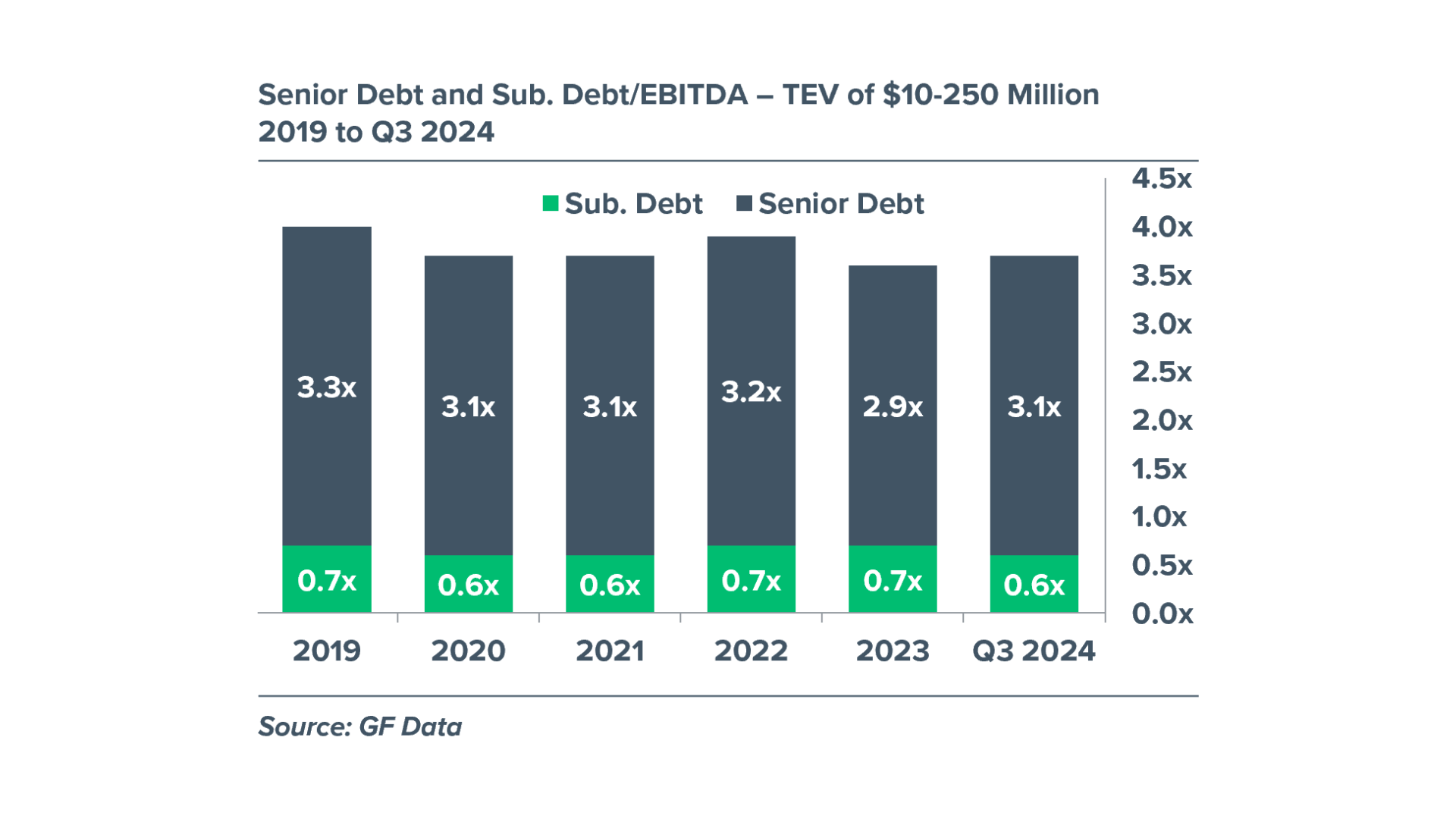
- Average total debt leverage in middle-market deals was lower in 2023 moving to 3.6x, from the 3.9x average in 2022. Inflation induced rising interest rates and business uncertainty led to lower debt leverage multiples in 2023. Our 3Q24 data shows that leverage moved a little higher to 3.7x but remains conservative relative to 2022.
- Mezzanine capital continues to play a key role in leveraged capital structures. While mezzanine is more expensive capital than senior debt, its return structure matches the risk profile of companies operating in the current uncertain economic environment.
- Over the past five years (2018-2023), mezzanine debt averaged about 0.7x EBITDA in the typical capital structure. Through 3Q24 mezzanine leverage declined to 0.6x EBITDA, slightly lower than the long run average.
- We see evidence that the senior debt markets are improving in 4Q24, but because our market data lags by a quarter, we are still evaluating the pre-election 3Q24 market. In the 3Q24 market, there was a conservative senior debt lending regiment, which coupled with higher interest rates negatively impacted the level of senior debt in the typical capital structure.
- Like in the M&A market, we anticipate positive changes in the lending markets in 4Q24 (to be covered further in the Spring PMMP) that will continue into 2025.

Terry Bressler is a Managing Director and can be contacted at 312.348.1323 or by email, tbressler@prairiecap.com.
Download the PDF above.


